TIRANA, July 3 – Turkey continues to remain a top tourist destination for Albanians spending their holidays abroad despite security concerns having cut the number of foreign tourists there by about a third.
Data published by Turkey’s tourism ministry shows Albanians were among the few European tourists along with Kosovo, Ukraine, Georgia travelers whose number of visits to Turkey during the past couple of years saw a modest increase.
The number of Albanians who picked Turkey as their travel destination rose to 83,000 in 2016, up from 80,000 in 2015 and about 76,000 in 2014. The increase is dedicated to the affordable all-inclusive packages Turkish tour operators offer and rising popularity of Turkey among Albanian housewives fuelled by its soap operas that have made Turkey the world’s second largest exporter of TV series after the U.S. in the past few years.
Other factors include the traditional links and cultural affinity between the two countries under the Ottoman Empire for about 500 years until the early 20th century when Albania gained independence.
Turkey faced a 30 percent cut in tourists in 2016 affected by its failed coup effects and a drastic decline in tourists from Russia and Germany, the top two countries of origin for tourists to Turkey.
The number of Albanians travelling to Turkey this year is also on rise with some 27,000 people visiting it during the first five months of this year, up 8 percent compared to the same period last year, according to Turkey’s tourism ministry.
Albanians made up only 0.33 percent of Turkey’s 25 million tourists in 2016, in a list topped Macedonian, Serbian and Kosovo tourists among the EU aspirant Western Balkans countries.
“Greece is very sought after for households who travel on their own cars. A considerable number also go to Turkey where everything is arranged including plane or charter flights and prices are much more favourable,” says a Tirana-based travel agent as quoted by Turkey’s state-run Anadolu news agency.
Turkey security concerns have also favoured the development of country’s emerging tourism industry, with many cancelling plans to travel to Turkey.
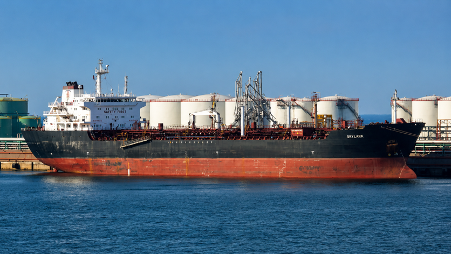
Albania’s emerging cruise ship tourism is set to register a boost this season as several international cruise lines have placed Turkey off their itineraries on security grounds, replacing it with alternative Albanian destinations among others.
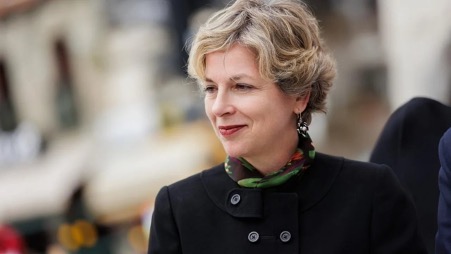
Auron Tare, the head of the Albania’s National Coastline Agency, says Albania ports will host a record 75 cruise ships with some 150,000 tourists on board this year, also thanks to feared insecurity in Turkey and the Balkans attracting more international attention.
“It is not on our own merits that so many tourists are coming. The situation is a result of Turkey having become a tough destination to visit also because of security elements. On the other hand, the Balkans as a region is generally getting more attention by tourists,” Tare earlier said, adding that Albania is still not well-prepared to handle large influxes of cruise tourists.
Other regional picks
Greece is apparently a top travel destination for Albanians due to prices having considerable dropped in the past few years as the neighbouring country escapes its worst-ever recession that saw its economy contract by about a quarter since the 2008 debt-triggered crisis.
The neighbouring country, the host of some 500,000 Albanian migrants, is estimated to be on top of Albanians’ travel list. Data published by Greek Tourism Generis portal show some 722,300 Albanians entered Greece last year, a 47 percent increase compared to 2015. The increase is mainly dedicated to an increase in tourist numbers as the number of Albanians visiting Greece from 2012 to 2015 fluctuated at about 500,000, the same to the number of Albanian migrant community there.
The number of Albanians visiting Italy, the host of another 500,000 Albanian migrants is estimated to be more than 1 million, but the visits are mainly carried out by Albanians residents in Italy and their family members. Due to being a rather expensive destination, Italy is not on top of Albania’s summer vacation destination.
Albanians are also increasing picking Montenegro, Croatia and Spain as summer destinations.
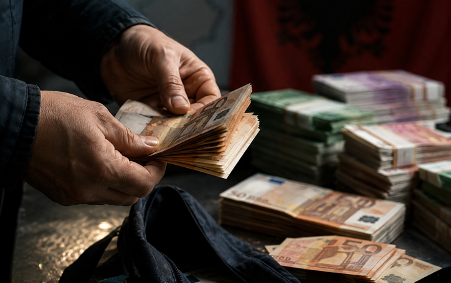
Albanians increased their spending in trips abroad to €226 million in the first quarter of this year when about 1 million Albanians travelled abroad, according to official data.
Back in 2016, Albanians only slightly increased their expenditure in trips abroad, spending about €1.1 billion, mainly in trips to neighbouring Italy and Greece, where about 1 million Albanians live and work, but also holidaying in other destinations such as Turkey.
Already in its peak tourist season, Albania’s restaurants and hotels have been rated as Europe’s cheapest, a report by Eurostat, the statistical office of the European Union has recently found.
The tourism industry has been one of the country’s fastest growing in the past few years, attracting more than 4 million tourists and generating about €1.5 billion, about 8.4 percent of the country’s GDP alone.
The country boasts dozens of sandy and rocky beaches along its 476 km coastline stretching through the Adriatic and Ionian, the most famous of which are found on the Albanian Riviera south of the country.
Three UNESCO World Heritages, the Butrint archaeological park and the historic towns of Gjirokastra and Berat, in southern Albania, also unveil the rich cultural heritage in Albania, a gateway to the Mediterranean boasting a mix of Illyrian, Roman, Greek and Ottoman civilizations.
Earlier this year, Albania was rated as one of the top seventeen global destinations to visit in 2017 by the prestigious CNN news portal amid other renowned destinations such as the U.S., Canada, France, Denmark, China and Australia.
The communist past is also what fascinates tourists about Albania, which was cut off from the rest of the world under a Stalinist dictatorship for about five decades until the early 1990s.
The House of Leaves museum of the notorious Sigurimi police surveillance in downtown Tirana, a Cold War bunker outside the capital city that the former communist regime had built underground decades ago to survive a possible nuclear attack and the Sazan Island military base south of the country all house the mystery and phobia of the country’s communist leaders for about five decades until the early 1990s.