TIRANA, August 3 – Albania’s central bank expects the negative effects that the strengthening of the national currency is having to gradually wane as the economy continues recovering mainly driven by some major energy-related investment, a recovery in exports and a boost in the tourism industry.
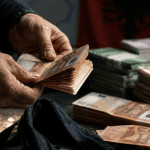
The national currency, lek, has strengthened by an annual 2.7 percent against Europe’s single currency, currently trading at an 8-year low of 132.48 with a negative impact on the country’s exports which are back to moderate growth mainly thanks to a pickup in commodity prices and the reactivation of the country’s largest steel plant.
Two-thirds of Albanian exports are destined for Eurozone countries which makes them vulnerable to Euro fluctuations.
On the positive side, the depreciation of the Euro against the national currency is good news for borrowers in Euro who have their income in lek and the government’s external debt payments as well as imports whose cost has slightly dropped.
Albania’s banking system is highly euroised with Euro-denominated loans and deposits accounting for about half of the total which has led the Bank of Albania to initiate de-euroisation measures in order to boost the impact of its easier monetary policy and reduce foreign exchange risks.
The Euro depreciation has also slightly affected inflation rate, which dropped to 2 percent in the second quarter of the year, down from 2.4 percent in the year’s first quarter as a result of cheaper imports, especially food products, the main item in the consumer basket.
Inflation rate has been at an average of 2.2 percent in the first half of this year, up from a mere 0.7 percent during the same period last year.
Albania’s annual average inflation rate hit a 16-year low of 1.3 percent in 2016, reflecting a slump in global oil and food prices, but also sluggish domestic consumption as the economy grew by 3.3 percent, mainly thanks to major energy-related investment.
The situation in the first half of this year has led the country’s central bank to slightly revise downward its inflation rate target for 2017 to 2.2 percent, which is yet 0.8 percent lower compared to the Bank of Albania’s 3 percent target, estimated to have a positive impact on the country’s economic growth.
The central bank says it will continue its easy monetary policy until the first half of 2018 when inflation rate is expected to achieve its 3 percent target.
“Considering the second quarter performance, our projection for the average inflation rate in 2017 has been slightly revised downward to 2.2 percent compared to a previous 2.3 percent,” governor Gent Sejko told a press conference this week as the central bank continued to hold the key rate unchanged at a historic low of 1.25 percent in an easier monetary policy that continues since May 2016.
The central bank says the appreciation of the national currency is a result of exports growing by 13.5 percent in the first half of this year and foreign direct investment continuing its positive performance mainly fuelled by some major investments such as the Trans Adriatic Pipeline, increasing the euro’s market supply.
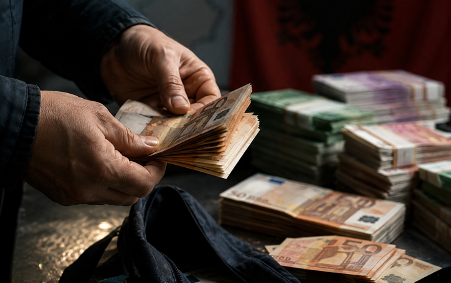
However, some local experts have partly blamed the rising cannabis cultivation and the increased presence of Euro in Albania due to drugs sales abroad for the sharp depreciation of lek against the Euro.
The euro dropped to as low as 132.48 lek this week in levels not recorded since late 2009, depreciating by 5.4 percent compared to the average exchange rate of 140 lek for about five years until mid-2015.
The Albanian economy grew by 3.9 percent in the first quarter of this year, in line with the government’s target.
“The Albanian economy is gradually approaching its potential target, reflecting both lower unemployment and higher capacity utilization rates. This cyclical improvement will enable a gradual increase in salaries and profit margin reaching its historical average,” says governor Sejko.
The Albanian economy has been growing by an average of 1 to 3 percent annually since 2009 following a pre-crisis decade of 6 percent annually, the growth rate estimated to bring welfare to the EU aspirant Balkan economy.