TIRANA, Aug. 9 – Climate change effects will have a negative impact on Albania’s energy security in the next decade unless the country diversifies its current wholly hydro-dependent domestic electricity generation.
In its 2017-2027 strategy on integrated water resources management, the Albanian agriculture ministry warns water flows in the country’s main rivers could drop by up to 20 percent in the next decade as a result of lower rainfall.
“The expected climate change effects show that water flows in the Drin, Mat and Vjosa rivers will drop between 4.5 percent to 20 percent by 2027. Underground water levels are also expected to drop, with the area along the Adriatic coastline suffering the biggest losses. It is expected that a slight increase in sea water level will affect the sweet water aquifers through the flow of saline water and the flooding of river deltas and coastal lagoons,” says the strategy.
Citing a World Bank report, the strategy drafted by UK-based Mott MacDonald consultant, expects electricity production from big and small HPPs in Albania to drop by 15 percent and 20 percent respectively because of a 20 percent drop in summer rainfall until 2050.
Electricity production in big hydropower plants is dependent on rainfall filling reservoirs, while production from small HPPs depends on the volume of river water flows.
Low levels of snowfall and its quick melting due to global warming effects have cut the operation period for small HPPs to 4 months from a previous 8 months.
With the country facing one of its worst droughts in decades, Albania is currently meeting the overwhelming majority of about 80 percent of its electricity needs through costly imports. State-run operators have already spent some €53 million in electricity imports for the past 2 months. Electricity imports are expected to cost the state budget some other dozens of millions of Euros in the next few months unless heavy rainfall fill up the empty reservoirs of the big hydropower plants.
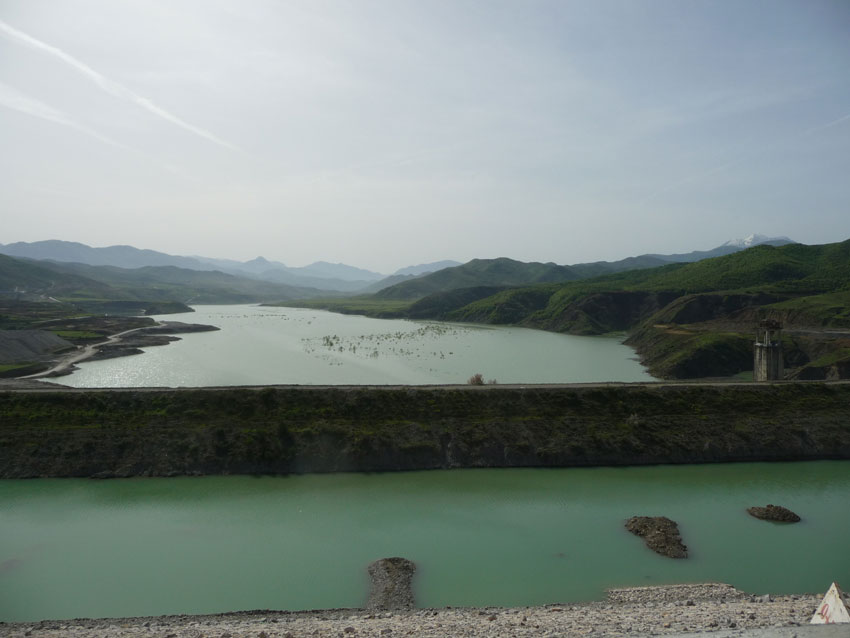
Domestic electricity production by state-run hydropower plants in the northern Drin River Cascade has almost been paralyzed due lack of rainfall for the past three months and water levels at an almost historic low. The three state-run HPPs in the Drin Cascade produce about three quarters of domestic electricity generation while the rest is produced by more than 100 private and concession HPPs, making Albania’s wholly hydro-dependent electricity sector vulnerable to adverse weather conditions such as this year’s prolonged drought.
The Vlora thermal power plant and the launch of the Albania-Kosovo interconnection line are Albania’s sole hopes of diversifying the country’s power sources in the next few years.
The Vlora thermal power plant, a costly debt-financed investment of $112 million has not been put to use since 2010 when it was finished due to high costs of operating on fuel and problems with its cooling system.
The launch of the Trans Adriatic Pipeline and its first gas flows by 2020 are expected to make the costly thermal power plant operational and increase the country’s energy security.
Meanwhile, a Kosovo-Serbia dispute over the ownership of transmission assets in Kosovo territory has been holding back a newly built 400 kV interconnection line between Albania and Kosovo for more than a year, with negative effects on plans to create a common regional market and missed earning in both countries.
“Water is a strategic resource for Albania. Although rich in water resources with eight rivers and three big navigable and cross border lakes, a big number of important wetlands and abundant underwater resources, the country will face climate change effects accompanied by an increase in temperatures and a decrease in precipitation which will lead to milder winters, warmer springs and drier and hotter summer and autumn. Water resources are expected to drop by 14 percent until 2050,” says the water resources strategy.
Experts say changes in the precipitation regime will lead to heavy rainfall coupled with early snow melting caused by higher spring temperatures and trigger more frequent floods.
The population growth, economic development and competition on water resources will put extra pressure.
The expected increase in flash floods along with the quick snow melting because of higher winter temperatures could be a threat to dam security, making the nearby communities and areas exposed to floods and possible discharges from the hydropower reservoirs.
The report also warns that two-thirds of Albania’s dams, 410 out of 626, are in urgent need of repair to increase their security and availability of irrigation water.
The rise in temperature and droughts will also lead to losses of woods and negatively affect water quality.
An earlier World Bank report has warned that agriculture is one of the most climate-sensitive of all economic sectors in Albania, and without a clear plan for aligning agricultural policies with climate change, the livelihoods of rural populations will be at risk.
“The rural poor will be disproportionately affected because of their greater dependence on agriculture, their relatively lower ability to adapt, and the high share of income they spend on food,” World Bank experts have warned.
Agriculture is a key sector of the Albanian economy employing about half of the country’s population, but producing only a fifth of the country’s GDP, unveiling its poor efficiency.
The UN has described climate change as one of the major global challenges.
“From shifting weather patterns that threaten food production, to rising sea levels that increase the risk of catastrophic flooding, the impacts of climate change are global in scope and unprecedented in scale. Without drastic action today, adapting to these impacts in the future will be more difficult and costly,” says the UN.