TIRANA, Oct. 17 – Sporadic rainfall following one of the driest summers on record continues to negatively affect Albania’s wholly hydro-dependent domestic electricity generation, putting state-run electricity generation and distribution companies in dire financial straits and almost paralyzing much-needed investment in the distribution grid.
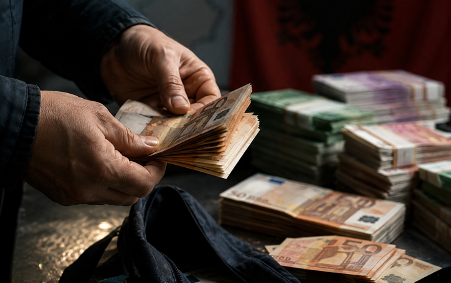
State-run KESH power utility and OSHEE distribution operator have already spent about €100 million in costly electricity imports in the past four months and are due to spend another €30 million until the end of the year unless rainfall considerably increases.
The Albanian government has recently approved a 1 billion lek (€7.4 mln) loan to state-run OSHEE distribution operator to handle electricity imports for October 2017. The new support to electricity companies comes after the government already revised the 2017 budget and was forced to make use of an emergency World Bank loan last August to handle the electricity crisis in the peak tourist season.
Last August, Albania revised the 2017 budget through a special normative act procedure increasing support to state run power companies by another 3 billion lek (€22 mln) to 4.5 billion lek (€33.2 mln), but left unchanged the revenue and spending targets due to the positive performance of public finances despite the electoral year effects.
With domestic electricity generation securing only about a fifth of the country’s needs, the government was also forced to make use of a €22.4 million World Bank loan intended for emergency electricity imports last August.
Due to sporadic rainfall, the situation at the Drin Cascade, northern Albania, where state-run KESH power utility manages the country’s three biggest hydropower plants and produces about three-quarters of domestic electricity, has not significantly improved in the past few weeks.
The situation also remains critical for about 150 private and concession hydropower plants, the majority of which small and medium-sized ones and producing about a quarter of domestic electricity generation. Their 2016 income reached a record high of €80 million, triggered by favorable weather conditions and the launch of new HPPs, including the Banja HPP built by Norway’s Statkraft as part of its major Devoll Hydropower project that is expected to conclude by late 2018 with the completion of a bigger HPP.
As the whole region faced one of the worst droughts, paralyzing hydro-electricity generation, electricity import power prices surged to about €70/MWh last August.
The OSHEE distribution operator contracted about €6 million in electricity imports for October 2017, a small amount compared to the average monthly imports of about €25 million from June to September 2017 when the heat wave and the influx of tourists sharply increased demand for electricity.
With prices having dropped to below €60/MWh, the OSHEE operator also preliminarily purchased about €13 million for November and December in its latest late September tender.
State-run OSHEE distribution operator which turned profitable in 2015 thanks to an aggressive nationwide campaign to curb electricity thefts and collect hundreds of millions of euros in accumulated unpaid bills, was the largest Albanian company in 2016 and ranked the 125th largest SEE company, according to a regional annual report.
Government authorities have assured the costly imports pose no threat to public finances, but planned investment in the dilapidated grid where losses have considerably reduced but still remain high at about 28 percent, are at risk.
Diversification need
The critical situation the country faced this year has unveiled the need to diversify the country’s domestic electricity resources, currently fully reliant on hydropower and rainfall, making it vulnerable to adverse weather conditions such as last summer.
The existing but non-operational Vlora thermal power plant and the Albania-Kosovo interconnection line are considered as opportunities for Albania to diversify the country’s power resources in the short run.
The government is already mulling solutions to link the costly Vlora thermal power plant to the Albanian section of the Trans Adriatic Pipeline and make it operational on gas by 2020 when first Caspian gas flows are expected. TAP scheduled to bring Caspian gas to Europe through Albania, Greece and Italy is the only hope for the costly Vlora thermal power plant, a new 97 MW $112 million low-sulphur distillate oil-fuelled power plant, available for use since 2010, but which has not been put to use because of high fuel costs.
Meanwhile, the German government is pushing for a deal between Serbia and its former breakaway province Kosovo over a long-standing electricity transmission dispute holding back a newly built German-funded Albania-Kosovo interconnection line.
The Kosovo-Serbia dispute over the ownership of transmission assets in Kosovo territory has been holding back a newly built 400 kV interconnection line between Albania and Kosovo for more than a year, with negative effects on plans to create a common regional market and missed earning in both countries.
Albanian and foreign companies have invested in more than a hundred HPPs so far producing about a quarter of the country’s domestic electricity generation, but no major wind or solar energy projects yet.
With domestic electricity generation currently wholly reliant on hydroelectricity, Albania has large untapped wind and solar energy potential that can be cost-competitive, UAE-based International Renewable Energy Agency (IRENA) has unveiled in a South East Europe report.
“Due to the very good solar resource and relatively satisfactory wind speeds (3.3-9.6 m/s), there is high, untapped potential for the deployment of solar PV (up to 1.9 GW) and wind (987-2 153 MW),” says the report, adding that low temperatures of geothermal reservoirs make geothermal power generation an unlikely option in Albania.