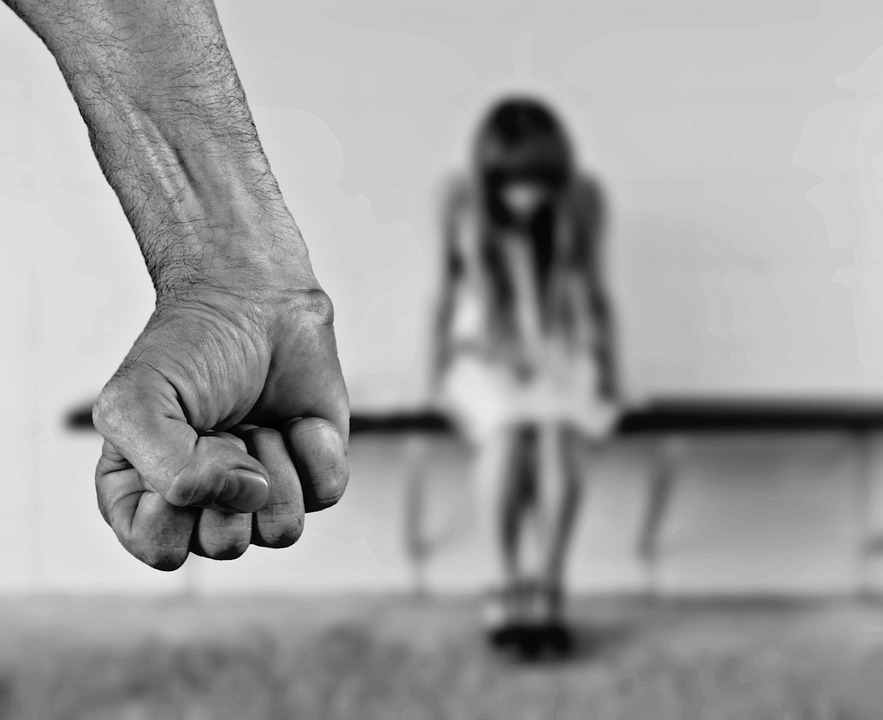
TIRANA, Nov. 26 – Reacting to the recent increase in domestic violence cases, which are mainly directed towards women and often end tragically, Albania’s Democratic Party has submitted a request for the toughening of measures against the perpetrators of such crimes.
The move was made public by Democratic Party MP, Albana Vokshi, one of several lawmakers, who had signed a resolution on the matter.
The opposition lawmakers note that the government is yet to take any significant measures in order to keep domestic violence at a minimum, as there is a lack of strong parliamentary supervision and no one to properly look into domestic violence denouncements.
Parts of the motion suggest that the Parliament establish a special commission to legally handle the phenomenon of domestic violence in Albania, to hand in a data analysis, as well as create a national register for domestic violence in the country.
In addition, the motion suggests that a sole legal entity should be created to deal with the issue at hand and be made entirely responsible for domestic violence prevention and the victims’ protection guarantee.
The deputies also signed in favor of lawfully expelling from any amnesty or sentence reduction any crimes involving domestic violence.
The motion also argues that the protective measures against violence should be reevaluated and that the cohabitation between the violator and the victim in a closed environment should not be allowed.
“We should not keep quiet during these days, but react against governmental violence, which begins from the Prime Minister and expands like an epidemic in all its forms, and in each institution,” Vokshi said.
Despite the added political colors of the debate between the government and opposition, it is a well-known fact that domestic violence prevention is indeed failing across the country.
Several experts have told local media the system in place to protect the lives of children and women at risk of family violence has clearly failed, as well as have urged authorities to do more.
Government has proposed changes
However, the government did propose some changes to the current laws earlier this year, in a bid to offer better protection. Changes such as speeding up the issue of protection orders and providing victims with free legal assistance are already in process.
The current law punishes domestic violence perpetrators with up to five years in prison, but tighter penalties adopted in 2013 have not helped curb the phenomenon.
Under the government’s proposed changes, courts will also have to decide on protection order applications within 15 days while their decisions will be final in order to avoid common appeals delaying victims’ protection from immediate threat.
“Under the changes we are proposing, domestic violence victims will receive free legal assistance and free lawyers from the National Chamber of Advocacy. The proposed legal changes also clearly envisage the obligation by all state authorities for the free of charge provision of expertise in domestic violence cases, while the cost of experts summoned by the court such as psychologists and forensic experts will be covered by the perpetrator,” the Minister for Health and Social Protection, Ogerta Manastirliu, said earlier this year.
Week to fight domestic violence marked
Meanwhile, the International Day of Eliminating Violence against Women found Albanian Civil Society Organizations (CSO-s), initiating a variety of awareness campaigns, as another woman’s life was recently taken from her husband’s hand in the town of Kavaje.
“The situation is truly grave and the measures taken so far by the courts, police and other human rights organizations are insufficient. Another woman lost her life in Kavaje two days ago and numerous cases of violence are registered around the country,” Fabiola Egro, from the Network of Community Centers Today for the Future told the Voice of America.
In this context, both the capital and the peripheries are undertaking a number of activities aiming to raise awareness among the citizens coming from the most rural of areas.
These awareness campaigns will last for two weeks and will see to cover as many areas of life as possible because, according to sociologists, domestic violence in the country is related to a number of factors such as living conditions, unemployment and poverty. Of the 2,100 penal cases supervised by the courts during this year, more than a third was related to violence against women.