TIRANA, March 21 – Albania’s trade gap moderately widened in the first two months of this year despite exports registering strong double-digit growth rates, in a situation apparently negatively affected by oil imports meeting all of the country’s domestic needs following the bankruptcy of a local refinery in late 2017.
A report by INSTAT statistical institute shows Albania’s trade gap widened by an annual 7.6 percent to 43 billion lek (€328 million) over January-February 2018 as exports rose by 21.5 percent to about 47 billion lek (€362 mln), but imports also grew by 14.5 percent to 91 billion lek (€695 mln).
A sharp 50 percent increase in imports of “minerals, fuel and electricity” to 11.5 billion lek (€88 mln) was the main contributor to the widening trade gap in the first couple of months of this year.
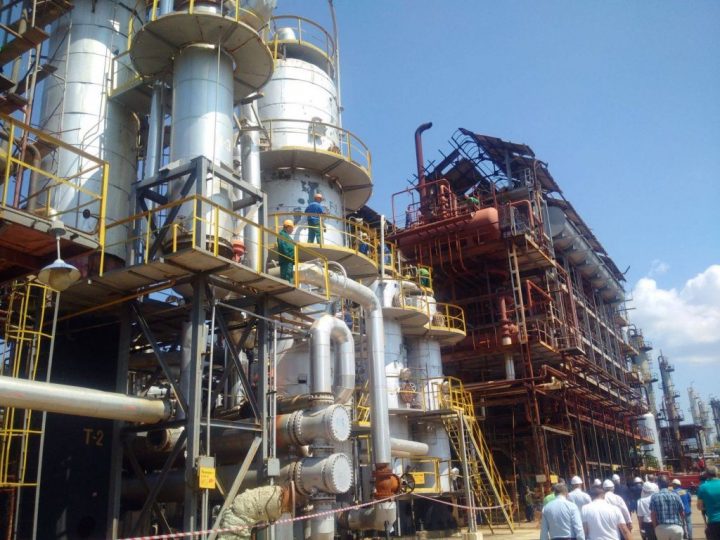
With electricity imports halted in late 2017 following heavy rainfall leading to local hydropower plants meeting domestic consumption needs, fuel imports were the key contributors to this group as domestic oil refining was suspended in November 2017, leaving more than 1,000 workers jobless.
Imports of ‘machinery, equipment and spare parts,’ an indicator also measuring the level of domestic investment, grew by 12 percent to about 19 billion lek (€146 mln), leading the country’s imports.
Albania’s exports during the first two months of the year were led by the traditional ‘garment and footwear’ products which rose by 13.5 percent to 20.6 billion lek (€157 mln), with top trading partner Italy as the destination of the overwhelming 88 percent of them.
However, it was the construction materials and metals, which are emerging as the country’s second largest exports, that had the key contribution to the exports’ double-digit growth for the first two months of this year.
Exports of this group grew by 57 percent to about 8.6 billion lek (€61 mln) in the first two months of 2018 with steel, brick and cement as the main products.
Despite the resumption of electricity exports and domestic crude oil production destined only for sales abroad, exports of “minerals, fuels and electricity” grew by only 5 percent to about 8 billion lek (€61 mln) in an ongoing poor performance since the mid-2014 slump in commodity prices, affecting oil and mineral exports.
Albania’s exports grew by 12 percent in 2017 following modest growth of 0.1 percent in 2016 and a 5 percent decline in 2015 triggered by a sharp cut in international oil and mineral prices.
Albania is a net importer with exports covering only about half of what the country imports.
Trade exchanges with the EU accounted for more than two-thirds of the total in 2017 with Italy, Greece, Germany and China as the country’s main trading partner.
Trade exchanges with Italy accounted for 36 percent of the total, compared to 6.8 percent with Greece and Germany and 6.4 percent with China, according to INSTAT.