TIRANA, April 24 – Albania’s consumer prices slowed down in the first quarter of this year, amid sluggish domestic consumption and ongoing depreciation of the country’s national currency against Europe’s single currency and the US dollar.
Data published by state statistical institute INSTAT, shows inflation rate growth dropped to 1.93 percent in the first quarter of this year, down from 2.37 percent over the same period a year ago, remaining significantly below the central bank’s 3 percent target, estimated to have a positive impact on the country’s economy.
The quarterly inflation rate was fuelled by a 2.66 hike in food and non-alcoholic beverage prices, the key item in the consumer basket, compared to a 4.33 percent increase the group registered in the first quarter of 2017.
Hikes in tobacco excise duty, fuel and tap water prices also contributed to a moderate increase in consumer prices in the year’s first quarter. Experts estimate consumer prices are expected to undergo another hike in the second quarter of this year as thousands of small businesses were included in the 20 percent VAT system starting April 2018, triggering a hike in consumer prices.
Albania’s central bank expects inflation rate to return within the 3 percent target by the end of 2019 hopeful that economy continues to recover and a more efficient capacity utilization rate leads to a more rapid increase in salaries and production costs.
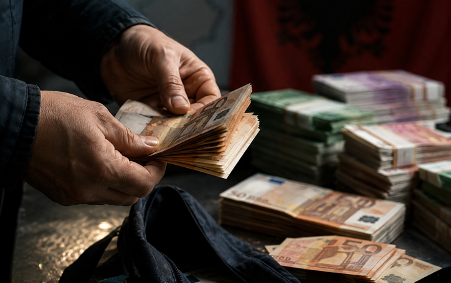
The central bank estimates the significant strengthening of Albania’s national currency against Europe’s single currency, has also had an impact on the country’s low inflation pressures by making imports cheaper. The national currency currently trades at a 9-year high of about 129 lek against the Euro, down 4.5 percent compared to the same period last year.
The strengthening of lek is estimated to have curbed inflation by 0.2 to 0.3 percent in 2017, says the central bank. Europe’s single currency accounts for about half of Albanians’ savings and credit, a high level exposing Albanians towards currency exchange fluctuations and causing losses to Albania’s central bank which is implementing de-euroisation measures in a bid to reduce euroisation levels by about 10 percent to 40 percent.
The Bank of Albania says it will continue maintaining an easy monetary policy during the whole of 2018 and keep the key interest rate unchanged at a historic low of 1.25 percent, a policy it has been following since mid-2016 in a bid to boost sluggish credit and consumption.
Albania’s inflation rate hit a five-year high of 2 percent in 2017 following a 16-year low of 1.3 percent in 2016.
The Albanian economy grew by a 9-year high of 3.84 percent in 2017, but household consumption was about 1 percentage point lower compared to the annual GDP growth rate, hinting the construction-led growth failed to produce enough welfare for the average Albanian.
Growth in annual household consumption ranged from 0.13 percent in 2012 to 2.86 percent in 2017 at a time when the country’s GDP growth recovered from 1.4 to 3.8 percent during the same period, considerably below the average 6 percent GDP growth estimated to bring tangible welfare to Albanian households, according to INSTAT.