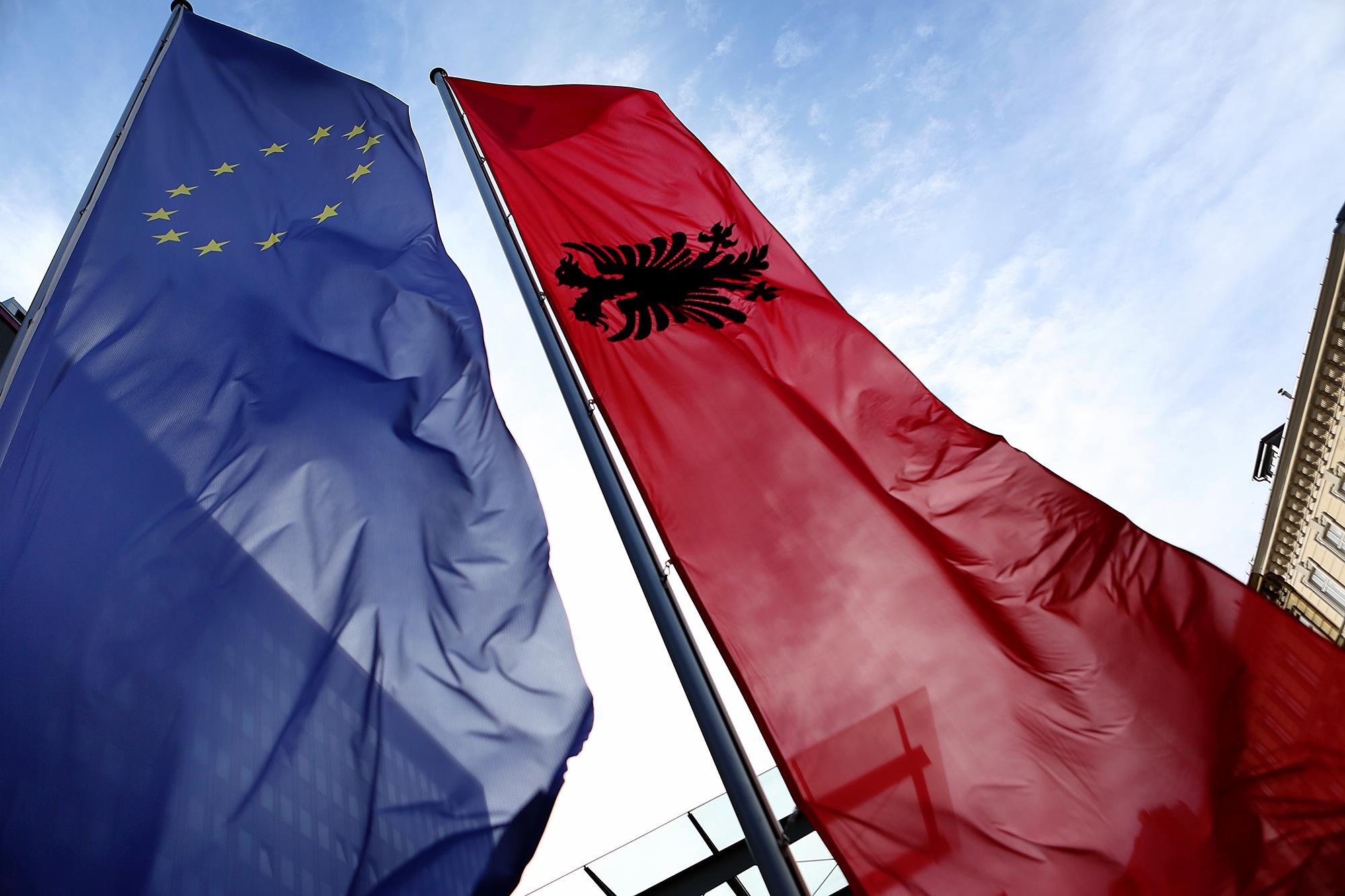
TIRANA, April 25 – Albania’s economy experts say a ‘yes’ vote by the European Council to open accession negotiations with Albania next June would send a positive signal to the Albanian economy and its future although the road to accession will be long and require hard work to meet standards.
As the European Commission has made a clear recommendation for the opening of negotiations with Albania, business representatives say the country’s political class should be united and business experts get engaged in the negotiation process to determine priority sectors for the Albanian economy as the Balkan country seeks to join the EU’s Single Market guaranteeing the free movement of goods, capital, services and labour.
“From the economic point of view, the recommendation for the opening of accession negotiations is a positive signal for foreign investment and the safety of domestic investment as well as establishing new partnerships between local and foreign enterprises,” says the Tirana Chamber of Commerce and Industry.
The chamber’s appeal to Albania’s divided political class is a national pact and a new approach to communication and dialogue benefiting both households and businesses.
“It is crucial to develop a national policy of economic development, determining the priority sectors of the Albanian economy so that local and foreign enterprises are clearly oriented where to focus their investment in order to generate economic stability, economic and employment growth as well as an increase in Albanian citizens’ welfare,” it adds.
“Private companies should be an important part of the negotiation process. Meanwhile, the government should take immediate action on the training of experts that will take part in the negotiation of chapters so that national interests are strongly defended in compliance with the potentials and resources that Albania has,” it adds.
As Western Balkan countries prepare to adopt measures for an EU-backed regional economic area, a test before their apparent eventual European Union integration, Albanian economy experts have earlier noted the government should initiate a process of dialogue with the country’s business community to identify the sectors Albania can decently compete both regionally and within the European single market.
The Union of Producers has already identified the garment and footwear manufacturing sector producing the country’s top exports, olive oil, water, fish and oil and minerals as Albania’s competitive products which the Albanian government can support to boost their regional competitiveness.
A candidate country since mid-2014, Albania is one of the six EU aspirant Western Balkan countries and hopes to join Serbia and Montenegro in the accession talks pending a positive decision by EU leaders at the European Council next June. Neighboring Macedonia is also hopeful of launching accession talks next June as talks over its name dispute with EU member Greece are progressing. Ethnically-divided Bosnia and Herzegovina and Kosovo, whose independence is not yet recognized by five EU members, are still potential EU candidates.
‘Not much room for enthusiasm’
Economy expert Selami Xhepa says there is not much room for enthusiasm even if Albania is given the green light next June and that hard work awaits the country to meet EU standards.
“The recommendation for the opening of negotiations does not allow for great enthusiasm from the economic point of view. But, there is no doubt that expectations are positive and that means there will be support to those reforms that are critical and hold back the Albanian economy,” says Xhepa.
“We don’t expect much in EU financial support as the same [pre-accession] instruments will continue to be applied on Albania until it becomes a member. However, for the business community and especially foreign investors, this is a positive signal which I believe will meet their expectations for a bigger, more interesting and predictable market,” adds Xhepa.
According to him, the main effect is related to increasing competitiveness, although that has not worked in all cases.
“For example, Croatia saw its economy improve and growth accelerate during the negotiations. Meanwhile, the effect of this process was quite the opposite for Baltic countries. That’s why I say there is no room for great enthusiasm and that internal political stakeholders have to make all efforts in order to translate this step into a real benefit for the Albanian economy,” says Xhepa, an economy expert and former MP.
For economy expert Zef Preà§i, the granting of recommendation for the opening of negotiations does not have direct benefits for the Albanian economy.
“That is because the government still has to carry out many reforms to fight crime and corruption and the country has to become more attractive to foreign investors. It must be noted that Albania is one of those countries that still have a lot of problems with the public administration and its capacities to absorb EU funds that are made available,” says Preà§i.
“Integration in itself is meeting standards. What we have achieve is far less than what remains to be done with building institutions, respecting property rights etc.,” he adds.
Economy expert Ketrina à‡abiri says Albania will have to negotiate 35 chapters of the acquis, something that requires investment in addition to political good will, bringing the example of Montenegro which has spent €1.5 billion to bring waste and wastewater management to EU standards.
“First of all, the opening of negotiations is a process of market regulation, the improvement of good governance and the country’s further stabilization. As a concept, that guarantees economic and social stability and as a result makes the country more reliable and attractive to foreign investors. Secondly, Albania is expected to have rising access to EU funds based on its needs and strategic priorities but also depending on its absorption capacities for those funds,” she says.
In its latest country report on Albania, the European Commission said Albania continues to remain moderately prepared in developing a functioning market economy and coping with competitive pressure and market forces within the EU.
The report notes that while the Albanian economy growth has been progressing and public debt and non-performing levels have been reduced, improving the business climate and strengthening rule of law remain key to prepare the country for EU accession.