TIRANA, Nov. 15 – A new joint venture between Albanian and Italian state-run gas operators will maintain the Albania section of the major Trans Adriatic Pipeline for an initial seven-year period once first supplies of Caspian gas flow to Europe in 2020.
‘Albanian Gas Services Company,’ a joint venture between Albania’s newly established state-run Albagaz company and Italy’s experienced Snam, one of the key shareholders in the TAP consortium, will act as the maintenance service provider for the Trans Adriatic Pipeline on the territory of Albania, according to a deal signed with TAP representatives this week in Tirana.
The Albanian government which holds a majority 75 percent stake in the joint venture says the pipeline maintenance company will employ 52 workers, 90 percent of whom young Albanians who will be trained and certified by Snam in Italy during the first half of next year.
The joint venture will operate maintenance facilities in three key regions of the Albanian section including Korà§a, southeastern Albania, where the pipeline enters Albania from Greece, and Fier, the final Albania onshore section before TAP is linked to Italy through an offshore section across the Adriatic.
Snam, which holds a minority 25 percent stake in the joint venture with the Albanian state-run operator, is one of the key TAP shareholders with a 20 percent stake. One of Europe’s leading gas utilities with 75 years of experience and operations in Italy and operations even in Austria, France and the UK, Italy’s state-run Snam entered the TAP consortium in late 2015 after acquiring a 20 percent stake from Norway’s Statoil.
Albanian’s energy minister Damian Gjiknuri described the maintenance deal with the TAP consortium as “a milestone that will bring Albania added value not only to the country’s economy, but also in keeping qualified workers at home.”
Minister Gjiknuri says he is confident TAP will enable Albania’s gasification and make the country a regional gas hub through the Ionian Adriatic Pipeline, a proposed extension of the under construction Trans Adriatic Pipeline that will supply natural gas to Montenegro, Bosnia and Herzegovina and Croatia through Albania.
Lower benefits as construction nears completion
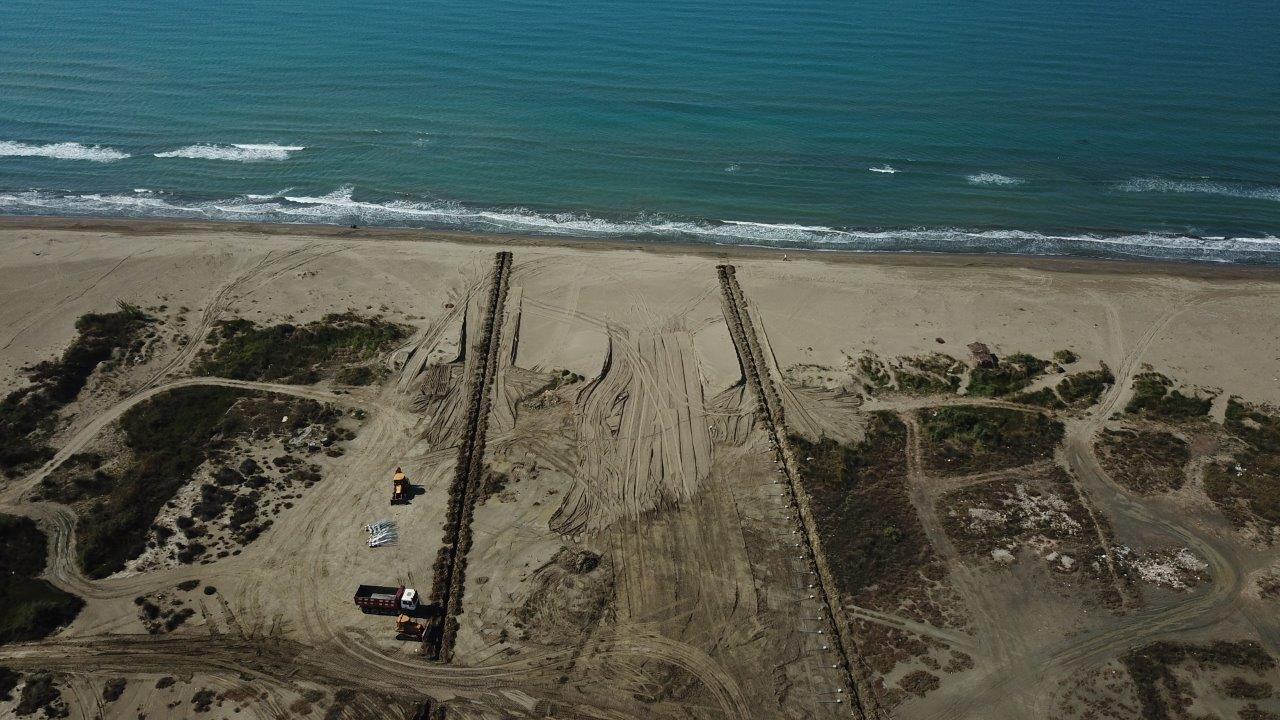
The maintenance deal comes as the major Trans Adriatic Pipeline project has launched construction works for its 105-km offshore Adriatic section linking the pipeline to Italy after completing a 215-km onshore section.
TAP representatives says more than 80 percent of TAP’s works in Greece, Albania and Italy have already been completed and the pipeline is on track to start operations in 2020.
The major energy related project is estimated to have triggered more than €1 billion in investment in Albania alone in the past four years and its lower contribution to Albanian foreign direct investment starting next year is one of the main reasons why international financial institutions expect the Albanian economy to slow down in the next couple of years.
An earlier Oxford Economics study has shown that once the investment stage concludes, operational benefits for Albania will be smaller, but persist for 50 years, the design lifetime of the pipeline.
“We estimate that, in its first year, pipeline operation will contribute €7.6 million to GDP and create 190 jobs (part-time and full-time). A further €2.1 million and 260 jobs (part-time and full-time) will be supported by indirect and induced effects,” says a 2012 study by Oxford Economics.
“These operational effects are scheduled to continue for 50 years, providing a consistent boost to Albanian economic activity. In total, we estimate that the project’s operational direct impact will contribute a cumulative €500 million to Albanian GDP over the operational horizon. An additional €243 million and will be supported via indirect and induced effects,” it adds.
However, with domestic electricity generation 100 percent dependent on hydropower plants and rainfall, TAP would be another opportunity to diversify production in Albania, especially through the Vlora thermal power plant, a new World Bank-funded 97 MW $112 million low-sulphur distillate oil fuelled power plant available for use since 2010, but which has not been put to use because of high fuel costs and a legal dispute with the Italian company that built it over the plant’s cooling system.
TAP would also help the country’s gasification by offering cheaper liquid gas, already massively used as a cheaper alternative to electricity for cooking and heating, although the country’s buildings lack gas infrastructure and huge investment is required.
In its 2020-2040 natural gas master plan, the Albanian government has envisaged the construction of two gas-fired thermal power plants in Korà§a and Kuà§ova, southeast and south of the country, in the long-run.
Authorities plan to first build the gas infrastructure in southern Albania where the Vlora thermal power plant and the Fier and Ballsh oil refineries are situated before switching to other major industrial consumers in central Albania and extend gas pipes to household consumers, who already massively use gas as a cheaper alternative to electricity for cooking and heating but often in dangerous gas cylinders.
Earlier this year, Austria-based Ivicom GmbH proposed the Albanian government to build a 500MW gas-fired thermal power plant that is expected to trigger investment of about €500 million. The pipeline is projected to be built in the outskirts of Korà§a, Albania’s largest southeastern region of some 220,000 residents where TAP enters Albanian territory from Greece.