As leftist radicals flourish in the region, there are question marks in Tirana
This week’s developments in Kosovo and Greece have led the news in Albania due to their importance to the wider region, but also because there are direct implications for Albania itself in their outcome.
The two stories might seem separate, but they are tied by the thread of leftist radicals capitalizing on the economic pain stemming from the crisis and governments losing touch with the people they govern.
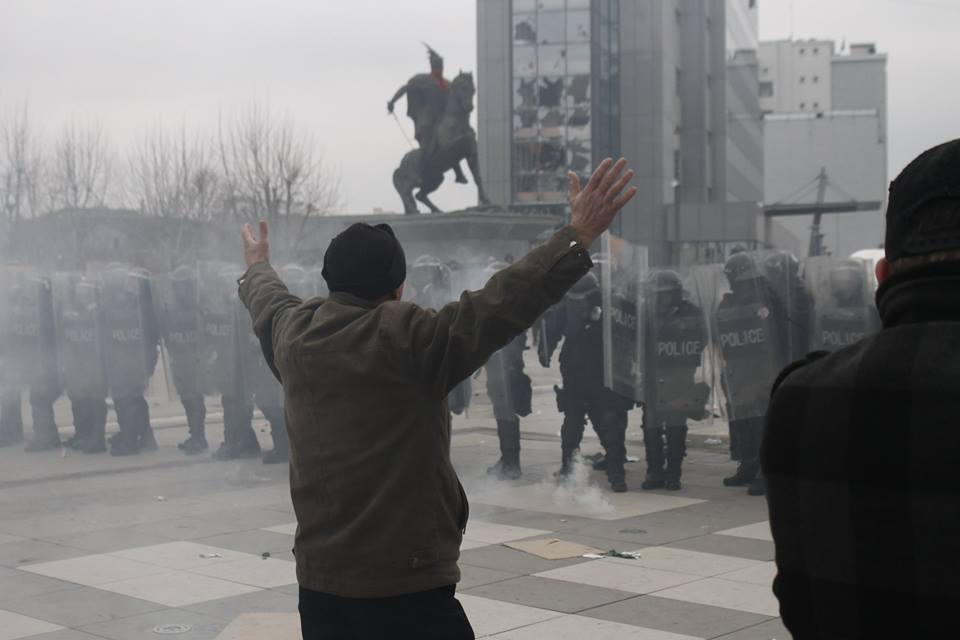
In Prishtina, many anti-government protesters and policemen were injured in the worst violent protest since independence in 2008. The city’s newly-constructed main square looked like a war zone. The leftist nationalist radicals led by Albin Kurti of Vetëvendosje (Self-Determination) Movement demanded the resignation of an ethnic Serb cabinet minister accused of insulting ethnic Albanians. They were also angry about a law on the ownership of a major mine in Kosovo’s north.
Despite the stated demands, many analysts believe they are largely a pretext the political opposition in Kosovo is using to capitalize on growing discontent of certain strata of Kosovar society with the ruling parties in Kosovo.
Political demonstrations are nothing new to the region. The problem is that Kosovo is still vulnerable and it can ill-afford that type of instability. For nationalists like Kurti who learned their methods on clashing with police when they were being oppressed under Serbia’s apartheid-like regime in Kosovo in the 1990s, it is deeply ironic that they have now found a new oppressor to target in violent protests — their own independent state.
For Albania, the view is clear: A strong and independent Kosovo is what official Tirana wants, and the last thing Albanians on this side of the Drin River want to see is ethnic Albanians in Kosovo in violent conflict with each-other. Opposition and ruling parties in Kosovo should sort their problems in parliament and through the ballot box, not through violence in the square. There is much to lose and little to gain from an implosion in Kosovo.
Greece too has a new prime minister, Alexis Tsipras, of the Coalition of the Radical Left, better known as Syriza. He scares much of the establishment in the EU, but in terms of relations to Albania there are many questions that remain to be answered.
A government with radical leftists in charge is theoretically good for the Albanians who live and work in Greece — and particularly their children — because of the softer stance on immigration and citizenship rights that Syriza offers. However, their coalition of convenience with a right-wing anti-immigrant party gives cause for concern.
In terms of Albania-Greece relations, change, if any, remains to be seen, but Tsipras is expected to be — well, radical, in his behavior. Albanian newspapers are already publishing excerpts of interviews where he seems to indicate that Greece should have blocked Albania’s NATO membership and EU candidate status over the maritime border delineation. It is unknown whether he will turn that into actual policy or whether the words were simply campaign rhetoric, but if that becomes policy, it could plunge relations between Albania and Greece to a new low.
In any case, Tsipras has bigger fish to fry at this time, as he tries to get out of paying the debts previous governments took. As Albanians who live in Greece have greatly suffered, like the rest of the population, we can’t help but wish the new Greek government the best in improving the economic situation of our beleaguered southern neighbor.