Albania is not ready for candidate status and not ready to open negotiations.
By Fiona Mcllwham
I’m very pleased to be here speaking to you.
It is an excellent moment to reflect on Albania’s relationship with the EU, with the UK, bilaterally; as well as on Albania’s future.
The positive EU decision on visa liberalisation, but the negative avis from the Commission on Albania’s EU progress provide a perfect snapshot of Albania’s status – the country has made extraordinary progress since the dark days of the regime; but to consolidate that progress, to ensure democratic opportunities for all, and to move to the next stage of the EU relationship, there’s more to be done.
Let me start, however, by setting out my Government’s position and saying a few words about EU enlargement in general.
Although the appetite for EU accession sometimes waxes and wanes in the Member States, the UK is staunchly pro-enlargement. We see the expansion of the 27 member bloc to Western Balkans as a strategic goal: a means to create stability, security and prosperity across Europe on a firm foundation of democracy, the rule of law and shared values.As William Hague, the British Foreign Secretary, said in June in Sarajevo: “Europe without the Balkans will forever have a disillusioned and disenchanted hole near its centreŮ”
It’s an opportunity and test for both parties: Achieving this long-term goal will be a major test of what the EU can accomplish in foreign affairs. Equally, enlargement is a test for the region and the commitment of local governments to EU values. It will require firm action by aspiring members, like Albania, to fulfil the European Union criteria. As Commissioner Fule said, enlargement is a two-way street, and for the process to be credible, the Member States have to be rigorous on conditionality, and have to make sure the aspirant countries have the support they need to meet those conditions.
That’s the strategic context, now back to Albania. Last week saw two important EU decisions on Albania: one about the past, the other about the future.
The decision to lift visa requirements for Albanian tourists was an important and very positive decision – and testament to Albania’s extraordinary progress since the 1990. Of the many decisions the EU has made about Albania, this one will probably be felt most directly in the country, as people are able to travel on holiday without queuing, without paying for visas etc. But above all, the decision was about reforms undertaken and promises made. It was a signal of the EU’s commitment to Albania and the ordinary people of this region.
The second decision, however, was much more important for the future. The Commission’s Opinion looked at Albania’s readiness to move to the next phase of EU relations. The assessment was tough but fair. The Commission judged that notwithstanding the important progress, Albania is not ready for candidate status and not ready to open negotiations. Why?
Not – despite the claims of Albanian politicians – because one side or the other has blocked progress. But because of the absence of political dialogue, because the democratic institutions of this country are weak and the political parties – whether in Government or Opposition – have not done enough to support and strengthen them.
The report highlights the need for a functioning parliament; a depoliticised public administration and a strong, independent judiciary as basic requirements for further EU progress.
The core message: Institutions, institutions, institutions.
It is worth dwelling on this for a moment.
A truly democratic country cannot depend on the whims of political parties – of whatever colour and however well-intentioned (or not) those politicians may be. It needs strong, independent, neutral professional institutions that can act as a check on party politics; on the Government; on individuals; and support and protect the interests of the Albanian citizens. There needs to be continuity, expertise and fair procedures. Professional respect and proper checks and balances within and across the democratic system.
I want to make a few comments about two core pillars – the legislature and Parliament and the judiciary. Two elements we, UK, hold dear and on which we are actively engaged here in Albania
The Commission’s report said that Albania’s parliamentary institutions and procedures do not function properly. Why? Because it is currently used as a forum for rhetoric and theatre not substance.
The parliamentary commissions do not scrutinise policy.
They do not question Ministers or consult independent experts in a way that informs policy or the development of legislation.
There is no regular session for the Prime Minister to answer questions from MPs. In the UK, as in many EU countries, the Prime Minister appears before parliament every week to answer questions on any issue MPs wish to raise.
There is heated debate, and as President Topi saw for himself when he joined a session during his recent visit to the UK – some theatre. But serious issues of national interest are addressed.
Parliament is not and cannot be another government department. Even government MPs are supposed to ask questions and make suggestions on legislation and policy. And members of the Opposition are expected to participate fully and constructively. The Opposition can support and should work constructively to improve Government proposals. That’s not weakness; that’s good, public-spirited politics.
The recent hearings on judicial appointments highlight the problems. Commission members of both parties used the opportunity to settle personal scores against the other party and the candidates.
– little serious consideration was given to the professional credentials of the candidates and whether they fulfilled the criteria set out in the constitution (different from party agendas);
– there was little engagement in the substance and;
– little respect was shown for some serious professionals or indeed for Albania’s judicial reform needs.
And reform of the judiciary and progress on the rule of law is urgently needed, as the Commission’s Opinion highlighted. The report pointed to substantial shortcomings in the independence, transparency and accountability of the judicial system, and a lack of a solid track record in tackling corruption.
Regardless of the EU comments, the net effect is that ordinary Albanians don’t trust the courts to deliver justice for them and their families.
There’s a perceived culture of impunity. A sense that justice and opportunity are only available for the few and well connected. It’s this frustration – the abuse of power and lack of attention to ordinary needs – that Blendi Kajsiu has suggested prompted civic action in Dukati. Civic action is positive; it’s an essential element of a healthy democracy. But it shouldn’t come only at moments of crisis.
But let’s be clear, problems with Justice are not all the fault of the judges.
Parliament and the Government need to support the judiciary by:
– providing enough of the right people for them to do a good job;
– allocating the resources to fund enough support staff and equipment and;
– respecting the institution and decisions of the court, not by applying political or personal pressure to change them.
And, there needs to be better judged application of immunity rules so the prosecutors can investigate claims swiftly, professionally and effectively. Endless accusations and counter-accusations by political parties of wrong doing, without investigation or prosecution perpetuate the sense of impunity and damage the credibility of Albania’s institutions.
It’s clear that further progress on major reforms cannot be achieved without a more constructive political culture and dialogue.
The European Commission concluded that the current “political situation risks a profound and lasting polarisation of the political class with serious consequences for [Ɲ finding consensus..”
It’s disappointing that since the report, political parties have persisted in blaming each other. That will do little to
– fix the current political stalemate,
– to improve the lives of ordinary Albanians;
– or to boost Albania’s international – and particularly EU – reputation.
Seen from London, seen from Brussels, now would seem a good time to pull back, to acknowledge Albania’s achievements but also recognise, not ignore, the problems and work constructively to tackle them; and soon.
The recent proposal by the Opposition [on investigation of the elections] is a promising sign and a possible way through the impasse. BUT it’s for Albania and Albania’s politicians to determine the details and next steps. And until there is agreement, we are no further forward.
In Sarajevo, Foreign Secretary Hague highlighted qualities which he, we in the UK, see as fundamental to the way we do business in the European Union – “flexibility and readiness to make well judged compromisesŠdetermination to find acceptable solutions when interests differ”
That seems ever more urgent here in Albania.
This country’s potential is clear. The EU and UK’s commitment to Albania is clear. What’s needed now is the creativity and courage to take steps that
– demonstrate Albania’s EU credentials
– deliver for the people; and,
– put this country firmly back on-track for Candidate Status and accession negotiations.
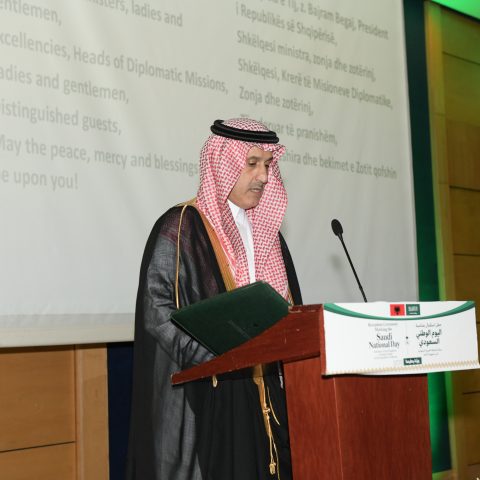
British Ambassador Fiona Mcllwham Speech at European Academy 2010 of the Albanian Institute for International Studies, Tirana, 22nd November 2010