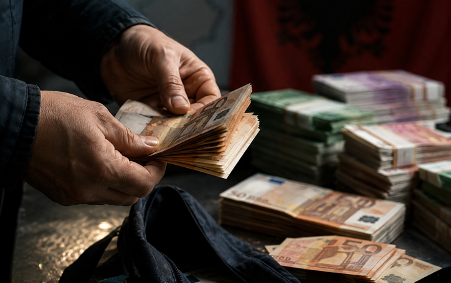
TIRANA, May 2 – The accumulation of new arrears although at slower pace has worried the country’s business community after some €500 million was cleared in 2015 in payments to private sector companies contracted for public works under a two-year deal.
Official data shows central and local government institutions accumulated about €93 million to the private sector, equal to 0.9 percent of the country’s GDP by the end of 2016, but the business community claims the arrears have increased to as much as $250 mln.
Finance ministry data shows central government institutions accumulated about 1.8 billion lek (€13 million) in unpaid bills to the business community and compensation under court decisions, mainly to households over property-related issues.
Meanwhile, local government units are estimated to have accumulated about 11 billion lek (€80 mln) in arrears, equal to about 0.7 percent of the country’s GDP by the end of 2016.
Reporting to the IMF earlier this year after concluding a 3-year binding deal supported by a soft loan, Albanian authorities said the bulk of new arrears was due to unbudgeted commitments for road construction and water infrastructure projects as well as court cases.
However, the Konfindustria business association says government arrears at the end of 2016 reached $250 million equal to about 2 percent of the GDP, posing a threat to businesses and the national economy.
“Konfindustria estimates that the rapid re-accumulation of government arrears to businesses and households are clear signs of the unfavorable situation of the national economy’s fiscal potential and in the meantime reflect issues over the management of public institutions,” says Konfindustria’s administrator Gjergj Buxhuku.
“The high level and the speed in the accumulation of government arrears to third parties will have severe consequences for the business community and the national economy during 2017 at a time when we are facing an electoral year and under conditions of a protracted political crisis,” adds Buxhuku.
The IMF has warned political tensions ahead of next June 18 general elections and potential weakening of growth in the key trading partners Italy and Greece could hinder the implementation of structural reforms to improve business climate and create downside risks for public debt reduction.
By late 2015, the Albanian government cleared unpaid bills of about €500 million to the private sector under a two-year program that is estimated to have strengthened private sector balance sheets, reduced nonperforming loans and supported domestic demand, although credit is still struggling with modest growth rates, mainly thanks to an increase in lending abroad.
The arrears also pose a new threat to government plans to reduce public debt, currently hovering at a staggering 70 percent of the GDP, and efforts to reduce debt to a more affordable level of 60 percent of the GDP by 2020.