TIRANA, Oct. 4 – A huge wave of migrants returning home, lower trade exchanges, investments and remittances are some of the most obvious impacts in the past five years from the economic crisis in neighbouring Greece, the top investor and second most important trade partner for Albania, according to a recent study conducted by The Albanian Centre for Competitiveness and International Trade (ACIT) led by Gentian Elezi. The study has found that around 180,000 Albanian migrants, or 18 to 22 percent of the total Albanian migrants in Greece, have returned home during the past five years, and there are few advisory and information services for investment and job opportunities.
The report warns Greece’s possible Eurozone exit and its return to drachma would further affect Albanian exports to the neighbouring country and remittances from migrants there.
“As the Greek economy continues to remain in recession and the unemployment figures remain above 22%, the Albanian migrants working in Greece that will return to Albania will put under pressure the already fragile health and education system. Albania in the short term cannot increase its social security net or invest in its health system as it is significantly lowering public spending in order to maintain its public debt at less than 60% of GDP. This pressure might create room for a ‘social bomb’ in terms of a high demand for service that is poorly funded,” says the report.
Background
Since 2008, many developments have taken place and the Greek crisis has directly affected the Albanian economy. As expected, the economic situation in Greece would become the main issue and would provide mechanisms of the transmission of effects of the crisis to the Albanian economy. The influence would appear first in the drop of the flow of the exchange of goods and services, in the flux of investments, in remittances and in the possible return of Albanian migrants. The first wave of deposit withdrawals was accompanied by instability and difficulties in managing the liquidity of the banking system, a significant drop in loans for the economy and a significant augmentation of liquidity costs. These are clear signs of the affected economy. The drop of commercial exchange that aggravated the balance of payments (imports dropped by 1.8% during these six months) and the diminishing of transfers in foreign currency (the entries for this year’s tourism season also seem to be far below the expected level) brought a significant destabilization to the exchange rate, considerably affecting the national currency.
While it is widely accepted that under the influence of the Greek economic crisis, the Albanian economy has entered a cycle of slower economic growth, the confusion and debate have focused on details, the examination of which is indispensable for obtaining the real picture of the structural features of the crisis and the correct response to it. Hence, it is not clear whether this slow-down of economic growth will be short-term or longterm; the degree of importance that different mechanisms of transmission have had in introducing the Albanian economy in this negative cycle is unclear. This low level of knowledge makes it difficult to prevent and resolve the different factors and problems, so that the recessive cycle of economy can be slowed or overcome. Apart from the occasional perceptions of the business community, as expressed sometimes in the daily press or in the sporadic research initiatives, there is not yet a genuine analysis on the structural features of the impact of the Greek economic crisis and its consequences.
Economic impact of the crisis in Albania
The sectors of the real economy in Albania have started to reflect the rigidity and further drop in demand, the fluctuation of the exchange rate and the difficulties in financing since 2008. The industrial sector in general and the active processing sector business in particular, commerce and services, mining and refinement of minerals, started to show performance indicators that were dropping and augmented the pressure for protective and supportive measures by the authorities. The year 2009 represented the worst year in terms of economic performance. The difficulties in financing the expenditures and the public investments were caused by public loans with high costs, while the official unemployment rate increased.
a) Remittances
While the total figures for remittances sent to Albania show a consistent decrease in value, there seems to be a reverse trend concerning remittances received from Greece.
According to data obtained from Eurostat in 2010, remittances sent from Albanian workers in Greece to Albania increased to 514 million Euros, a drastic increase compared to 2009. Two main explanations are possible for this increase in the remittances received from Greece. The first explanation is an opinion supported by the government suggesting that Albanian immigrants are returning and investing their money in Albania (Ministry of Finance, 2011).
The other explanation for this increase is the bank crisis in Greece and that the Albanian immigrants are making withdrawals of deposits and sending the money back to Albania, hence the large increase in deposits in Albanian banks during this time. It is likely that this increase is only temporary, given the dire situation in the Greek economy.
It is therefore sensible to suggest that in the coming months and years, remittances from Greece will again significantly drop. Albanians working and living in Greece will find it difficult to find work as the fear of Grexit (Greece leaving the Eurozone) becomes more probable.
b) Capital inflows and direct investments
Albania receives an exceptionally large portion of its FDI from Greece, which has been the main investor over the last 20 years. However, due to the considerable economic crisis in Greece, FDI originating from this country in 2011 was fifteen percentage points less than three years earlier, reaching 27% of the total FDI. In 2006, the share of Greek FDI to Albania was almost double at 53%. It is also important to note that FDI in Albania has diversified to activities where Greek investors do not have firm specific advantages. Greek FDI focuses on telecommunications and financial intermediation where the capital stock has even declined since the foreign takeover. This is due to the fall in Greece’s FDI whereby the share of EU members has declined in the Albanian FDI stock from almost 80% in 2006 to 67% in 2010.
c) Bilateral trade and trade balance
Greece has been one of the major trade partner countries for the last 20 years, surpassed only by Italy.
Since 2008, a continuous decrease of trade flows has occurred between the countries. In
2011, the Albanian trade volume with Greece reached 68,008 million ALL, having decreased by 16.3% from 2010. Exports were valued at 9,788 million ALL, having increased by 12% in 2011. The trade deficit reached 48.453 million ALL, having decreased by 19% mainly due to the converse trend between exports and imports. The imports coverage ratio was 17% and has increased by 4 percentage points (ACIT, 2012). The effects of the crisis are also visible in terms of loss of share on total trade. In 2007 exports to Greece were at 8.2% of total Albanian exports, occupying the second position in the ranking of Albanian exports’ destination. While in 2011, the share had dropped at 4.9% putting Greece at the fourth place in terms of Albanian exporting partners. The same has happened with imports, which went from 15% on total in 2007 to 11% in 2011.
A shift has also occurred in trade components over the last 4 years. In contrast to 5 years ago, exports to Greece are now mainly represented by main metals and have replaced textile products which are now the second most exported product to Greece.
Main findings of the study
ՠIn the last 5 years, between 18 to 22% of Albanian migrants in Greece have returned to Albania (around 180,000 persons).
ՠReturnees are mostly concentrated in south Albania, almost 50% in the districts of Korca, Gjirokastra, Saranda and Fier (60% of those are in rural areas). However, many are seeking accommodation and job opportunities in bigger cities, mainly Tirana and Durres. Around 30% of returnees have worked in the construction sector. They have low level of skills or vocational training. Almost 70% of returnees are male with most of them between the ages of 25 and 45.
ՠIn terms of reintegration challenges, despite considerable efforts from Albanian institutions, there is a lack of information on institutional practices and procedures. Only a small part requires training (22%) or assistance (5%) and there are few advisory and information services for investment and job opportunities.
ՠAlthough total remittances have decreased in the last years, remittances from Greece have increased since 2009 due to Albanians withdrawing their savings from Greek banks. Greek FDI to Albania has decreased significantly in the last 5 years, dropping from 53% of total FDI in 2006 to 27% in 2011. As for trade, Albanian imports from Greece have decreased from 15% in 2007 to 11% in 2011.
Albanian exports to Greece went from 8.2% of total exports in 2007 to 4.9% in 2011, falling to fourth trading-partner from second.
Conclusions: main risk factors from the Greek crisis
This study has attempted to contribute to the public debate on the current impact of the Greek crisis on Albania. The experts’ opinions differ on some specific issues, but as our research and analysis showed, policy makers need to pay particular attention to a number of major factors. After analyzing all the data and discussing and brainstorming the data with experts and economists involved in this issue, ACIT believes that there are three main risks for Albania in the short and medium terms:
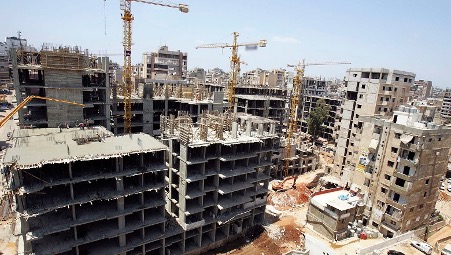
1. The pace of the return of Albanian migrants is one of the worrying factors that need to be monitored carefully. As the Greek economy continues to remain in recession and the unemployment figures remain above 22%, the Albanian migrants working in Greece that will return to Albania will put under pressure the already fragile health and education system. Albania in the short term cannot increase its social security net or invest in its health system as it is significantly lowering public spending in order to maintain its public debt at less than 60% of GDP. This pressure might create room for a ‘social bomb’ in terms of a high demand for service that is poorly funded. In the short term, there might be some positive effects from the returnees, such as stimulating internal demand, especially in the housing sector which is stuck, as well as increased consumption, investments, etc. However, in the medium term, the pressure put on state authorities to offer services might be an important and problematic risk.
2. Many predictions and speculations have been offered that Greece might abandon the Euro, thus re-introducing the Greek currency, the drachma, which would depreciate in value by more than 60%. This would affect Albania directly through two main channels. First, Albanian exports to Greece would become more expensive and thus a significant drop in exports is expected in such a scenario, leading to a deterioration in the balance of trade. Secondly, the situation for Albanian immigrants in Greece would deteriorate and thus lower remittances by at least half the value. The fear of the exit from the common currency could be the cause of the significant increase in the past two years in the number of Albanians working in Greece depositing Euro in Albanian Banks. Apart from the likelihood of the introduction of the drachma, trade with Greece is likely to be affected by the continuing recession in the country. According to ACIT (2012), the imports coverage ratio was 17% and this increased by 4 percentage points. However, the data shows that in contrast to 2010, exports to Greece are mainly represented by main metals replacing textile products which are now the second most exported product to Greece. The fall in exports of textile is likely to impact the inward processing industry which employs about 100,000 workers in Albania. Therefore, the continuation of the crisis in Greece would further endanger the portion of the inward processing sector that is related to Greece and create a number of social costs in the short term. In the medium term, companies usually reallocate their resources and search for new economic partners in other countries, therefore ACIT predicts lower risks.
3. The Bank of Albania and the government of Albania have on many occasions stated that the banking system in the country is well capitalized and is capable of withstanding any risk deriving from Greece or the Eurozone. However, in 2008 at the beginning of the global financial crisis, the Albanian public reacted to the negative news from abroad by withdrawing some amounts of their deposits.
Despite the fact that it was far from triggering a banking panic in the country, these fluctuations in behaviour might have immediate (although little) repercussion on the economic system, in the short term. If Greece exits the Eurozone, Albanian public might behave in the same manner as it did four years ago and therefore create potential difficulties for the banking system in the short term. Although ACIT believes that probabilities of this risk are much lower than the previous two, it is advisable to monitor the situation carefully.