TIRANA, Nov. 16 – A Western Balkan country with a key geographical position, Albania is a geopolitical terrain that could be under various West or East influences, but the EU-aspirant NATO member country has already made clear its future path and has no Plan B to shift to the East, experts said on Thursday at a conference discussing geopolitics in Albania and the wider region.
“Albania is the only country in the region that doesn’t have a plan B,” said Remzi Lani, the head of the Albanian Media Institute at the conference organized by the Albanian Institute for International Studies (AIIS) and the Friedrich Ebert Foundation (FES) in Tirana.
“We don’t have our eyes set on Turkey, Russia or China. For us, it’s Europe only, which makes us a difficult point of influence for Russia,” added Lani.
Exploring the possibility of a new Cold War due to Russia’s perceived influence significantly rising lately following its Crimea annexation, Lani acknowledged that relations between the West and East have reached one of their most critical points, but said it was too early to speak of a Cold War, and “that we now live in a world where it is much more relevant to speak of climate change, human rights, capitalism, etc.”
Moderated by Albert Rakipi, the head of the AIIS, and the FES director in Albania Wulf Lapins, the conference hosted several local and international scholars and experts, who gave presentations on topics such as “Turkey’s interests and influence in the Western Balkans,” “the return of geopolitics in the Balkans” , “energy is a geopolitical tool in Albanian and the Balkans” and “non-Western influences in Albania (China, Russia, Turkey and the Gulf countries).”
Mainly attended by young geopolitics students and experts, the conference offered both European and local points of view on the importance geopolitics take up in the bigger political arena, the influence of the ‘big powers’ in the region now and in the future, as well as the way the public perceives this influence with the help of the media.
AIIS researcher Ledion Krisafi shed light on geopolitics from a different point of view, focusing on energy as the geopolitical tool of Albania and the region.
“Before talking about energy as a geopolitical tool in Albania, we must first look upon Albania’s energy security,” said Krisafi, pointing out that Albania’s hydro-dependent electricity system does not make the country safe.
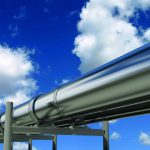
“Despite the licenses that allow the construction of hydro-power plants, Albania’s energy security is not guaranteed on the long run. Seeing how energy dependency can very well mean political dependency such as the case of Ukraine with Russia, the EU needs to make sure that there is diversity in the resources from which the Balkan region receives its energy,” said Krisafi noting the importance of the Trans Adriatic Pipeline, already in its peak construction stage and scheduled to bring first Caspian gas to Albania and Europe by 2020.
Security studies scholar Enri Hide said that China does not see the Balkans in the geopolitical context, but mostly as a geo-economic context, focusing on investments, transportation, science and culture and targeting a rise in economic cooperation by leaving an ‘open back-door’ that will enable China’s inclusion in the Western markets.
According to Hide, Turkey tends to strengthen pre-existing, historic ties in the region.
“Turkey, on the other hand, follows the doctrine of the ‘strategic depth’, in which the importance of each state is related to its geo-strategic position and historic relevance,” said Hide.
The researcher also highlighted the rise in violent extremism and religious radicalism and the strong geopolitical effects they have produced in the Balkans, especially since 2012.
Currently, only Serbia and Montenegro are in the negotiation stage with the European Commission among six Western Balkans countries, most of which have been striving for membership since more than a decade.
The outlook for quick accession is pessimistic considering internal developments in the block with the Brexit, the migrant and financial crises as well as rising populism.
An official EU candidate since mid-2014, Albania has expressed frustration over delays in the launch of accession talks as the European Commission has set the implementation of a justice reform and strengthening rule of law as key criteria.