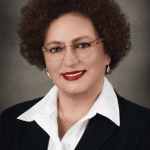
On May 3, the Austrian Embassy organized an International Conference on Interfaith Dialogue with the signature of a joint statement about “Interreligious Dialogue.” Below are some of the remarks at the conference by Johann Sattler, Ambassador of Austria to Tirana.
I wanted to start my speech, with a quote by the Albanian cleric and patriot, Father Gjergj Fishta, who said about 100 years ago: “It’s true we have Eid and Easter, but we all have Albanianess too!” That statement is still expressed today in the mosaic of religious beliefs in Albania. Religious coexistence, harmony and peace in Albania are tremendous values and an excellent example to be followed by both the Eastern and Western countries.
In achieving this standard of coexistence and harmony an extraordinary role was played by simple Albanians, by ordinary members of the various religious communities in the country through their actions and their example. But a very important role was also played by the clergy, by the hierarchy of the communities. So let me express my deep respect and acknowledgement to you and your brethren, to the representatives of the religious communities for your extraordinary contribution to the preservation of this climate of harmony, which – by the way – should not be taken for granted. This exemplary state of good relations needs – like any good human partnership – a steady investment and refining.
I am very grateful to the religious communities represented here who have agreed to our proposal for a joint statement on coexistence, harmony and interreligious dialogue, which gives to this conference an added value and promotes future co-operation and dialogue. Because, if there is one thing which can be improved in the multi-confessional Albania of today, it is more of a regular dialogue.
This conference offers a platform for doing so, for speaking your mind, but also for listening to the suggestions of the other and for exchanging best practice. We as Western and Central Europeans can learn a lot from the experience here in Albania. Let me give you a few examples in the field of religion, which I personally came across over the last two years and which left a deep impression on me:
- First is the way you celebrate your religious feasts (inviting each other on Christmas, Easter, Kurban Bajram, Sulltan Newroz, and exchanging visits from other communities on these occasions).
- Second example: I was impressed when father Mirazh from the Franciscans order showed me around the most important pilgrimage site in Albania: Shnan Ndou (Saint Antony) in Laৠ– run by the Franciscans, visited by 2 ml. visitors (with a majority of Muslims/Bektashi visitors).
The pilgrimage mountain of Tomorri is also another example, which is massively visited in August by 300.000+ visitors, not only Bektashi, but also from other religious groups (Thanks for hospitality Baba Mondi).
- Third: language is a good indicator of societal conditions. So representatives of different religioius communities not only celebrate together, they even combine their religious beliefs through language, adding to the most important Christian feast (Easter) a Muslim wish (inshallah) – Gezuar Pashket inshallah.
Let me give a final beautiful example of religious harmony and diversity – from my own biotope so to say, my own team at the Austrian Embassy: apart from the Austrian employees I have 10 Albanian employees – and within these 10 people you have the whole mosaic of diversity of religions in Albania. I have devoted Muslims, active Orthodox, faithful Catholics, traditional Bektashis, and a also a theologian Protestant. This mosaic of faith can be found in the society as a whole, in small communities and sometimes even in families.
Albania on the other hand can also learn from our experience. Let me give you a few examples:
- First – from our long Austrian tradition of dialogue (the first tolerance decree called “patents of tolerance” came out in the early year 1781/82 from the emperor Joseph II, which was the first step in constitutionalizing the platform of religious communication and coexistence. The real interreligious dialogue started from the time when Islam was recognized officially in 1912.
- Second example: the Austrian religious education – the religious communities receive religions education for their pupils in their own confession and the teachers are paid by the State – expenditures of approximately 100 mln € per year by the Austrian state.
Our joint conference is organized in the framework of the Austrian-Albanian Cultural Year 2018. Our slogan for this year is – te rizbulojme te perbashketat – ‘Lets rediscover what unites us’, and religious co-existence and harmony is definitely a topic which unites us. But 2018 is also important in other ways: Albanians throughout the world celebrate their national hero Skanderbeg, a larger than life figure, whose contributions to creating an Albanian spirit cannot be overestimated. And lastly, 2018, will be important also on Albania’s European path with a hopefully positive decision about opening accession negotiations with the European Union. Not only do I believe that this step is deserved, I am also convinced that Albania will contribute positively to the European family, not least through the example of interreligious harmony, especially between Muslims and Christians.
We are happy to have here among us some of the best theologians and experts in their fields, from Albania, Austria, Italy, Greece and Turkey. I would like to thank my Ministry in Vienna for supporting this conference. A big thanks goes to the Albanian Minister of Culture. Thanks Mirela for being here: your presence gives this conference another dimension and shows that for a well-functioning society, it is very important to have a certain separation of state and religion