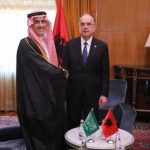
TIRANA, Jan. 29 – Bulgarian Prime Minister Sergei Stanishev visited Albania Sunday-Monday to meet with all top officials basically discussing on the power crisis, Kosovo and assistance to Albania on its integration toward integration into the European Union and NATO. Stanishev met Sunday with opposition Socialist leader Edi Rama and then on Monday with Prime Minister Sali Berisha, President Alfred Moisiu and parliament Speaker Jozefina Topalli. During all the meetings Stanishev and Albanian leaders considered ties between the two countries as excellent with no problems at all.
Deals signed
Albania and Bulgaria signed three agreements during Stanishev’s visit. They served to complete the legal infrastructure in the relations between the two countries. The first agreement was on rescheduling an Albania’s debt to Bulgaria. The other deal was on the joint fight in the war against terrorism, organized crime, illegal trafficking and other criminal acts. While the third agreement was between the education ministries of both countries.
Power crisis
Albania and Bulgaria joined forces Monday to appeal to the European Union for help in trying to resolve a regional energy crisis made worse by the partial shutdown last month of a nuclear power plant in Bulgaria. At the request of the EU, which Bulgaria joined on Jan. 1, two 440 megawatt units at the Kozlodui plant, Bulgaria’s only nuclear energy facility, were shut down in December. Two newer, 1,000 megawatt units remain in operation. The EU said the older units needed to be shut down because of safety concerns. The shutdown also affected Bulgarian power supplies to neighboring Albania, which has been suffering extensive blackouts for two months in part because reduced rainfall has lowered the output at hydroelectric facilities. Former KESH head Andis Harasani said, however, that Albania had not imported electricity from Bulgaria since 2003. Bulgaria had been supplying between 50 percent and 100 percent of the electricity deficit that resulted from the power troubles in Albania, but is no longer to make the extra shipments.
During a visit here, Bulgarian Prime Minister Sergei Stanishev said the region’s governments should work together to inform the EU of the consequences of the plant’s partial shutdown. “We cannot help Albania at this moment because Bulgaria could only export electricity with the two blocks of the power plant if they were active,” said visiting Bulgarian Prime Minister Sergei Stanishev at a news conference with his Albanian host Sali Berisha. “The countries of the region should inform the EU on practical economic consequences the shutdown caused on their countries and work to take the proper measures,” he said. “We appeal to the European Commission and the EU to reconsider such a Bulgaria’s commitment which damages more the regional energy market than Bulgaria itself as it lifted a great amount of energy to this market,” said Berisha, adding that, “I should also say that such a technology is still operative in the EU area. Albanian Prime Minister Sali Berisha, who spoke to reporters alongside his Bulgarian counterpart, said the shutdown had damaged the region’s energy market. He appealed to the EU for help and suggested the 27-nation bloc, of whom Albania is not a member, was treating the region with double standards, saying that similar technology was still in use in the EU. The two leaders pledged to support efforts by local businessmen to invest in Albania’s energy, infrastructure and tourism sectors.
AMBO project
AMBO oil pipeline project was another topic of discussion. Both countries are the entrance and the end point of the 913 kilometer long pipeline that is expected to bring some 45 million oil barrels a year and bringing considerable financial profit to each of them. While Berisha strongly hailed the pipeline as part of the Corridor 8 big project, Stanishev was more careful. Though he said that his country strongly supported the project he also added that it very much depended on the fact if the corporation would secure enough oil to pass through the pipeline. A draft agreement was signed Wednesday by the three countries, Macedonia included, that set the end of 20087 as the starting point and 2010 as the end of the project.
Kosova
Both leaders considered ties between the two countries as excellent with no problems at all. On Kosova two premiers also said they shared the same opinion, naturally Albania stressing more the importance of granting independence to the province. They both said they supported U.N. envoy Martti Ahtisaari and his plan. “We appreciate the constructive role which Albania has played in order to calm down the impatience in Kosovo because it is important that the issue be resolved in conformity and bring stability not only in Kosovo but in the whole region,” said Stanishev.