Tirana Times
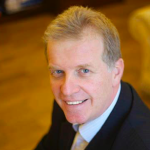
Tirana, March 29 – Sitting in his newly established office, Dr. Dieter Klein doesn’t look as though he’s only just arrived in Albania. Though in reality he has been in the country for just a few months, Dr. Klein is already expertly balancing the pressures of a full waiting room, bustling office aids and nurses, and the added distraction of my visit which I insisted on after a brief yet fascinating discussion when our paths crossed at Tirana’s airport.
“Every day is like this,” he remarks as he closes his personal office doors and sits down. “When I came I knew that there was a need for my specialization, but I didn’t realize it would show itself so quickly and to such an extent.”
The specialization to which he refers is the diagnosis and treatment of glaucoma, an eye condition that damages the optic nerve. As Dr. Klein discussed, monitoring and treating this condition is especially critical because it often has no symptoms, and if left untreated for a few years, blindness can occurءt which point the damage has become severe.
When asked how he chose to add his specialization to Albania, Dr. Klein explained:
“A friend of mine is a specialist in the eye complications of diabetes. While my expertise is in glaucoma, his is in surgical treatment of cataracts. A few years ago he decided to uproot his U.S. base and begin traveling to provide low-cost, high quality service to natives of countries in the developing world. This got me thinking.”
“Whenever we would get together he would tell stories of restoring sight to villagers who had previously had no idea what plagued them and that there was even a cure for it. The work was difficult, the profit small, but he never regretted the work he did in medically needy places like the Caribbean, Madagascar, and Africa.”
Tracing this story to his own, Dr. Klein notes that while Albania is not comparable to the countries his friend aided, it was one that stood out to him as an important destination.
“My son has been specializing in Balkan studies at George Washington University for many years now, and naturally this has raised my awareness of the country. From a medical perspective it was also fascinating to me. Before coming, I already knew a friend who works at the American hospital here, and she described how despite the fact that the country has experienced remarkable improvement over the years, it is also a place where the average citizen still lacks important medical information and care. This encouraged me to think that I could actually make a larger net impact.”
In addition to this, Dr. Klein explained that his decision to bring his family with him on his latest endeavor was a major factor in choosing to relocate in Albania. Not only did he want to provide services that would benefit a country and its people in the process of development, but he hoped to find one which was stable enough for his wife and five children.
“It’s not easy to find a place where I can make a difference and also feel comfortable bringing my family. Many places rest too extremely on one side of the spectrum. One may be in great need but not stable enough to bring my children, while others may be secure but also already saturated with excellent medical personnel. Albania is one of the few places where I can make a greater difference and still maintain my family,” he added.
Since coming to the Balkan country Dr. Klein has no regrets. Though securing the necessary permission and licensing to begin his operations was time-consuming, he has had an endless stream of clients ever since. Not all of them may actually end up having glaucoma, but those who don’t have the condition at least are able to receive some advice regarding their possible problem and are advised as to which other doctors best could assist them.
“My goal here is not to accumulate personal fortune or a mass service office. I only take on cases I know I can help. The others who do not fall into my field, I at least advise and am happy to show them the way to others who can assist their condition,” Dr. Klein explains.
“I have noticed and heard from other doctors here that there is a general lack of ‘health culture’ in Albania. By that I mean that there is not a general trend of patients conducting annual physicals and check-ups like people would in other countries. Unless they have an obvious problem or symptoms, people generally don’t think of visiting the doctor. The result is that the focus lies on prescriptive rather than preventative medicine, and it poses huge problems for conditions that do not necessarily exhibit symptoms, like glaucoma. It is also a lose-lose situation for the patient, because not only is he or she faced with a problem by the time a doctor’s visit is made, but that problem is more expensive than it would have been if treated earlier.”
Lying beneath the general ambivalence to regular health care, Dr. Klein cites his concern for a general overlooking of the individual wellbeing of citizens. Though choosing to visit the doctor or not is a personal decision, he contends that the government should pursue public awareness campaigns that can positively influence such individual decisions. Instead, however, as has been observed by his fellow doctors and even himself during the last few months, Dr. Klein believes the focus on political reform has been overly consuming and edged out other issues in need of attention.
“I understand that politics is a very important matter and that it deserves great attention. However, Albania needs more than political healing. It is the health and wellbeing of its citizens that must also remain a priority. After all, corruption, democracy, and the other issues consistently in the media spotlight are inherently tied to this. Is democracy not meant to be a means of serving its people? Is corruption not the materialization of an ambivalence toward social responsibility? These two aspects are seen as political ends for the elite, but they should be the means to ultimately healing and providing for a society in great need.”