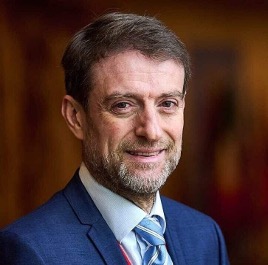
TIRANA, Oct. 3 – Albania successfully tapped international markets to raise €500 million in its third ever Eurobond at an interest rate of 3.55 percent, down 2.2 percent compared to three years, in an issue which the Prime Minister described as a sign of confidence in Albania’s economy, but the opposition slammed as more costly compared to Albania’s regional competitors and going to cover luxury expenditure.
Albania’s new Eurobond is a 7-year €500 million issue which also includes €200 million in a buyback from the previous €450 million in a five-year Eurobond that was due to mature by November 2020.
“The markets responded clearly. Four years ago, Albania paid 5.75 percent for its 5-year Eurobond to reward those who invested in this country. Today we are paying 3.5 percent for a 7-year Eurobond. The difference is that Albania is no longer seen as risky, but as a safe and promising investment thanks to the transforming reforms, but there’s still a lot to do,” Prime Minister Edi Rama commented on social media.
The government says the Eurobond and buyback operation will meet financing needs for the next couple of years and could save taxpayers money by reducing refinancing risk in 2020 when borrowing needs are estimated at €700 million.
Due to higher public debt levels compared to regional Western Balkan countries, Albania’s Eurobond interest rate was slightly higher compared to neighbouring countries tapping international markets in 2018.
Earlier this year, Macedonia borrowed €500 million in a 7-year Eurobond at an interest rate of 2.75 percent while Montenegro raised €500 million at a 3.37 percent rate.
This year’s market conditions were much more favorable compared to the 2015 issue as the European Central Bank continues to keep its key rates at a historic low of zero while Europe’s single currency currently trades at a 10-year low against the Albanian lek, making external debt repayments much cheaper for the Albanian government.
However, both U.S.-based Standard and Poor’s and Moody’s, two of the ‘big three’ rating agencies, continue to rate Albania B+ and B1, with a stable outlook, in a rate that remains the same compared to 2015 Eurobond issue due to public debt levels lingering at about 70 percent of the GDP, a high level for Albania’s stage of development.
Opposition Democratic Party MP Jorida Tabaku said taking out new debt to pay off old debts and borrowing to pay for the luxury spending in the past four years and at a higher rate compared to Montenegro and Macedonia cannot be considered an achievement.
“With a hidden debt because of the public private partnerships that take it to 82 percent of the GDP and an economy handcuffed by monopolies, the future of Albanians, who according to INSTAT, live on 600 lek (€5) a day is grim,” wrote Tabaku.
The last time Albania addressed international markets was in late 2015 when it managed to secure €450 million in a five-year Eurobond at a coupon rate of 5.75 percent, down from 7.5 percent in its inaugural €300 million Eurobond in 2010.
Albania picked Citi, an American multinational investment bank and financial services corporation, Banca IMI, a subsidiary of Italy’s Intesa Sanpaolo specialized in investment banking and capital markets and French lender Societe Generale as joint lead managers for Albania’s third Eurobond.