Government says Albania’s trade exchanges with CEFTA member countries have increased to 10 percent of the total, up from only 2.4 percent before the liberalization process in 2007
TIRANA, Feb. 20 – Albania has taken over the presidency of CEFTA for 2012 in a bid aimed at further increasing trade exchanges among the eight member countries of the Central European Free Trade Agreement in force since Dec. 2006.
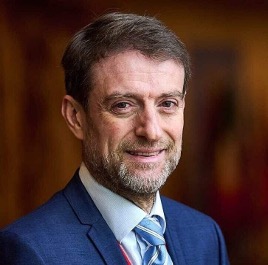
Unveiling the priorities, Albania’s Economy Minister Nasip Naco said Albania’s CEFTA chairmanship for 2012 will focus on agriculture, customs and rules of origin, non-tariff and technical barriers to trade, liberalization of trade in services, state aid, investments and capacity building.
“The Albanian presidency coincides with a sensitive moment for all our economies. The unfolding of the crisis sees difficulties not only in EU countries but in the region also. I believe that we need to explore new areas for cooperation and create conditions for more investments while increasing the competitiveness of our economies,” says minister Naco, adding the government is willing to duly address issues that might arise during the program implementation.
“The past experience gives us testimonies that we can successfully cope with any economic and trade issues and find solutions acceptable to all CEFTA Parties.”
Government says Albania’s trade exchanges with CEFTA member countries have increased to 10 percent of the total, up from only 2.4 percent before the liberalization process in 2007.
The full liberalization of trade in agricultural with all EFTA countries has had positive impacts with their exports during the first 9 months of 2011 reported at 30 percent higher than the whole of 2010.
As of 1 May 2007, the parties of the CEFTA agreement are: Albania, Bosnia and Herzegovina, Croatia, FYROM, Moldova, Montenegro, Serbia and UNMIK on behalf of Kosovo.
Albania also has free trade agreements with Turkey and the European Free Trade Association (EFTA) member states Iceland, Liechtenstein, Norway, and Switzerland.
Barriers to trade in services in the CEFTA region
Albania is one of the three Central European Free Trade Agreement (CEFTA) countries where the services sectors stagnated during the past few years. The findings are revealed in a World Bank report called “Barriers to trade in services in the CEFTA region” covering the 2007-2009 period.
“In most countries, the service sectors have been growing above the average economic growth rate. Exceptions are Albania, Kosovo, and Montenegro, where the share of services, though high, has been flat,” says the report.
While the shares of services in the Albanian economy represent around 74 percent of the gross value added (GVA), the top four sectors are led by trade including hotels and restaurants, followed by construction, transport and post and telecommunications. Their share in the Albanian economy from 2007 to 2009 remained unchanged only for trade at 22.2 percent and slightly improved by 0.1 percent to 4.6 percent for the post and telecommunications sector.
The rates for the construction and transport sectors decelerated to 14.8 percent of the GDP and 5.6 percent of the GDP respectively, down from 15.5 percent and 5.7 percent in 2007.
The study shows that in 2009 when the global economic crisis broke out exports of goods dropped by 18.1 percent while services exports slightly rose by 1.8 percent.
Albania’s service exports during 2007-2009 are estimated at an average of 1.6 billion euros, with tourism accounting for more than 70 percent. Transportation and communications services rank second and third with 146 million euros and 81 million euros, respectively.
“Travel (tourism receipts) is the major source of inflows for countries on the Adriatic coast, accounting for about 70 percent of total service exports for Albania, Croatia, and Montenegro, and 50 percent for BiH.”
As far as arbitration of commercial disputes is concerned, the strength of laws index in Albania is at 84, worse only compared to Serbia (95), Croatia (93) and Macedonia (93).
In the ease of obtaining construction permits, Albania has the most complicated procedures among the seven countries covered in the report. In Albania, the number of procedures needed to obtain a construction permit is 24, while time needed 331 days. However, the cost of income per capita to obtain a permit is the lowest in the CEFTA region at 381 percent.
Albania’s trade exchanges with CEFTA countries account for only a minor share of the total as around 70 percent of the country’s exports and imports are carried out with European Union, with Italy and Greece as the top trade partners.