About 3.3 million Albanian registered voters will be eligible to cast their ballots to elect 140 new lawmakers for a four-year mandate
TIRANA, June 20 – Albania holds national elections on Sunday, when governing Democratic Party’s Prime Minister Sali Berisha seeks a third mandate competing with main opposition Socialist Party leader Edi Rama.
In addition to being a personal battle between the two leaders, the parliamentary elections will be a test for the country’s democratic standards and its efforts and progress toward membership into the European Union.
Albania, a NATO member since 2009, has also applied for the EU membership, but it has failed to obtain candidate status in the past three years due to a political deadlock inside the country and failure to meet benchmarks required by the bloc. Sunday’s elections are widely seen as test whether post-communist Albania is capable of holding elections in line with international, European and NATO standards.
“We continue to monitor closely the preparations of the elections stressing the need to hold them in line with international and European standards,” EU Enlargement Commissioner Stefan Fule and Catherine Ashton, the EU’s high representative for foreign affairs, said in a joint earlier this week.
About 3.3 million Albanian registered voters will be eligible to cast their ballots and elect 140 new lawmakers for a four-year mandate. The ballots cast in more than 4,000 voting centers will be counted in 89 zone commissions.
While 66 political parties are participating, most are divided into two main coalitions. Only four political parties and two independent candidates are competing by themselves.
Despite the huge number of parties in the elections of this tiny country, Albanians are primarily faced with the choice to give a third mandate to Berisha, who leads a center-right coalition, or to find a new prime minister in Rama and vote for his leftist Coalition for a European Albania, which includes Ilir Meta’s Socialist Movement for Integration.
Berisha, 69, a former cardiologist turned professional politician, is the most dominant political figure in Albania since the fall of communism, having served as prime minister four eight years and as president for another five in the 1990s.
Rama, 48, an artist who served three terms as mayor of Tirana, has been leading the Socialist party for more than seven years.
No chief executive has been able to be elected three times in row in Albania since the fall of communism, and polls indicate the leftist location has a slight lead of the the prime minister’s grouping.
Campaign generally calm
Berisha and Rama have been crisscrossing the country in an electoral campaign was generally calm by Albanian standards, with some incidents in a few places, including a couple of serious ones involving injures.
The campaign was held in a variety of formats – ranging from rallies to town-hall-style meetings. Rallies took place across the country. Observers have noted the governing authorities applied different forms of pressure on public employees to go to ruling coalition rallies.
Social networks also played a key role for the first time. There have been scores of addresses that Berisha, Rama and their close associates and supporters have launched. It is yet to be seen and evaluated how much this new format will have its impact on the voting.
The main policy difference is taxation reforms. The Democrats say the key to their success has been the implementation of a flat tax. “We have imposed the flat tax, which is the most honest tax this country has ever seen. With this tax, everyone pays only 10 percent of what is earned,” Berisha said at a recent rally.
The Socialists’ main policy proposal is the return to a progressive tax for personal income. They say that 95 percent of the population will profit from the move.
“Whoever lives on a salary should not think party affiliation, but should vote the Socialist Party to remove the flat tax,” Rama said at a recent rally. “Those who make less will pay less in taxes.”
The campaign closing rallies take place Friday, as Saturday is left for reflection and campaign silence, based on Albanian laws and tradition.
The governing Democrats have the upper hand in location and timing, and they are scheduled to hold the traditional campaign-ending rally at the Mother Teresa Square in Tirana at 8 p.m. Friday.
The opposition Socialists are trying a new format, and they will hold three similar rallies in three main centers in the country.
All parties in Albania want the country to join the European Union, and the elections need to get local and international approval as free and fair as a key indicator in boosting Albania’s EU bid.
Dysfunctional CEC concerns observers
As of press time, the setting to hold elections according to the best international standards is not ideal, however: The elections’ governing body, Central Election Commission or CEC, has been operating with only four members since April 15, after the parliament fired one of the members affiliated with the Socialist Movement for Integration, a party that left the governing coalition to join the opposition ahead of the polls. The seat was then filled with the governing coalition nominee.
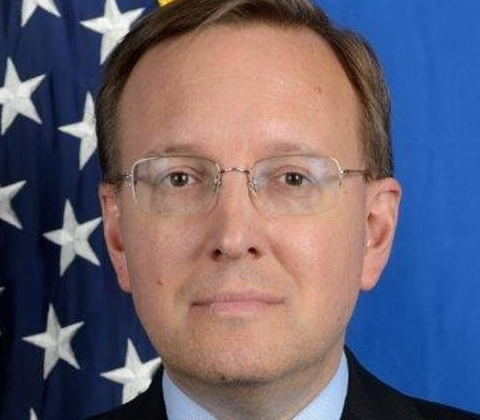
Independent observers, like former U.S. Ambassador to Tirana John Withers, say the move was based on very flimsy legal arguments and the vote of the governing lawmakers was not in the spirit of the country’s laws and the constitution.
“What happened with the Central Election Commission can be called an administrative coup. It was against the law, the electoral code, and it was beyond the responsibilities of the parliament to do this,” Withers, who is now retired, said in recent interview with VOA.
The opposition deemed the move illegal, and, in response, three other CEC members affiliated with the opposition Socialists quit their seats. The commission has been operating with only four members since, but many decisions – including election certification נneed a majority of at least five members.
Despite several efforts by international representatives to make the two sides reach a compromise, they have stuck to their positions.
The governing Democrats said they were open to having the empty places filled and could hold an extraordinary parliamentary session. The opposition Socialists asked for a total reshuffle of the CEC, which was turned down by the Democrats.
Meanwhile the CEC has been operating with four members and only observers from the opposition, who have taken matters to the Electoral College court when they have seen things they disagree with.
Two decisions taken by CEC have been turned down by the Electoral College, a group of judges and the highest legal body deciding on election matters. Some analysts also argue that the zonal electoral commissions may certify the results for each zone. But protects seem uneasy should a solution not be found.
Alfred Moisiu, the country’s former president who now heads a civil society foundation, says it wouldn’t be legal for the Electoral College to certify elections.
“That’s not the role of that body,” he told a local television station in an interview. “The CEC should be in charge.”
It is a feeling echoed by Skye Christensen, an international observer of Albanian politics who wrote a recent analysis about the CEC situation in Albania.
“What makes this curious situation even more surprising is that the opposition SP seems to have nothing to gain by their boycotting of the commission. Many observers predict that the SP-led coalition will take the majority of seats and form the next government, and thus would want the legitimacy of a clean process rather than the contested legal quagmire that is likely to result if the commission remains unfilled,” he writes. “The SP has also left the governing party in charge of critical decisions in the electoral process with the possibility of affecting the counting. Either the observers or the SP are misreading that party’s support, or more likely the SP didn’t understand the ramifications of their boycott until it was too late to turn back without losing face.”
Christensen and others have mentioned that an 11th-hour deal might be reached but there is still no sign of that as of press time on Thursday night, despite repeated calls by international community representatives.
“It is never too late to guarantee a complete Central Election Commission. This relates to the trust voters place in the process, such as the role of the parties and leaders who need to ensure two things: a process that the Albanians can trust and to guarantee that the politicians will accept the result,” EU Ambassador Ettore Sequi said Wednesday, following a meeting with the CEC chair.