TIRANA, Nov. 21 – Albania’s exports are on track to register double-digit growth rates this year following sluggish performance affected by a slump in commodity prices in the past couple of years.
Data published by state statistical institute, INSTAT, shows Albania’s exports grew by an annual 13.4 percent in the first ten months of this year but were not fuelled by the pickup in commodity prices as a considerable amount of domestically produced crude oil by the now China-owned Bankers Petroleum is being sold to a local refiner and destined for domestic use which has cut fuel imports by a quarter during this year.
The indicator hints Albania’s exports, heavily reliant on garment and footwear accounting for 43 percent of total exports and “minerals, fuel and electricity” for 16 percent, down from 40 percent ahead of the mid-2014 slump in oil prices, are slowly moving to becoming more diversified as they now account for 61 percent of total exports compared to about 68 percent in 2013 when oil topped Albania’s exports.
Albania’s exports heavily rely on garment and footwear manufacturing as well as oil and base metals whose share in the country’s exports is estimated at two-thirds, making them vulnerable to international headwinds.
The country’s exports registered modest growth of 0.1 percent in 2016 following a 5 percent oil-price affected decline in 2015.
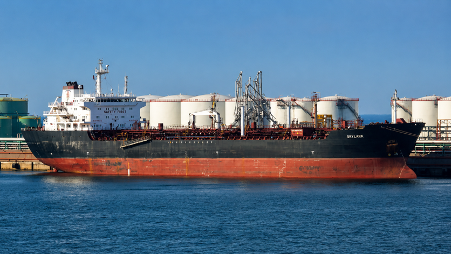
Brent oil prices have currently risen to a 2-year high of above $60 a barrel, up from a 12-year low of $30 a barrel in early 2016, but yet stand at almost half of the peak level of more than $110 in mid-2014 just before the slump. The hike has had a positive impact on Albania’s oil industry whose exports have halved since the mid-2014 slump in international oil prices.
Albania’s double-digit growth in the first ten months of this year was fuelled by a sharp 40 percent hike in exports of construction materials and metals, apparently triggered by the resumption of production by the country’s largest steelmaker.
Turkish-run Kurum steel plant, which in early 2016 initiated bankruptcy proceedings, has resumed operations this year following a loan restructuring deal with its creditors. Kurum has been operating in Albania for about two decades mainly in steel production through its plant in Elbsan, central Albania, but also manages a container terminal concession in the country’s biggest port of Durres and owns four small and medium-sized hydropower plants which it purchased in 2013. Its debts to international and local creditors are estimated at more than €200 million.
At 36 billion lek (€267 million) in January-October 2017, exports of construction materials and metals were almost on par with exports of “minerals, fuel and electricity” which this year remain almost unchanged due to one of the driest summers on record almost paralyzing the country’s domestic hydro-dependent electricity generation and no significant increases in oil exports due to domestic sales.
The garment and footwear sectors, Albania’s traditionally top exporting industry in the past two decades, is also performing well this year, with its exports rising by about 10 percent to 98 billion lek (€724 mln) in January-October 2017.
Employing about 100,000 people and relying on cheap labor costs, the sector is largely dependent on demand from top trading partner Italy and remains mostly involved in cut-make-trim production with few companies having created their own in-house brands.
Exports of “food, beverages and tobacco” and “machinery, equipment and spare parts” also registered significant double-digit hikes in the first ten months of this year, but yet accounting for only 16 percent of total exports.
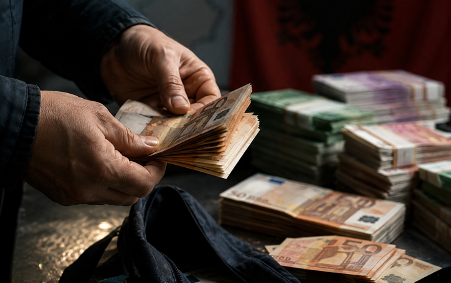
The significant export growth comes at a time when the national currency has hit an 8-year high against Europe’s single currency with a negative impact on the country’s exports whose two-thirds are destined for Eurozone countries making them vulnerable to Euro fluctuations.
The Euro currently trades at 133.61 lek in levels not recorded since August 2009, depreciating by about 5 percent compared to the average exchange rate of 140 lek for about five years until mid-2015.
Trade gap widens
Imports in the first ten months of this year also grew by a significant 7.7 percent, widening the trade gap for a net importer such as Albania where exports account for only about half of total imports.
Fuelled by about €100 million in costly electricity imports due to prolonged drought paralyzing domestic electricity generation and rising imports of “machinery, equipment and spare parts” thanks to some large energy-related investment such as the Trans Adriatic Pipeline, Albania’s trade gap widened by an annual 3.5 percent to 285 billion lek (€2.1 billion) in the first ten months of this year.
Imports of “machinery, equipment and spare parts,” an indicator of domestic investment and the country’s top imports, grew by an annual 3.2 percent to about 108 billion lek (€802 million), mainly thanks to pipe imports for the major Trans Adriatic Pipeline project bringing Caspian gas to Europe, already in its peak construction stage in its Albania section.
Italy, Greece, Germany and China were Albania’s main trading partners in the first ten months with Italy alone accounting for about 36 percent of Albania’s trade exchanges, making the Balkan country heavily reliant on developments in Italy where the economy has been slowly progressing to 1 percent growth rates after overcoming its recession.
Recessions in Italy and Greece, Albania’s top trading partners and the hosts of about 1 million migrants, had a huge impact on the Albanian economy in terms of trade exchanges, remittances, and foreign investment flows for several consecutive years following the 2008 global financial crisis.