TIRANA, May 2 – A British analyst said Monday evening that Kosova’s status is still unclear as Russia has the power to block Ahtisaari’s plan at the U.N. Security Council.
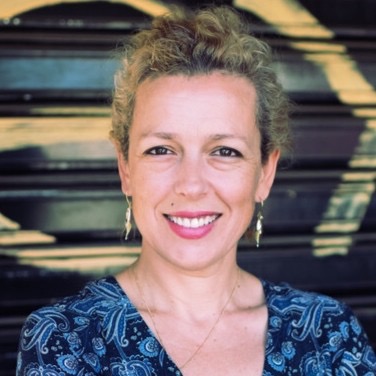
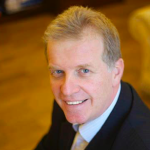
Speaking at Top Channel’s Shqip show, British analyst Tim Judah said that both sides, Belgrade and Prishtina, understand each other quite well but they have diametrically opposing stands. “These months will be decisive, probably the most decisive since the 1999 bombings. We do not know what is to happen and how much that will influence their relations,” said Judah, who has been following Balkan developments since 1990.
Judah said that a rational debate, devoid of emotions, was needed to determine what is best for Kosova’s and the region’s future.
Judah acknowledged that Kosova has been of special importance in Serb history and feelings, but he was not that sure whether there were other political reasons to exploit that historical link.
Judah said he has been optimistic that Kosova’s independence would be achieved soon, by the end of last year or early this year. “It resembles when you climb a mountain. When you think you have reached the top you see there is another peak,” he said.
At the moment Kosova’s future is being played abroad by the big powers, at the United Nations. “But the real debate on Kosova is being held between the U.S., Russia, the permanent Security Council members and other non-permanent members who have some influence or a Security Council vote.
“Russians have Ņ the power to block Ahtisaari plan and not let it pass the Security Council,” he said.
Judah said that Russians play a very important role in determining a peaceful transition of events in Kosava, but the analyst also said that Russians could not prevent independence.
Judah further stated that if there was no resolution at the Security Council, or if there was a resolution that could be vetoed, Kosova would declare independence and then the U.S. and other countries would recognize it. “But that would create a very unstable situation,” he said, adding it was almost impossible to imagine there would be future U.N. missions to the region.
In that case, noted Judah, it was very probable to have violence, conflict and lack of stability in the region and in that respect, “Russians were a key factor and they have a card to play.”
On the other side, Judah said Washington was very interested in closing this violent chapter in the Balkans and resolving the Kosova issue.
Judah said, however, he could not set a date for Kosova’s independence. “The situation is unclear and this is a very critical moment,” he said.
If Washington or London agreed to recognize an independent Kosova, while other countries in the European Union did not, that would result in nothing and delay decisions, he said. “That would be a very unclear situation and I do not know how to respond.”
At the moment there is little leverage in the hands of the Kosova leaders but everything is in the hands of Russian and western powers at the Security Council, as well as other EU countries. “What they have to do is to be responsible and moreover not to have violence. Violence would be a tool for Serbs and Russians.”
Tirana has a very limited role in this international arena, he said. Judah added that a Greater Albania is not possible and there is no political support for that. It would be irrational to think that the moment Kosova became independent Albanian leaders start to lose what they waited for so long by looking to become a bigger country.
An independent Kosova has many question marks and will need a lot of answers. It very much depends on what form of independence will be created, how much territory will be under their governance, whether they will operate in the north, whether Serb enclaves continue to exist and how they will be governed, and will independence be accompanied with violence?
“All these will define the form of governing, and whether there is going to be a non-direct interference from Serbia. In that case the form of government would be very difficult compared to a governing that comes from a U.N. resolution based upon Ahtisaari’s plan and an EU mission covering security and justice,” said Judah, adding that may be accompanied with an International Civil Office, a high representative office of the international community with a general counsel or governor like that of Bosnia.
“There is nothing known of what may happen and whoever claims to know that for sure is lying,” said Judah.