By Alba ȥla
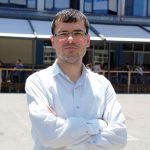
Tirana welcomed on Monday this week a delegation led by Fidel Sendagorta – Ambassador at large, Coordinator for the Barcelona Process and the Mediterranean Affairs at the Spanish Foreign Ministry and including Senen Florensa- Director of the European Institute for the Mediterranean who participated in a seminar on the EuroMed partnership/ Barcelona Process hosted by the Spanish Embassy in Albania. Mr. Sendagorta in his fist visit to Albania talked to Tirana Times about Albania’s progress towards integration and the importance of the Barcelona process towards this goal.
The core of the Barcelona process
“EuroMed is the only political forum where Arabs and Israelis sit side by side, with other countries like Turkey and others. Trade, environment, education, energy, cultural exchanges, gender issues and youth are some of the main issues in the agenda of this collaboration forum and are the main topics around which the participating countries interests converge. The headquarters are in Alexandria, Egypt. “We are trying to build bridges in a complex region but we feel that even if problems will prevent us form going more quickly, we are still building something solid that is extending to many sectors.”
The European Neighborhood Policy complements nicely the bilateral dimension of the Barcelona process while the regional dimension is still very much left at the hands of the EuroMed, he explains. “ENP allows every bilateral dimension of collaboration to be adapted to the needs of every country, creating thus a menu of a la carte options of collaborations instead of a fixed menu,” he concludes.
Delicate balances
The Middle East conflict prevents the forum from being build as a more solid political consultation process but it is also true that the EuroMed partnership is a confidence measure in itself.” Indeed being in the same table with Syria, Lebanon and Israel should not be easy. Spain has been the traditional “the Mediterranean dimension has been a key part of our foreign policy. When we joined the EU we brought this emphasis to Brussels and we urged the union to look more into its south. We became the host of the very first Euro-Mediterranean conference in Barcelona in 1995 and we feel the responsibility to keep this partnership alive and renew it in order to make it more efficient towards the aims for which it was created.
Albania’s relative position
Prior to this seminar it is my impression that the EuroMed partnership was not very well-known in Albania and only now the government is starting to get interested, although NATO and EU integration are on top of the priorities,” explains Mr. Sendagorta. The Ministerial Conference meeting next month in Lisbon will have a chance to review Albania’s application to the EuroMed, hopefully extend an invitation of acceptance to the forum. For this decision to be taken the consensus of all members is needed. ” we are confident that we can reach this consensus though we are not there yet,” Sendagorta explains. Albania has a lot to gain in “making friends, allies and having its voice heard in a forum where all EU members are also participants.” This is an occasion to get knowledge, network and facilitate integration thought his forum is essentially independent from the integration developments. “It will help Albania to be more active in international issues, in those areas where it can make a contribution.”
A Mediterranean Union?
“I want to reach out to all of the people of the Mediterranean to tell them that it’s all unfolding in the Mediterranean. That we must overcome all the hatred and leave in its place the great dream of peace and the great dream of civilization. I want to tell them that the time has come to build at its center a Mediterranean Union, that will link Europe and Africa. “What was done for Europe 60 years ago, we will do today for a Mediterranean Union”. – Nicholas Sarkozy, Presidency Acceptance Speech
Asked weather he sees the proposed Mediterranean union as a rival to the Barcelona process, Mr. Sendagorta opposes, saying instead that he has welcomed the decision of France to “be back to the Mediterranean with a lot of energy, consecrate time and political will to a region that we feel is as important for them as it is for us.” He also adds that their initiative is still to be seen after the Summit that France wants to organize in June and that it should build upon what has been achieved so far because “there is no use in having overlapping initiatives.” Mr. Sendagorta does not believe France is doing this to circumvent Turkey’s application to the EU or keep Islamic countries at arms length “because they know this would not work. They want to give an impulse towards collaboration in the med and they are working on ways to of this but at the end of the day we will have to work with them.”
On olive oil and home feelings
Mr. Sendagorta is hoping to come back to Albania. So far he has only seen the mosque in Tirana and the sunset from Kruja’s mountainous view. He concludes that “there is a common spirit to the Mediterranean. No matter where you are on it, you find certain things such as olive oil in the cuisine, sitting on the sun and chatting with friends or other cultural traits that make you feel at home. The flavor of the Mediterranean persists as much as the hundreds of years of common history that has united us so far.”
Euro-Mediterranean Partnership/Barcelona Process
The Euro-Mediterranean Conference of Ministers of Foreign Affairs, held in Barcelona on 27-28 November 1995, marked the starting point of the Euro-Mediterranean Partnership /Barcelona Process, a wide framework of political, economic and social relations between the Member States of the European Union and Partners of the Southern Mediterranean. The latest EU enlargement, on 1st May 2004, has brought two Mediterranean Partners (Cyprus and Malta) into the European Union, while adding a total of 10 to the number of Member States. The Euro-Mediterranean Partnership thus comprises 35 members, 25 EU Member States and 10 Mediterranean Partners: Algeria, Egypt, Israel, Jordan, Lebanon, Morocco, Palestinian Authority, Syria, Tunisia and Turkey. Libya has observer status since 1999.The Barcelona Process is a unique and ambitious initiative, which laid the foundations of a new regional relationship and which represents a turning point in Euro-Mediterranean relations. In the Barcelona Declaration, the Euro-Mediterranean partners established the three main objectives of the Partnership:
1. The definition of a common area of peace and stability through the reinforcement of political and security dialogue (Political and Security Chapter).
2. The construction of a zone of shared prosperity through an economic and financial partnership and the gradual establishment of a free-trade area (Economic and Financial Chapter).
3. The rapprochement between peoples through a social, cultural and human partnership aimed at encouraging understanding between cultures and exchanges between civil societies (Social, Cultural and Human Chapter).
The Euro-Mediterranean Partnership comprises two complementary dimensions:
Bilateral dimension – The European Union carries out a number of activities bilaterally with each country. The most important are the Euro-Mediterranean Association Agreements that the Union negotiates with the Mediterranean Partners individually. They reflect the general principles governing the new Euro-Mediterranean relationship, although they each contain characteristics specific to the relations between the EU and each Mediterranean Partner.
Regional dimension – Regional dialogue represents one of the most innovative aspects of the Partnership, covering at the same time the political, economic and cultural fields (regional co-operation). Regional co-operation has a considerable strategic impact as it deals with problems that are common to many Mediterranean Partners while it emphasizes the national complementarities.
The multilateral dimension supports and complements the bilateral actions and dialogue taking place under the Association Agreements. The existing MEDA program is the main financial instrument for the Euro-Mediterranean Partnership. From 1995 to 2003, MEDA committed 5,458 euro million in co-operation programs, projects and other supporting activities, the regional activities comprising around 15% of this budget. The other important source of funding is the European Investment Bank that has lent 14 billion euro for developing activities in the Euro-Mediterranean Partners since 1974 (3.7 billion euro in 2002-2003). Since 2004 the Mediterranean Partners are also included in the European Neighborhood Policy (ENP).