TIRANA, April 3 – Albania’s foreign direct investment, tourism income and migrant remittances slightly recovered in 2016, narrowing the gap in the country’s current account as exports struggled to return to positive growth rate and imports moderately increased fuelled by some key energy-related investment.
A key indicator of a country’s economic health, the current account deficit measuring the flow of goods, services and investment into and out of the country, slightly dropped to about €1 billion in 2016, accounting for about 10 percent of the GDP, according to the central bank. The narrowing of the gap by only €75 million is a result of low commodity prices weighing down on exports and a boost in imports fuelled by some major energy-related project.
The country’s poorly diversified exports hardly managed to overcome the 2015 contraction after commodity prices picked up in the second half of the year, while imports rose by 6.4 percent mainly boosted by imports of gas pipes for the major Trans Adriatic Pipeline project crossing Albania.
In its latest country report on Albania, the International Monetary Fund, with which the Albanian government concluded a binding three-year deal in early 2017, expects the current account gap to narrow in the mid-term.
“The current account deficit will narrow over the medium term, as large energy-related project imports tail off, and energy and tourism exports pick up and offset gradually declining remittances. External financing will continue to be dominated by FDI and official financing,” says the IMF.
Considered the most complete measure of trade because of covering not only trade in merchandise and services but also investment flows, the gap in the current account is expected to drop from an estimated 12 percent of the GDP to about 10 percent by 2020 when major energy-related projects such as the Trans Adriatic Pipeline bringing Caspian gas to Europe are completed.
At 7 percent of GDP, FDI remains the single largest source of financing, covering nearly two-thirds of the current account deficit in 2016, with the remainder primarily financed by official flows.
The Albanian economy is estimated to have recovered by 3.4 percent in 2016 and is projected to accelerate to 3.8 percent in 2017, mainly boosted by some major energy-related investment and a pickup in domestic consumption, but the upcoming June general elections and the tense political climate preceding them are expected to have a negative impact on the country’s economy, delaying investment until things get clear.
Experts say the Albanian economy, one of Europe’s poorest, needs to grow by at least 6 percent annually, a rate it enjoyed for about a decade until the outbreak of the global financial crisis in 2008, in order to produce welfare for households.
FDI
Foreign direct investment hit a historic high of about Euro 1 billion in 2016 when the major TAP project entered its construction stage and Norway’s Statkraft completed its first Albania hydropower plant, but investment in oil and mining remained sluggish as commodity prices only slightly picked up from the mid-2014 slump, delaying scheduled investment and strongly affecting the country’s poorly diversified exports mainly relying on ‘garment and footwear’ and ‘oil and minerals.’
Bank of Albania data shows FDI registered a record high of €983 million in 2016, up 10 percent compared to 2015 and breaking the 2013 record of €945 mln when FDI was boosted by strong investment in oil and mining as commodity prices stood at their peak before the mid-2014 slump.
With international oil and mineral prices, only slightly picking up, Albania’s FDI is expected to continue relying on the major TAP project until 2020 when first gas flows are expected, but could suffer headwinds over the medium term unless the country offers new incentives in other key sectors and makes the economy more competitive regionally in terms of reducing its high tax burden, guaranteeing clear property rights and putting in place an independent judiciary following a long-awaited justice reform approved in consensus in mid-2016.
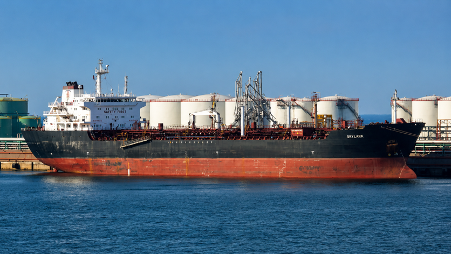
The Trans Adriatic Pipeline bringing Caspian gas to Europe has already completed its first phase of access roads and bridges in Albania and is now on its pipeline construction stage which is expected to bring about €400 million for 2017.
TAP is set to be made operational by 2020 bringing total investment of about €1.5 billion in a major project that will benefit Albania both economically and politically, making the country an important hub of the international gas pipeline for the Western Balkans.
Meanwhile, Norway’s Statkraft has already made operational its first Banja HPP as part of the Devoll HPP project, one of the country largest foreign investment projects and is set to complete its second and final Moglice HPP by 2018.
The Banja and Moglice HPPs, part of the €535 million Devoll Hydropower project, are being built on the Devoll River, about 70 km southeast of Tirana.
Several other small and medium-sized power plants are being built, some of which amid environmental concerns of damming Vjosa and Valbona, two of Europe’s last wild rivers. Private and concession HPPs have increased their share in the country’s wholly hydro-dependent domestic electricity generation to about a third in the past decade as more than 100 HPPs have been made operational.
Tourism which brings about 4 million tourists and more than €1 billion in revenue, as well as agriculture, an underdeveloped sector that employs about half of the country but produces only about 20 percent of the GDP, are seen as two key industries that foreign direct investment can make more competitive by bringing know-how and boosting employment.
A strong pickup in commodity prices could however make up, triggering investment by Bankers Petroleum, the country’s largest oil investor recently taken over by a Chinese company, and Dutch giant Shell, already engaged in oil exploration operations in the country.
Oil prices have currently recovered to about $50 a barrel after hitting a 12-year low of below $30 a barrel in early 2016.
Albania has been the second largest FDI recipient among five EU aspirant SEE economies for the past six years lagging behind only Serbia which is a much bigger economy. Thanks to huge investment in energy-related projects such as oil and hydropower plants, Albania has managed to attract about $1 billion in FDI annually in the past few years, according to UNCTAD, the United Nations body responsible for international trade.
Greece, the Netherlands, Canada, Italy and most recently China are the main foreign investors in Albania.
The telecommunication, manufacturing and extractive industries have attracted around half of the FDI stock in Albania during the country’s past two decades of transition into a market economy after the collapse of communist regime and its planned economy.
The country’s FDI stock at the end of 2016 is estimated to have climbed to about €5.7 billion, up from €5.37 bln in 2015 and about 4 billion euros by early 2014.
BoA: 2013 -2016 FDI inflows
2016 = €983 mln
2015 = €890 mln
2014 = €869 mln
2013 = €945 mln
Top foreign investors, FDI stock at the end of 2016
1 – Greece €1.227 bln
2 – Netherlands €843 mln
3 – Canada €798 mln
4 – Italy €561 mln
5 – Turkey €531 mln
6 – Austria €424 mln
Most FDI attractive sectors (stock at the end of 2016)
- Information and communication €1.243 bln
- Financial and insurance activities €941 mln
- Electricity, gas €938 mln
- Extractive industries €736 mln
- Processing industry €629 mln
… Agriculture, forestry, fishing €5 mln
Travel industry
Albania’s emerging travel and tourism industry registered a strong recovery last year when a record 4.7 million foreign tourists are reported to have visited the country, bringing more than €1.5 billion in travel income, according to central bank and INSTAT data.
The industry continues relying on its peak summer season and the arrival of Albanian migrants as well as ethnic Albanians from neighbouring countries.
While patriotic tourism from ethnic Albanians in Kosovo, Macedonia and Montenegro still accounts for more than half of tourist arrivals, the geographical location of tourists has also extended to Greece, Italy, Germany, the UK, France and Switzerland although a considerable number of foreign tourists coming from these countries are believed to be Albanians holding dual citizenship.
Tourists from Serbia and central European countries such as Poland, Austria and the Czech Republic have also considerably in the past few years.
Directly employing about 85,000 people in 2016, the travel and tourism industry is set to register one of the region’s highest growth in the next decade in terms of its contribution to GDP, employment, investment and exports, according to a report by London-based World Travel & Tourism Council, WTTC.
Meanwhile, Albanians only slightly increased their spending in trips abroad in 2016 when they spent about €1.1 billion, mainly in trips to neighbouring Italy and Greece, where about 1 million Albanians live and work, but also holidaying in other destinations such as Turkey which despite security concerns continues remaining a favourite destination for summer vacations among Albanians. Central bank data shows spending in trips abroad remains only slightly higher compared to the pre-crisis years after Albania was granted visa free travel to the Schengen zone in late 2010.
Travel income
2016 = €1.528 bln
2015 = €1.352 bln
2014 = €1.195 bln
2013 = €1.113 bln
Travel spending
2016 = €1.139 bln
2015 = €1.117 bln
2014 = €1.195 bln
2013 = €1.113 bln
Remittances
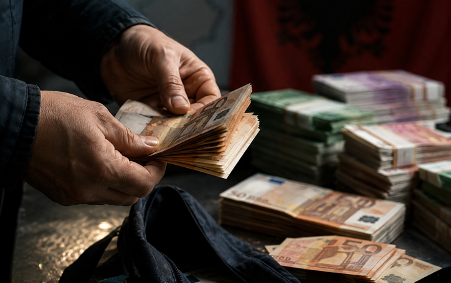
Although having almost halved since the onset of the global financial crisis in 2008, migrant remittances continue to play an important role for thousands of poor households in the country.
Fuelled by a recovery in Italy and Greece, Albania’s main trading partners where an estimated 1 million Albanian migrants live and work, remittances slightly recovered for the third year in a row in 2016 when they climbed to €616 million, but remained about a third below their peak level of €952 million in 2007 just before the onset of the global financial crisis, according to the country’s central bank.
The sharp cut in remittances, one of the main sources of revenue for thousands of households, has considerably affected domestic consumption and the construction sector which has been paralyzed facing lack of demand and a stock of unsold apartments following a pre-crisis boom.
In addition to crisis impacts, experts say remittances will continue to decline on social factors because most immigrants are creating their own families abroad and often even taking their parents with them.
Migrant remittances now represent about 6 percent of Albania’s GDP compared to a record high of about 16 percent of the GDP a decade ago.
Remittances
2016 = €616 mln
2015 = €599 mln
2014 = €594 mln
2013 = €548 mln
Transfer of profits
Foreign companies operating in Albania continue transferring large amounts of profits from Albania rather than reinvesting them. The transfer of profits slightly dropped to about €203 million in 2016, but remained at almost the same annual outflow for the past three years.
Since the onset of the global financial crisis, foreign companies operating in Albania have considerably increased the transfer of profits to their parent companies.
The transfer of profits hit a record high of €401 million in 2009 at the onset of the global financial crisis compared to a pre-crisis decade of €19 million to €57 million annually, according to the Bank of Albania.
Transfer of profits
2016 = €203 mln
2015 = €227 mln
2014 = €214 mln
2013 = €78 mln