TIRANA, June 25 – The UK’s Leave decision in its Brexit referendum could have negative implications on Albania’s EU integration efforts and its economy by delaying the accession process and reducing investment, experts say.
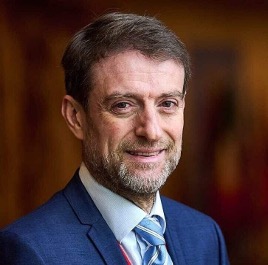
Besnik Mustafaj, a writer and former foreign minister, says UK’s decision to leave the 28-member block will affect Brussels’ enlargement policy on EU aspirant Western Balkans countries, including Albania.
Commenting on a statement by European Commission President Jean-Claude Juncker, Mustafaj says “Albania is among the small countries who will have less Europe in the future, despite Albania’s choice being quite the opposite.”
“In the worst scenario, Albania would open its accession talks next year,” Mustafaj said, adding that statements by EU leaders hint that enlargement will either stop or slow down.
Albania, an EU candidate country since mid-2014, is hoping to open accession talks next autumn after the expected approval of a long-awaited justice reform which has been set as a precondition for the negotiations.
Mustafaj says Albania could also face a reduction in its Instrument for Pre-Accession Assistance (IPA) funds.
“I think that in the coming weeks and months, Albania will not be officially told that its Brussels arrival has been postponed to an undetermined deadline. But, de facto, it is very likely that the IPA funds will shrink,” he says.
Integration Minister Klajda Gjosha said the Brexit storm would not affect Albania’s EU integration aspirations.
“European integration is a major national priority for Albania which will continue its state-building reforms to be closer to the EU. The Brexit storm does not infringe our aspiration as I am convinced Europe will find mechanisms to overcome this difficulty. What we can do is continue with the domestic reforms,” she said.
Former Integration Minister Majlinda Bregu said the Brexit would also affect the EU enlargement policy in the next two to three years.
“The united Europe project will now be tougher in the next 2 to 3 years. The UK’s exit from the EU has made this project more difficult and the EU’s upcoming agenda is overcoming this situation,” said Bregu, an opposition Democratic Party MP.
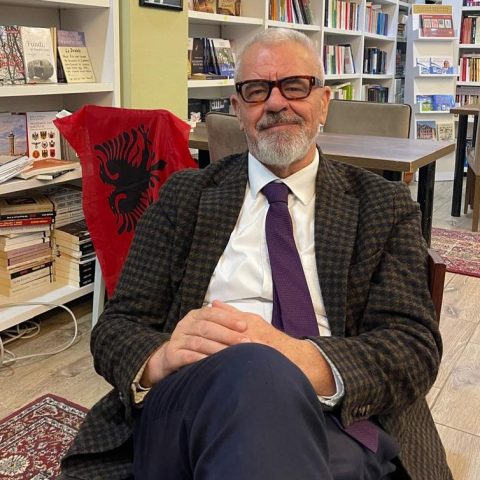
Albert Rakipi, the head of the Albanian Institute for International Studies, one of the country’s top think tanks on international and security issues, says the Brexit will affect the EU’s enlargement policy and could create a status quo for Albania and other Western Balkan EU aspirant countries.
“This is an unfavorable development for the EU’s enlargement policy. I think this development will create a status quo for Albania and other regional aspiring to join the EU. There will be an unfavorable environment for the enlargement policy and I think the focus will be more in strengthening the EU as the Brexit threatens the real existence of the EU,” he told Deutsche Welle.
The AIIS executive director said the European integration should continue serving as the country’s driving force for state-building at a time when emerging populist voices could harm Albania.
“Today more than ever, there should be reflection on ‘local ownership’ of the European integration which in other words means undertaking important reforms which bring Albania and the Balkans closer to the EU,” said Rakipi.
“The European integration process has been a driving force of state building in Albania and there can be no plan B. The country’s Europeanization project will continue as it is widely supported by the Albanian society. In the meantime, there will be populist and mediocre voices which may think the EU is weak and can blackmail the EU with populist projects of the past century for short-term political interests.
Possible economic spillover effects
Economy experts say the Brexit decision could also have indirect implications on the Albanian economy by hitting investments at a time of unclear political and economic situation in the EU, Albania’s main trading partner and top foreign investor.
“In addition to direct consequences, it is unclear what the Brexit effect will be on capital markets and what happens in the EU will also have an effect on Albania’s foreign investment affecting growth,” says Arben Malaj, an economy expert.
Ardian Civici, another expert, says the EU will also become more reluctant to finance development projects in the Western Balkans, including Albania, until the Brexit situation clarifies.
Some 52 percent of Britons voted in favour of leaving the EU on the June 23 referendum, a decision which led Prime Minister David Cameron to announce he will step down by October. The pound tumbled to a 30-year low while Moody’s rating agency downgraded the UK’s outlook to “negative” following the vote.
Albania’s central bank governor Gent Sejko the Brexit effect on Albania will be negligible due to the small amount of trade exchanges, investment and remittances from Britain.
The United Kingdom accounted for only 0.2 percent of Albania’s exports and 0.9 percent of imports in 2015, with the annual trade exchanges at about 5.5 billion lek (Euro 39 million), according to INSTAT.
Meanwhile, the stock of foreign direct investment from the UK fell to Euro 20 million in 2014, down from Euro 56 million in 2013, according to the central bank.
The British pound also hit a four-year low against the Albanian lek this week when it dropped by 8 percent to 165.14 lek following the Brexit vote.
“For the moment there’s no immediate negative impact on Albania. This means there will be no change either in the economic growth, trade activity, foreign investment, exchange rate or even the stability of the banking system,” said Sejko.
“However, the deterioration of the Eurozone economy because of the Brexit could be reflected on our region and Albania through trade and other elements,” added the governor.
Banks in Albania have a very low exposure to the British pound while remittances from some 10,000 Albanian migrants in the UK could be affected only in case of a sharp depreciation of the British pound.