TIRANA, Feb. 28 – Albania’s budget deficit hit a two-decade low in 2016 as revenue moderately recovered and the government applied a tight spending policy to bring public debt down to 71 percent of the GDP, following a five-year rising trend.
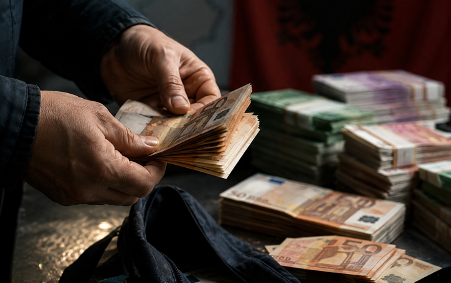
A finance ministry report shows Albania’s budget deficit hit a 21-year low of 26.3 billion lek (€194 mln) at 2.4 percent of the GDP in 2016 as the government spent less on public investments and debt servicing cost less due to interest rates being at a record low.
Public investment hit a nine-year low of about 57 billion lek (€422 mln) in 2016 at about 4 percent of the GDP compared to 4.5 percent to 5 percent of the GDP in the previous years.
Albania’s public finances recovered for the third year in a row in 2016 when they grew by 6.8 percent but failed to meet the target by €70 million even after a mid-year budget cut. The hike was boosted by a late 2015 campaign against informality that formalized thousands of businesses previously operating informally, moderately increasing the key value added tax levied at a fixed 20 percent rate on almost every product and service and excise taxes and social security contributions.
Mining royalty also hit a record low of 2.8 billion lek (€21 million) as commodity prices stood at a record low forcing oil and mining companies to curb production and exports until international prices recover.
Mining royalty has been on a downward trend since 2014 following the slump in commodity prices.
Royalties, which range from 4 percent for non-metallic minerals, 6 percent on chromium and copper and 10 percent on oil and gas, rose to a record 8.5 billion lek (€60 million) in 2013, up 20 percent compared to 2012, having grown by more than five time since 2009, when huge investments were made both in the oil and mining sectors.
All fuel, cigarette, coffee and beer imports increased in 2016 increasing revenue from excise duties by 7.4 percent to about 42 billion lek (€310 mln).
The Albanian government expects revenue to increase by 6.9 percent to 376 billion lek (€2.7 bln) in 2017 and the economy to accelerate to 3.8 percent fuelled by investment and private consumption. The budget deficit is targeted to drop to a new record low of 2 percent of the GDP, allowing public debt to slightly drop to 69.1 percent, down from a record high of 71.8 percent of the GDP in 2016.
The forecasts are slightly more optimistic compared to what other international financial institutions and the European Commission predict for the Albanian economy.
In its report accompanying the 2017 draft budget, the government has identified several risks related to fluctuation in international oil prices, tobacco imports, the performance of value added tax, natural disasters and unexpected decisions related to final court decisions mainly on property cases.