
TIRANA, Nov. 24 – Heads of states of the Central European Initiative (CEI) ad representatives of other international institutions convene in Tirana Friday to discuss about a closer integration and cooperation in the region. The Tirana meeting, which concludes Albania’s annual rotating presidency of the group, was expected to be attended by 18 heads of states _ Albania, Austria, Belarus, Bosnia-Herzegovina, Bulgaria, Croatia, the Czech Republic, Macedonia, Moldova, Montenegro, Hungary, Italy, Poland, Romania, Slovakia, Slovenia, Serbia and Ukraine _ and 17 high representatives of regional and international organizations. Seven CEI countries are also members of the European Union, two of them become next year and the others are along the process of getting integrated. The topic of discussion will be developments in the central European region, issues of cooperation, intensification of the integration processes to Euro-Atlantic structures and the CEI role as the adequate forum for strengthening the political dialogue among member countries and its orientation toward multilateral cooperation. During the one-year CEI presidency Albania hosted a series of important events as the meeting of foreign ministers, the transport conference, the parliamentary assembly, the energy forum and the forum of journalists. CEI is one of the most important regional imitative founded in 1989. Its objectives are consolidation of political dialogue, strengthening relations of good neighborliness, intensification of relations in the economic field, and the facilitation of their integration process to the Euro-Atlantic structures through the exchange of transforming experiences.
More than 800 delegates filled Tirana International Hotel’s entire capacity of conference rooms, to discuss the main economic and financial challenges of the contemporary European arena. The impressively big and important conference took place, within the framework of the 2006 Albanian Presidency of the Central European Initiative. The 9th CEI Summit Economic Forum (SEF) entitled “Fostering Reforms and Innovation for Sustainable Growth lasted for two long and intensive days. Regional co-operation is a necessity for the economic development of the Central European Region. The countries have higher opportunities to achieve their goals if they commit to joint actions towards common objectives. With this rationale as its focus, the event held multiple panel discussions, categorized thematically in four different areas. The first stream was dedicated to “Fostering Business Climate.” On Wednesday participants held three seminars, starting with “Towards New markets: Barriers, Challenges, and Opportunities. Focus on Albania”, addressed by Mr Helmuth Lohan, Head of Delegation, European Commission; Genc Ruli, Minister of Economy, Trade and Energy; Gulden Turkoz-Cosslett, UNDP Resident Representative in Albania and Ann Margaret Westin, Resident Representative, International Monetary Fund in Albania. The second seminar was dedicated to Pan-European Corridors and Trade Development. Speakers included the one of the highest figures in the administration of the Eighth Corridor project, Michele GRIMALDI, the project manager, coordinator of Corridor VIII Secretariat whose keynote lecture was entitled: “Contribution of Corridor VIII, as part of the South Eastern Transnational Axis, to the development of the Balkan Region: ongoing processes, potentials and proposals.” The discussions were followed by a roundtable on Tourism, Property and Real Estate, focusing on building opportunities in the region and finalized in the afternoon with a presentation “The EBRD and its role in promoting regional development.” The second stream, “Exploiting the local potential”, started with a seminar entitled “Sustainable Energy in the CEI Region: How to Scale Up?” which addressed one of the most contemporary global and especially regional challenges. Albanian officials such as Ferdinand Pone, Vice Minister at the Ministry of Interior of Albania and Albana Dhimitri, Deputy Mayor, Municipality of Tirana, brought to the third table, “Effective Delivery of Municipal Services”, the daily problems of adapting local structures to the impetus of European integration.
The second event of this stream focused on the specific role of one of the most important financial institutions in the world. The discussion was entitled “The World Bank in the Region: Generating New Businesses through Infrastructure Development.” Speakers, Ridvan Bode, Minister of Finance, Nadir Mohammed, Albania Country Manager of the World Bank Kutlay Ebiri, Regional Chief Economist for Central and Eastern Europe of the International Finance Corporation (IFC), and Alia Moubayed, Country Economist, for the World Bank explained the way in which the World Bank is assisting reform in South Eastern Europe. The final space was allocated to the presentation “Social sector, business and corporate social responsibility: working with local civil society.” The third stream, “Investing in innovation”, was definitely one of the most interesting and original initiatives and brought to the summit the voices of unique groups of entrepreneurs. It opened with a discussion of “Women in innovative business” monitored by Brigita Schmognerova, Vice President of Human Resources and Administration at the EBRD. Experiences of successful women managers and business risk-takers were given to a predominantly female audience. “Competitiveness through innovation: R&D and risk capital in the CEI countries” was the following event addressed by a variety of Italian experts from the finance and business administration field. The final panel discussed one of the most vibrant sectors of economy: small and medium business. The seminar entitled “SME growth and financing: business support services and networks”, attracted the attention of many experts from the entire region.
A special space was allocated to the “Interactive Business Area”, where Project presentations and Focused meetings were in the agenda. It is one of the main aims of SEF to offer networking opportunities to establish business alliances and trade relations, investment projects’ partnership, for networking with business leaders, SME community representatives, policy makers and government officials, as well as with representatives of International Organizations and Financial Institutions. Generally the discussions, speeches and suggestions focused on reforms and investments for stimulating business development with particular attention to infrastructure, finance, investments, innovation for competitiveness, entrepreneurship, regional integration and trade promotion. Participants came from a wide range of structures both from the CEI region and beyond. Government officials, industry leaders, businessmen, entrepreneurs, investors, financial institutions, international organizations, investment and trade promotion agencies, representatives of local authorities, bankers, fund managers and business service providers were all active in the panels, being selective to their own areas of interests. The common goal was to search for tangible opportunities for investment and growth in the CEI Member Countries. The second day of the conference had concise discussion in the second stream, with panels for “Integration of Western Balkans agricultural market into EU markets” and ” Investing in local and regional development through PPP projects.” In the third stream, Minister of Education, Genc Pollo was the keynote speaker for the discussion ” From Research to Enterprise: turning science into business.” the EBRD presented its Transition Report, focusing on the financial sector.
SEF 2006 was not the only event that brought together so many representatives of Central Europe. Parallel to it, there were two other meetings of crucial importance, the Round Table of Ministers of Economy and the Summit of Prime Ministers of 18 CEI Member States. Taken together, all these events represented the most relevant occasion to promote the economic co-operation among the CEI Member States.
The event gave the opportunity to its participants to discuss in several informal venues such as lunches, cocktails and cultural events. At the final press conference, Minister Ruli evaluated the entire experience as an impressive successful event and he expressed his enthusiasm for the new initiatives discussed and the new partnerships created.
CEI Summit in Tirana Boosts Economic Cooperation

Change font size:
Latest from News
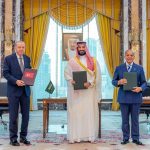
Mecca Defense Pact Signals Saudi Arabia’s Bid to Shape a New Security Order
Change font size: - + Reset The agreement with Turkey and nuclear-armed Pakistan strengthens Riyadh’s position as a central architect of regional security, while reflecting a broader shift toward a more multipolar
SPAK Brings New Charges Against Former Deputy PM Balluku
Change font size: - + Reset Tirana Times, August 07, 2026 — Albania’s Special Prosecution Office Against Corruption and Organized Crime has brought new allegations against former Deputy Prime Minister Belinda Balluku, widening
Milošević’s Language Returns to Serbia’s Government
Change font size: - + Reset Ethnic Cleansing Remark Tests Serbia’s Claim to Have Broken With Milošević A Serbian minister’s declared willingness to expel Kosovo Albanians has drawn condemnation across the region
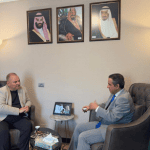
Saudi Ambassador Meets Head of Albania–Saudi Parliamentary Friendship Group
Change font size: - + Reset Tirana Times, July 6,2026 – Saudi Arabia’s Ambassador to Albania, H.E. Turki bin Ibrahim Al-Madi, received Albanian MP Baldi Çomo, Chairman of the Albania–Saudi Arabia Parliamentary Friendship

Anti-Government Protests Escalate in Tirana as Demonstrators Block Parliament
Change font size: - + Reset Tirana Times, July 03, 2026 – Albania’s month-long anti-government protest movement entered a more confrontational phase on Thursday, as demonstrators gathered outside Parliament, blocked access points