TIRANA, May 30 – Credit returned to negative growth last April following eight months of sluggish growth, apparently hit by the tense political climate preceding the June 25 general elections undermining business confidence.
Central bank data shows lending registered a turning point in April 2017 when it contracted by 0.4 percent following a positive trend since August 2016 when it has been growing by slightly above zero, negatively affected by the high level of non-performing loans and the write off of loans that have spent three years in the “loss” category statistically keeping real lending lower.
Credit to businesses, accounting for two-thirds of total loans, contracted by an annual 3.3 percent last April, apparently negatively affected by uncertainties ahead of the upcoming general elections as the main opposition Democratic Party was staging a protest over free and fair elections and a deal over a caretaker government to handle them was not reached until May 18, paving the way for fully participatory elections. Investor uncertainties are also related to the new government that will take over and the tax policy that will be applied.
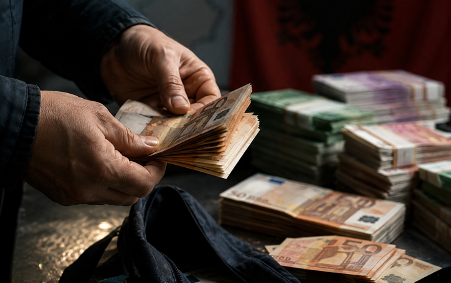
Euro-denominated loans continue dominating lending to businesses with about 53 percent of all loans, unveiling the country’s declining but still high euroization rate preventing the transmission of the central bank’s easier monetary policy.
Meanwhile, lending to households slightly recovered by 3.3 percent last April, triggered by a pickup in home loans.
In addition to poor demand by businesses and households, the credit performance also reflects tight lending standards as non-performing loans stand at about 18 percent, down from a peak level of 25 percent in mid-2014.
Lending contracted last April despite average interest rates on the national currency hitting a historic low of 5.25 percent, but slightly increasing to 5.13 for euro-denominated loans.
The interest rates are still considered too high as deposit rates stand close to zero.
The Bank of Albania has been keeping its key rate at a historic low of 1.25 percent since May 2016 in a bid to promote sluggish lending and consumption, but the move has been poorly reflected.
Since late 2011, the central bank’s easier monetary policy has been mostly reflected on deposit rates and T-bill and bond yields on government’s internal borrowing, rather than lower loan interest rates.
Albania’s central bank had earlier warned the political deadlock in the run-up to the June general elections and its possible escalation would for sure affect the investment climate and business and consumer confidence, leading to a revise downward in the country’s expected GDP growth.
Credit officially returned to positive growth rates in the third quarter of 2016, overcoming a one-year period of contraction also affected by the write-off of non-performing loans from banks’ balance sheets artificially keeping credit at statistical negative growth rates. Banks wrote off some 12.6 billion lek (€92 mln) in ‘loss’ loans in 2016 taking the total amount of bad debt removed from balance sheets in the past couple of years to 39.3 billion lek (€288 million), according to the central bank.
Lending to the economy has been striving to maintain positive growth rates since 2012 after growing by 30 to 50 percent annually in the pre-crisis years, an average of 10 percent from 2009 to 2011 and sluggish growth rates of 1 to 3 percent in the past few years.