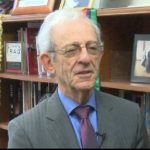
By: Naum Prifti
In any comparative study, a certain degree of proportionality is admittedly assumed or implied. Yet, looking at the subject at hand; i.e. the cultural exchanges between the US and Albania, one cannot help but notice the pronounced disproportion between the two countries in a number of areas. On one side, a powerful government, with well-rooted democratic traditions, a superpower that takes pride in being a champion of human rights and individual liberties; on the other side, a tiny country with an anemic economy, with semi-feudal social structures, a land that broke free after 500 years of Ottoman occupation in the last century, hence a new democracy, that is less than 100 years old.
The history books teach us that the US rendered crucial support to the Albanian nation on two occasions in the 20th century. The US under President Wilson’s leadership, came to the aid of Albania at a highly critical crossroad in its history. In the aftermath of WWI, President Wilson’s administration saved Albania’s territories from its neighbors’ territorial ambitions. Again, at the end of last century, it was President Clinton who saved Kosovo and its Albanian population from the Serbian holocaust. On account of these two significant points in the history of Albania and its people, feelings of genuine gratitude for the US are deeply rooted in the hearts and minds of all Albanians. It is worth noting that the communist propaganda claimed that it was Lenin, the Russian leader, that had saved Albania from being partitioned. Lenin was credited with such an important accomplishment since he had authored an article that “unmasked” the territorial appetites of the imperialist powers of the time (to borrow some of the clich顬anguage of the time). Albania’s communist propaganda conveniently neglected to mention that Lenin at that time was living as a Russian emigrant in Switzerland. Hence, his statements and revelations on imperialistic plots and conspiracies at the time could have little influence on world politics and the fate of Albania. Ironically, it is generally acknowledged by historians that the plans of Russia’s Czar, regarding the drawing of the borders of Albania in 1912, contained considerable carvings and reductions of Albanian land. This particular point becomes relevant when considering the Russian government’s policy towards the issue of Kosovo’s independence. On this matter of critical national importance to Albanians, Russia’s administration had adopted an obstructionist position, while joining forces with Serbia’s unreformed leaders and favoring its chauvinistic hard-line politics.
In view of historic and current positions, it is fair to state that Albanians feel allegiance to the US leadership and the American people. This brings us back to the topic at hand. Leaving gratitude and esteem aside, the cultural exchanges between America and Albania is a subject in need of much research and study by scholars and sociologists. It is my intention take a step toward that direction. While one might find some literature on how much America has helped Albania, one would be hard-pressed to even consider pushing the envelope. Despite the small number of immigrants in the USA, Albanians have contributed significantly to their adopted homeland.
Albanians discovered America in the 19th century. The first Albanian to set foot on the New World in 1880 was Kole Kristofori from a village in southeast Albania. A few years later, he went back home with his earnings and his European-style suits. He introduced a more practical and more economical clothing style that eventually marked a departure from the traditional designs that men wore in those days. Southern Albanian men used to do seasonal work in Greece, Bulgaria, Romania, Turkey, Mount Athos, Russia, and the Middle East. They set out in the month of October, and made the journey back in June, when it was time to take care of the summer chores. In the beginning of the 20th century, most emigrants ventured to North and South America. Due to the vast distance, the seasonal migration came to an end. Nonetheless the emigrants’ families remained in the home country, while the emigrants themselves traveled back every three-four years to be with their loved ones and to bring home the earnings.
In the 1930s, a number of Albanian immigrants petitioned to bring over their family members, and were reunited with them in America. This brought a tremendous change in the composition of the Albanian community.
Nini Demo of South Boston, is an Albanian who witnessed such changes, and recorded the sentiments of the time in his booklet, The Albanians in America. “Primarily we came here to make a living, but shortly after we arrived, the question of earning a living became secondary, for we learned that man cannot live by bread only. One must have freedom of speech, of thought, of movement, freedom to practice one’s religion in one’s language. Here we had all of these, but we were not satisfied. We wanted them transplanted across the sea to Albania, so that our people there could enjoy them also. Liberty and freedom became contagious to us.”
While the Albanian communities in Istanbul, Bucharest, Sofia, and Athens were sliding from the spotlight and even shrinking in numbers, the community in America was flourishing and growing both demographically and economically. Patriotic associations and Albanian publications marked a significant increase. In June 1912, a number of small, local organizations merged to found the Pan-Albanian Federation of AmericaעVatra” (The Hearth). “Vatra” went on to become a driving force in the community, as well as in the homeland, especially during the period of Word War I, when the country came under the occupation of several combating armies of different states. To this day, the 96 year-old “Vatra” Federation carries on its patriotic mission for the benefit of the Albanian nation.
On the issue of publications, it is worth noting that the first Albanian newspaper in America, Kombi (The Nation), came out in 1906. Three years later Dielli (The Sun) became the successor of Kombi, and was followed by a number of other periodicals. Up-to-date, a total of 82 Albanian newspapers and magazines have been printed in the U.S. at one time or another. Some of them, such as Dielli, Illyria, and the now defunct Liria, have upheld professional standards of journalism. The magazines with the longest life-span have been, Jeta Myslimane Shqiptare (Albanian Muslim Life) 1953-1961, Jeta Katolike Shqiptare (Albanian Catholic Life) Bronx, on-going since 1966, Krahu i Shqiponj쳠(Eagles’ Wing) Chicago, 1973-1986, published by Bilal Xhaferi, and Albanian Catholic Bulletin (Buletini Katolik Shqiptar) San Francisco, 1980-1994, a reputable periodical with valuable essays and analysis, published by Gjon Sinishta.
In the post World War II era, the cultural life of the community in several towns was greatly enriched with local radio programs that air Albanian music, proverbs and news. By the mid 1990s, TV Viktoria, the first Albanian language TV broadcast, broke new ground in New York. Albanian Cultural TV has been televising in the New York area since about ten years ago.
The opening of American schools in Albania had a significant influence in the country. Unlike the European schools which aimed at a classical education, the American schools were geared towards teaching students practical skills. Such were the Technical High School in Tirana, the Agricultural High School in Kavaja, the Vocational School in Korca, etc. The director of the Technical School, Harry Fultz, for example, taught his students by example. By being the first to roll up his sleeves and get to work, he instilled in them strong work ethics. Sadly, after the communist regime established itself, the American schools were labeled a cesspool, centers of espionage, and most of the students were accused of working as agents, and consequently some were sentenced to hard labor, and a few were executed.
A political experiment: In 1924, Prime Minister Fan Noli tried to establish a democratic government in Albania mirroring the American model. The experiment was doomed, since it was impossible to introduce and implement democracy in a semi-feudal country. Fan Noli was an idealist as well as a utopian when it came to confronting Albania reality. His democratic reforms were not carried out, or were undermined. In spite of the failed attempt at building democracy, Albania deserves credit for being the first country to adopt the Republican form of government among the monarchies of the Balkan countries, thus heralding the dawn of the new governance.
In addition, America made efforts to emancipate the Albanian women. For example, in the 1930s, the leading apparels company at the time, Singer, launched workshops to help Albanian housewives with some sewing and tailoring skills. I remember a photograph taken at a workshop in Rehove, which my mother attended. The Albanian girls were awarded scholarships by some American learning institutions. The first Albanian woman pediatrician, Xhanfize Frasheri (Basha), graduated in the US in 1938. After she got back in the country, she worked with dedication in the field of children’s health care.
The foundations of the Albanian Orthodox Autocephalous Church were laid in the US. Father Noli was ordained in March 1908, following the refusal of the Greek pastor to render funeral rites to an Albanian young man in Marlboro-Hudson, MA known as an activist. Fan Noli translated into Albanian the Orthodox liturgy, one of the major accomplishments and contributions he made to the national cause. The Albanian Orthodox learned to worship God in their mother tongue, putting an end to a widespread belief put out by the Greek propaganda machine, claiming that Greek was the language of God. Furthermore, identifying one’s religion or faith with one’s nationality had long been the strategic approach that the Greek authorities have employed throughout history. Thanks to the Albanian pioneers, the first Orthodox parishes turned into community houses for the Albanians of all faiths. In 1937 the Istanbul Patriarchate acknowledged the independence of the Autocephalous Albanian Orthodox Church.
Moving on to the field of Humanities and Social Studies, the American anthropologist Professor, Carleton S. Coon, did his fieldwork in Mirdit묠Northern Albania in 1929-1930 which laid the foundation of Albanian Cultural Anthropology. Coon published The Mountains of Giants: A Radical and Cultural Study of the North Albanian Mountain[s] Ghegs (1950). His guide and translator, Stavre Frasheri, documented the anthropologic expedition in his book Through Miredit롩n Winter. In recent years, this work was translated into English by Peter Prifti and published by the East European Monographs, Columbia University Press, in 2002. It is a valuable contribution to Albanian ethnographic studies. Prof. Coon followed in the footsteps of Rose Wilder Lane’s travel impression “Peaks of Shala,” edited in New York and London 1923.
The body of works by a new generation of American Social Sciences includes titles, such as Basic Albanian Etymologies by Martin Huld; Albanian-English Dictionary by Leonard Newmark, and others. Professor Newmark, with Philip Hubbard and Peter Prifti, also published Standard Albanian, a grammar book designed to assist students who intend to deepen their knowledge of the language.
The most intriguing question one could ask is: what have the Albanians or the Albanian community given to America?
Few among us know that the Albanian community has contributed to the religious diversity of the United States. In 1953, the Bektashi Teke opened its doors in Taylor, Detroit. As far as the author of this presentation is aware, the Teke is the only place of worship of its kind in America. Baba Rexhep, the founder and head of the Teke, authored a book in Albanian, Misticizma Islame dhe Bektashizma (1970), which was later abbreviated and translated into English by Bardhyl Pogoni, under the title The Mysticism of Islam and Bektashism (1984). The book served as an informed introduction to the origin and presentation of the Bektashi sect within the Islamic world. The Albanian Bektashi contingent features specific traditions and historical characteristics, which distinguish them from their counterparts in Iran, Iraq, and other countries in the Middle East. The hierarchy of the Bektashi branch of Islam bears Albanian names such as: Baba (father), Gjysh (grandfather), Kryegjysh (great grandfather), etc.; the only exception being the international clergy title Dervish.
Albania with its population of 70% Muslims (including the Bektashi), 20% Eastern Orthodox, and 10% Catholics, has never been listed as an Islamic country. On the other hand, Albania’s adversaries, most notably the Serbian propaganda, have played the card of the threat of a Muslim country in Europe, to oppose Kosovo’s independence. It is widely recognized by the Western scholarly community that the Albanian Muslims in Kosovo, Macedonia, and Chameria are neither terrorists nor extremists.
One of the proudest Albanians to American humanities is Fan Noli. He earned a citation in Webster’s Biographical Dictionary (1960) thanks to his monograph, Beethoven and the French Revolution. This work, a valuable addition to the bibliographic body of the renowned composer, earned praise from Bernard Show, Sibelius, and Thomas Mann. When the Albanian community regime banned immigration, Bishop Noli undertook the ambitious task of translating the Orthodox Liturgy into English to attract the younger generation of Albanians.
Dr. Ferid Murad, an Albanian-American, along with his fellow researchers, received the Nobel Prize for the discovery of Viagra. Being proud of his family origin, William Gregory, the US astronaut of Albanian descent, took with him the Albanian flag, with the double-headed eagle, on a mission to outer space.
What follows if a concise list of English titles by Albanian authors: Stavro Skendi, The Albanian National Awakening; Arshi Pipa, Trilogia Albanica; Safete Juka, Kosova- In the light of Historical Documents; Sami Repishti and Arshi Pipa, Studies on Kosova; Peter Prifti, Socialist Albania from 1944, Remote Albania, and Confrontation in Kosova; Nicholas Pano, The People’s Republic of Albania; Elez Biberaj, Albania, a Socialist Maverick, etc. The Code of Leke Dukagjini, translated by Leonard Fox, published by the Gjonlekaj Publishing House, highlights some of the ancient ethical and moral traditions of the Albanians. The book received a favorable reception from the academic circles. Dennis J. Kamburi published English-Albanian Dictionary in 1915 and Cost Chekrezi another pocket dictionary, English-Albanian in 1924. Almost every ten years, a bilingual dictionary has come out on each side of the Atlantic Ocean. Indeed, there is an extensive inventory of English-Albanian and Albanian-English dictionaries. In keeping with the modern time, new online versions have been added to that category.
In the genre of photography and cinematic art, the talented eye of Gjon Mili broadened the artistic dimensions of his profession. The images he captured with his camera impressed numerous readers of Life magazine. American actors of Albanian descent, such as John and Jim Belushi, have earned their own place in the halls of US comedy. In film directing and advertising, Stan Dragoti has imprinted his signature on his productions. Many young talents of the Albanian community have followed in the footsteps of these pioneers in the arts during the last decades.
My life experience exemplifies the subject that I attempted to explore here. My father was an immigrant in America when I was born. I saw him for the first time at the age of six, when he came to visit the family in 1938. A year later, my father and my oldest brother set out to cross the Atlantic Ocean. The following year my other brother joined them in the new country. I saw my father again when he was repatriated about twenty years later in 1957. One day he came to me with the news that I was entitled to US citizenship. I cannot say that it made an impression on me, since I knew well that the outbound routes were sealed off by the regime and emigration was banned. In light of the fact that two of my brothers lived in the US, I was thought to harbor sympathetic feelings towards America.
I started teaching myself English, being motivated by the desire to read the great works of English literature in the original, especially the ones that were deemed “unfit” for translations. The American literature became a valuable window of cultural communication and personal gratification. I read feverishly any title I could get my hands on, such as books by Jack London, Mark Twain, particularly Hemingway and William Saroyan, an American writer of Armenian descent. Under the spell of The Adventures of Tom Sawyer, I wrote the novel Cikoja and Beni. It was well-liked by the readers, and was reprinted six times, which is regarded as a respectable number in the book publishing business. In terms of writing “style,” some of my stories reveal my affection for Hemmingway’s concise and expressive phrases.
Under the watchful eye of the dictatorship, I wrote mostly children’s stories, fables and fiction, while manuscripts for dissident novels, I took care to keep in a safe place. Later on, to avoid any unpleasant incidents, I was able to smuggle them out of the country, with the help of a Swiss friend. After arriving in America, I asked him to mail the manuscripts to me. When I held those pages in my hand again, I had the feeling of coming upon a treasure.
In the early 1990s, I set foot in the land where half my family had spent the better part of their lives. Having been a well-published author in Albania, I came to the United States thinking that I would continue on that same professional path. It did not take very long to realize that the publishing mechanism here was, and continues to remain, a mystery to me. My first three years of living in America went by unnoticed. I felt like a plant uprooted and blown away by whimsical winds. I suffered the identity crisis of an ꮩgr鮠I missed my homeland, the social connections and the exchanges with my fellow writers. Everything that I had known and was dear to me was left behind. It took time to “find myself” and return to the writing process. I started editing one of my dearest works of Albanian legends and folktales. N쯡 e Diellit (Mother of the Sun) was published in Tirana and received the literary award The Silver Pen, in 2002. It was a joyful triumph for me as a writer, who now works and lives abroad, but remains inherently tied to Albania.
It was harsh to live under the Albanian communist dictatorship. You were confronted daily with an infinite source of depressing and gloomy subjects. As a writer, therefore, I believed it was my task to reveal the bitter reality by writing about the tragic occurrences, as well as the ridiculous that was part and parcel of that reality. My most recent collection of stories and novels bears the metaphoric title Grinding of the Soul, since the tyranny resembles a grinding mill of the moral and human values of all that lived through it. The stories reveal to the reader the Albanian Gulag. The collection is to be published by East European Monographs Series. It is an honor to contribute to the American body of literature, and keep the exchange between the two cultures alive.
* Paper presented at the Harriman Instituteolumbia University