By Sara Kelmendi
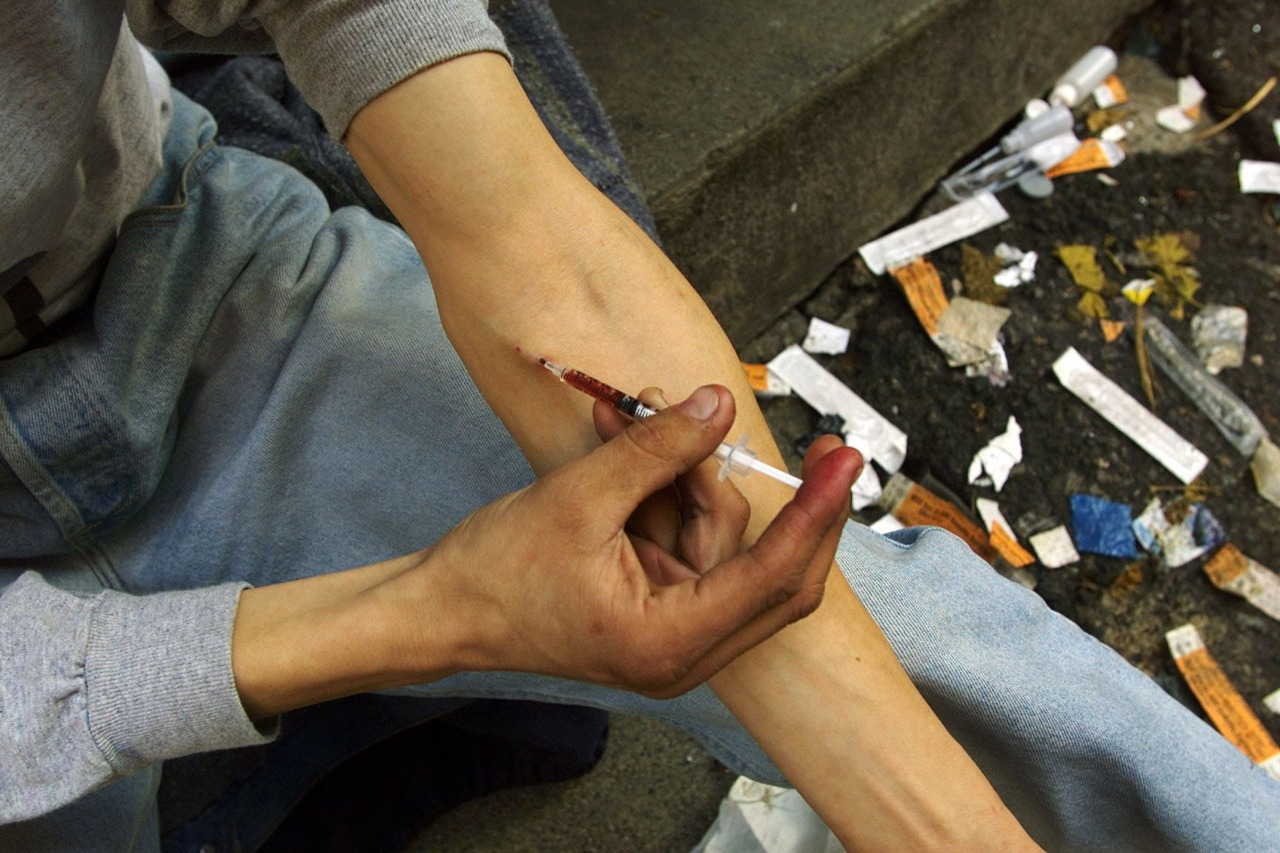
Availability of drugs in the Albanian penitentiary system poses a threat to individuals with a history of drug abuse and raises concerns on the efforts to regulate their behavior and treat addiction. Access to free health services, without discrimination on the grounds of their legal situation, is one of the basic principles for the treatment of prisoners. Despite some positive work being done in raising awareness on drug dependence in penitentiary institutions in Albania, the country lacks the structures necessary for providing effective treatment of dependency as a medical issue. Drug abuse policy and shortage of opioid medication in Albania permit only a limited number of prisoners to get treated.
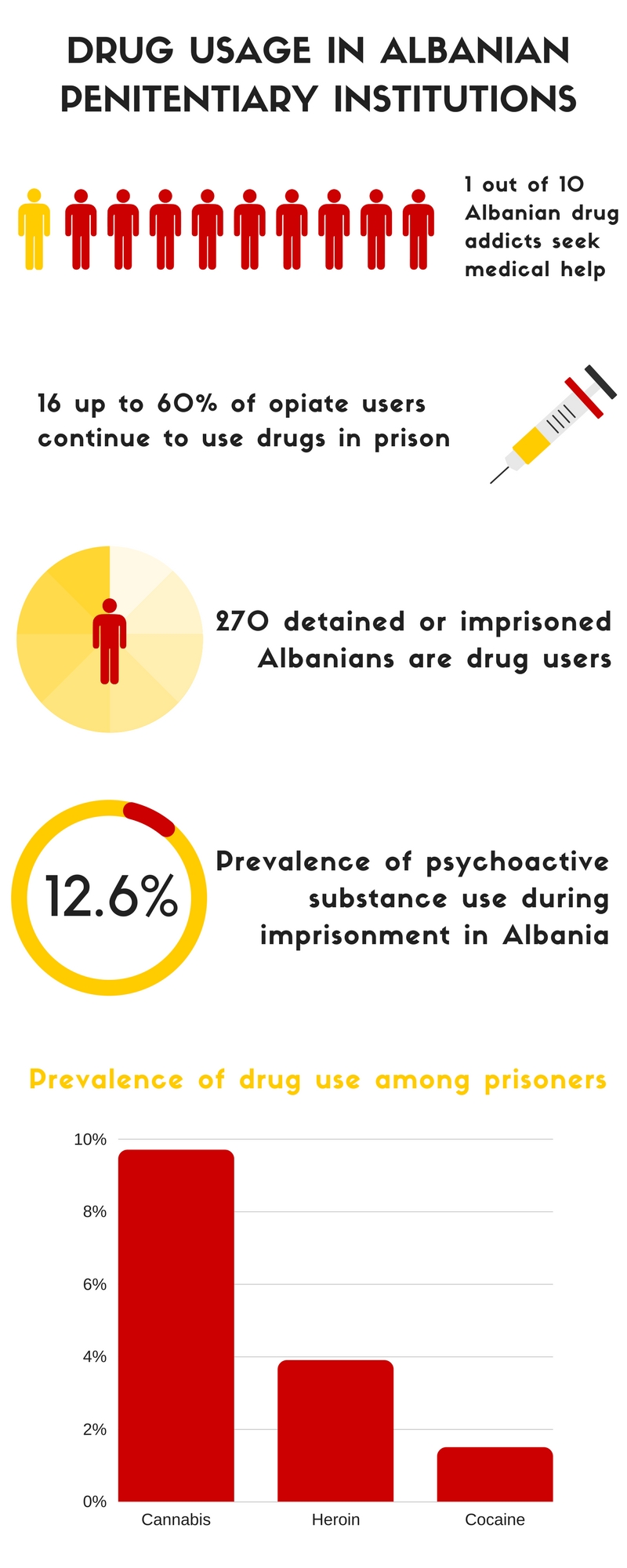
European researchers have found that 16 up to 60% of opioid users, will continue to use drugs in prison.[1] Not only this raises many health concerns due to the limited access to needles and syringes, but it should also serve as a warning sign addressed towards the decision-makers – a silent cry for help to treat drug dependency as to avoid potential overdosing in the future. This can be attained by introducing harm reduction and reinforcing rehabilitation treatments in the Albanian penitentiary system, which would allow experts to better assist prisoners in managing their addiction. Despite the fact that there are no reliable data on the exact numbers, it is estimated that around 270 detained or imprisoned Albanians are drug users[2].
Although the usage of cannabis is the most widespread, intravenous drug use remains a problem for a smaller percentage of prisoners. 5.3% of the respondents to a survey (Stop AIDS, 2015)[3] indicated heroin and cocaine as the most used illicit drugs, following cannabis. According to media reports, during cell checks, small doses of heroin and cocaine have been found. Inmates may acquire drugs most commonly through prison wardens or packages of goods and gifts from their families or visitors, to which the prison authorities turn a blind eye on. One of the most conspicuous examples in the past few years was that of Mariglen Pà«rgjini, a convict charged for murder and injury, who had allegedly obtained his dose of heroin from his lawyer. (Shqiptarja.com, 15 January 2015)
Surface-level efforts are being made to accommodate drug users in custodial and confinement settings. The Albanian Prison Service, along with the Institute of Public Health and organizations such as Stop AIDS, organize awareness-raising events, informing sessions and drug-prevention activities.[4] In spite of these efforts that appear to be implemented on the psycho-social level, there is no evidence of any specialized psycho-therapeutic support being provided. In fact, the Albanian Helsinki Committee has previously stressed the lack of psychiatrists engaged in the prison system.[5] Furthermore, the Ombudsman has emphasized the issue of overpopulation in prisons which might also hamper developing and implementing an individual-based rehabilitation program[6]. This program should be concordant to Albanian Constitution, on the individualization of the treatment based on the following criteria: psychological, social, gender, health, sexual orientation and gender identity, cultural and economic background – for which the assessment needs to be made prior to the treatment, and during the implementation.[7] Nevertheless, the General Directorate of Prisons has failed to provide department protocols for the evaluation of the conditions of drug addicted inmates. It is unclear whether and how assessments are currently being made, which is an alarming situation for the people behind the bars, as well as their relatives who are concerned for their well-being.
Another important issue related to the legal framework is the punishment of prisoners who use drugs while incarcerated. Agron Aliaj, imprisoned in Rrogozhina, was caught with two doses of cocaine hidden in his clothes, during a sudden facility check. The then-30 year old who was charged with drug trafficking, would face charges for illicit consumption as well. (Panorama, 21 February 2014) Many would argue that this is not the right approach. This incident shows that, not only the authorities have avoided conducting an initial assessment on the prisoner – thus, violating the above-mentioned law, but they have also neglected any signs Aliaj might have shown to indicate his drug dependency. Furthermore, his conviction as a drug trafficker should have been a sufficient ground for control and monitoring of his behavior and health.
When it comes to people addicted to opiate drugs, the primary focus should be on treating them, regardless of their status and regardless of the crime they are prosecuted for. “Drug dependence is a severe chronic disorder – and as a medical condition it should be treated and cannot be punished.” (Pompidou Group, 2017, p.7) says drug expert, Heino Stà¶ver.
Aksion Plus, a non-governmental organization, supported by Open Society Foundation and other donors, is the only supplier of methadone in Albania – an opioid medication, used to reduce withdrawal symptoms in people addicted to narcotic drugs. The organization, which has suffered shortages in methadone supply in the past, can only provide a limited quantity of methadone for detainees. Generally, prisoners are cut off of the methadone treatment when they are being jailed, with exceptions on severely deteriorated cases when Aksion Plus advises the penitentiary authority that the treatment should continue.[8] Although the organization intervenes in prisons with the cooperation of the Ministry of Justice, its actions are very limited. Nevertheless, an organization that relies on external donors should not be held as the sole responsible for the treatment of drug addicts imprisoned. The lack of governmental support in the medical treatment of drug dependency is an issue that deserves to be addressed because, in fact, it is the State that is required to cover all the medical expenses of prisoners. As such, methadone supplies and distribution need to be administered by the pertaining governmental structures.
The State’s reluctance to take action is undermining the efforts of every drug-dependent individual in confinement struggling to overcome addiction, without relying on help. Hence, putting them at risk of relapsing or even worse, overdosing once they serve their sentence. Reportedly, many drug-dependent individuals also suffer from communicable diseases and blood-borne virus infections, such as HIV or hepatitis C, which require efficient treatment services.
In order to put an end to the discriminatory policies in place which are hampering the individual efforts to overcome drug dependence while in prison, a successful cooperation between all actors involved is required. Thus, prison authorities need to secure the required quantity of methadone for all the persons which, according to experts’ assessment, have a history of drug abuse. This policy may be implemented with the assistance of non-governmental organizations which may contribute to the establishment of rehabilitation structures with the provision of experts, in accordance to the international standards that are applied, with respect to prisoners’ rights.
[1]. Stà¶ver, H., (2017) Treat—not punish! Criminal Justice and Drug Policy (pg. 6-7). Retrieved from https://rm.coe.int/criminal-justice-and-drug-policy-treatment-harm-reduction-and-alternat/16807667b3
[2]. Aksion Plus (2016) Parimet e trajtimit tà« varà«sisà« ndaj drogà«s. Politikat e drogave: perspektiva ndà«rkombà«tare dhe kombà«tare (p. 5). Retrieved from https://www.scribd.com/document/337506920/Politikat-e-Drogave-Manual-trainues-dhe-informues
[3]. European Monitoring Centre for Drugs and Drug Addiction and Institute of Public Health. (2017) Albania: National Drug Report 2017. Retrieved from http://www.emcdda.europa.eu/system/files/publications/4700/National%20drug%20report_Albania.pdf_en
[4]. Ibid
[5]. Albanian Helsinki Committee. (2016) Raport mbi situatà«n e tà« drejtave tà« njeriut tà« personave tà« privuar nga liria. Retrieved from: http://www.ahc.org.al/wp-content/uploads/2016/12/1._Alb__-_Raporti_i_Monitorimeve_2015_CRD.pdf
[6]. General Directorate of Prisons and Organization for Security and Development in Europe. (2015) Dokument politikash pà«r uljen e mbipopullimit nà« Institucionet e Ekzekutimit tà« Vendimeve Penale, p. 11.
[7]. Law on the rights of the treatment of prisoners and detainees, Albanian Constitution, art. 10 amend. 40 (2014).
[8]. Bell, J., (2012) UNODC Assessment of Drug Abuse Treatment Services in Albania, (draft report) p. 3.