TIRANA, April 1 – Brothers Astrit and Brahim Bilali were killed on Saturday close to their home in the Shkodra suburbs by persons still unidentified by the police.
The police so far suspects the murder is a continuation of several murders that took place last year, which are the result of clashes between criminal groups that have been operating for years in this city.
Astrit’s son was arrested last year for allegedly belonging to the ‘Bajri’ criminal group. The murder of the Bilali brothers rises the number of murders in Shkodra since last year to seven, none of which have been cleared by the police yet.
Ibrahim, 61 years old, was the head of the anti-communist “2 Prilli 1992” association, while Astrit, 59 years old, was a horse-racing champion.
The police reported that “police services went straight to the crime scene and are searching for the perpetrators who, after the murder, left with a vehicle that was later found burning in an alleyway in the neighborhood where the incident occurred.”
Meanwhile, Interior Minister Sander Lleshaj, who arrived in Shkodra a few hours after the event, at the end of a nearly four-hour analysis with local and Tirana-based police experts, stated that “the tentacles of organized crime have managed to hit again” and that the main lead the police is following to solve the murders is “settling of issues.”
Initial police doubts are linked to revenge and clash between criminal groups and the activity of Astrit’s son Asmir, a former boxing champion, arrested in September last year for allegedly belonging to the ‘Bajri’ criminal group.
Actually, criminal groups operating in Shkodra have a history dating 25 years back, filled with murders, threats, drug trafficking, prostitution, property theft, etc. Over the years, some of the groups left the scene after their leaders were killed and those who survived were the most powerful groups, operating on a family basis.
However, co-existence among those groups was disturbed last year’s January 13, when businessman Lulzim Kulla became the target of a commanded explosion. According to police, Kulla was recognized as a crime character in Shkodra and the murder attempt, which took place close to Shkodra’s most crowded market, injured eight people – among whom, Kulla himself.
The event was followed by successive murder attempts where, to date, nine people have been killed while two others have gone missing.
On June 2018, Gezim Hysa and his grandson Agron Molla disappeared without a trace. Following, on June 18, Mehdi Kavaja, owner of a service shop, was shot dead. On July 15, former police officer Boran Bercana and Silvi Ndoci, living with him, were also shot dead. On August 8, 2018, Fatbardh Lici, Lulzim Kulla’s brother-in-law and Mustafà« Lici’s brother, was killed. The latter was a municipal councilor and leader of a political party.
In addition, on September 1, businessman Arjan Ferracaku was shot as he was walking with Asmir Bilali, for which police suspects the perpetrators mistook the target.
On November 14, 2018, Fatos Ferracaku, cousin of Arjan Ferracaku, was shot dead in the crowded Rusi market.
The last murder before the double assassination of the Bilali brothers happened on March 20, 2019, when Nard Polia, owner of a guesthouse in Theth and a member of the Protected Area Administration, was killed in the Grude village.
The police has failed to prevent any of these criminal offenses that have shaken Shkodra residents and have echoed within the country and abroad.
Ferracaku’s murder at the start of September and the disturbed security in Shkodra became the reason why the opposition boycotted the year’s first parliamentary session, instead gathering in Shkodra and accusing the government of being tied with the organized crime groups that operate in the city.
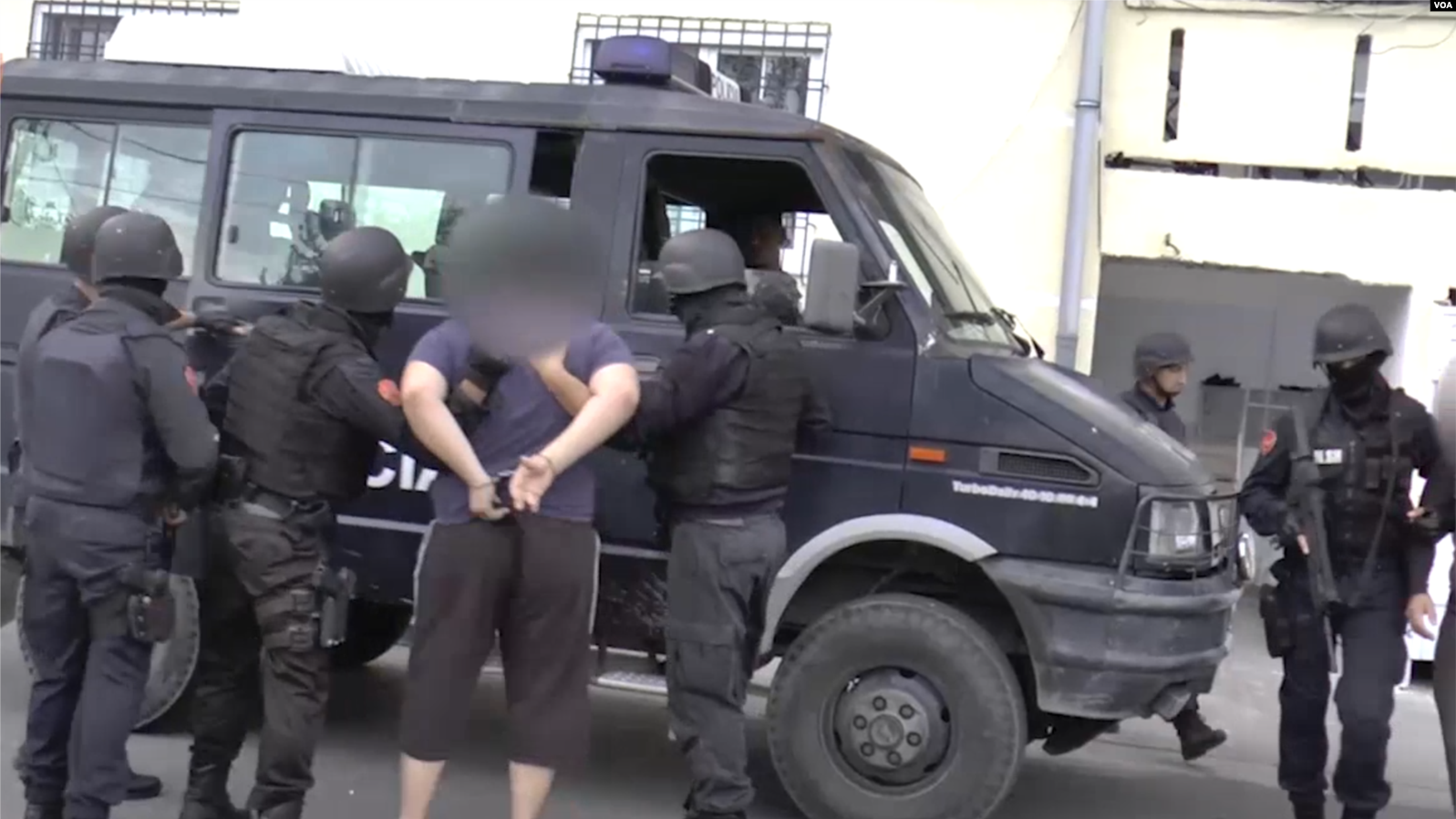
This reaction, along with the country’s tense political situation, seemed to push the police to launch its “Oasis” operation to take down one of the most powerful criminal groups – the ‘Bajri’ group. The police operation, one of the largest taking place in Albania in recent years, extended to Shkodra, Tirana, Spain and the Netherlands’ Rotterdam, arresting 12 group members and its leaders.
The situation seemed to calm down in Shkodra after these arrests up until Saturday; the Bilali murders brought back to public attention former Interior Minister’s Fatmir Xhafaj declarations, saying not one, but four main criminal groups, operate in Shkodra.
Unlike what was expected, operation ‘Oasis’ did not end murders or revenge among Shkodra’s criminal groups.
This was also accepted by Lleshaj on the day of the Bilali murders, when he said that “despite the blows given to the Shkodra crime, it turns out that the fight against this crime has still not been won. Metastasis of crime showed they are alive and can strike.”
On the other hand, local news channels and experts have not failed to point out that Shkodra only accounts for a part of crime-related murders and disappearances in the country and it is not the only city to suffer from high criminality rates and family-based criminal networks which threaten public order and security.
Among them is Vlora, Elbasan, Fier and Durres,all of which frequently make the news for the activity of criminal networks within them.