By ervin lisaku
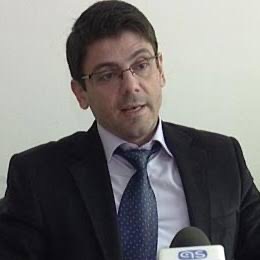
Adrian Civici, a well-known economic and financial expert admits the Albanian economy was severely affected by the global financial crisis in several key sectors such as construction, textile and footwear industry, partly tourism, foreign direct investment, trade, increased budget deficit and public debt rates.
Civici, who is also a member of the Supervisory Council of the central bank and the rector of a private university, told Tirana Times in an interview that a new growth agenda is needed to keep growth at high rates.
“From a model mainly based on consumption, we should target a model based on production and export,” says Civici
The Albanian economy seems to have returned to normal growth rates in the third quarter of 2010 when it grew 4.9 percent year-on-year after a slowdown in the first half. Do you think the Albania economy will manage to keep the pace and return to pre-global crisis growth rates in 2011 despite the crisis in some key sectors such as construction or telecommunications?
– In general, I think we are still far from the normal or multi-year trend of economic growth during the past decade. What’s positive is the fact that under direct and indirect impacts of the global financial and economic crisis, Albania managed to resist and remain among the few countries which registered positive economic growth rates. But if we continue to be satisfied with growth rates of 3 or 4 percent, we risk compromising the pace of economic and social development the country needs, which would require annual growth rates of 6, 7 or 8 percent. More concretely, referring to the third quarter when according to INSTAT, the GDP growth was at 4.9 percent, I think that what is specifically reflected in this period is the impact of the tourist season, electricity exports and the presence of domestic production, especially the agri-food one. Meanwhile, during the first two quarters of 2010, the Albanian economy suffered from a slowdown in the aggregate domestic demand, a low lending rate to businesses and individuals and an increase in bad loans especially by the construction sector, low imports of equipment and machinery, without mentioning the fact that the expected GDP growth rate for the fourth quarter will also reflect the effects of the flooding in the Shkodra area, the harsh political conflict in the country, the economic difficulties some European countries which are Albania’s countries are facing such as Greece etc.
How has the global crisis affected the Albanian economy? Which sectors were the hardest hit and which classes of society suffered more?
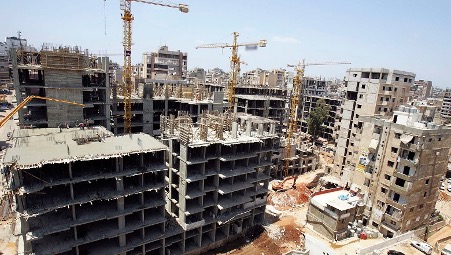
– Although the Albanian government has never openly admitted that the country was affected by the global crisis, many figures and indicators of the key economic and financial developments prove we were affected severely by the crisis. We were less affected by the real financial crisis also because of the low level of integration that our financial sector has with developed countries. Meanwhile, when the crisis affected the real economy, its effects came faster to Albania. The Albanian banks proved to be little exposed to toxic financial products which sparked the global financial crisis. Albania has been mostly affected in the construction sector, the facon (textile and footwear) industry, partly tourism, lower foreign direct investment, trade, increased budget deficit and public debt rates.
Considering that the main crisis effects appeared in phenomena such as unemployment rate, purchasing power, prices especially on basic food products and some fundamental services, it is estimated that the most affected groups were pensioners, youth, the jobless, inhabitants of poor rural and mountainous rural areas, and families mainly relying on migration.
How do you see the tightening of lending standards in 2010, and as member of Supervisory Council of the Bank of Albania, could you tell us if the central bank has any intervention plan to lower the key interest rate or temporary freeze the payment of loan instalments for businesses facing difficulty as Konfindustria has suggested?
– The tightening of lending standards by commercial banks in the 2009-2010 period came mainly as a reflection of banks toward effects and possible risks that the global crisis could bring. Under unclear economic and financial situations, and under conditions of a trend of rising bad loans, it is normal that in the frame of better administration of risk and banking management, lending standards will tighten. Starting from the third quarter of 2010, we are assisting a more positive trend to increase lending and ease standards applied by banks, which is a stimulus element for the development of the economy and the increase of domestic demand. But what’s more problematic right now is the reduction in demand for loans by many branches of businesses and categories of individuals.
Regarding the key interest rate, which is the key element of the Bank of Albania’s monetary policy, at the current 5 percent rate it can be considered as very comfortable for the price of lek. By keeping the key interest rate at a rate which is among the lowest historical levels, the Bank of Albania aims at giving a new impetus to credit growth and the modification of its interest rates in favour of borrowers and the country’s economic development. BoA acknowledges that currently its monetary policy effects are being transmitted faster and wider in the environments and monetary and financial institutions of the country. Every increase or decrease of the key rate will depend on a thorough analysis of factors such as the inflation rate and its trends, the progress of fiscal and monetary indicators, the main macroeconomic equilibriums such as the budget deficit, the public debt, the trade deficit and the balance of payment and the liquidity level etc.
What are the Bank of Albania’s expectations for 2011 on lek’s exchange rate to main two foreign currencies the euro and the US dollar as well as the inflation rate considering the growing prices of some basic food products or even fuel prices recently.
– In general, it is estimated that the lek/euro, lek/Us dollar exchange rate will preserve the stable trend of 2010, when it should be underlined that the rate of lek’s depreciation against the main two foreign currencies was lower, i.e lek was more stable. Of course, being the currency of a small country and economy, lek is very dependent on its exchange rate on the performance of the main two foreign currencies against each other and on the international financial markets. It is estimated that euro/lek ratio will have a lower volatility rate and more stable exchange rates than the dollar/lek ratio, also because of the fact that the fluctuation of the dollar in the international markets is expected to be higher during 2011.
Regarding the inflation rate, the Bank of Albania estimates that even during 2011 it will continue being kept under the 3 percent target with a tolerance of +,-1 percent, of course with the negative reserve that the staggering prices of some food and fuel prices could cause. If this effect proves to have a big impact on the inflation’s rising direction, then the BoA will modify its monetary policy in order to keep the inflation rate under its target parameters.
The World Bank has suggested that Albania should undertake a new growth agenda based on education and skills, ICT development, energy sector, and better governance and rule of law to be more competitive with other countries under the new status of an upper middle income country. Even the Bank of Albania is working on a new economic growth agenda, what can tell us more about this project?
– The economic agenda, in its gist, is nothing more than the re-shaping of resources and factors of economic growth in Albania. It is estimated that many of the growth resources that have traditionally influenced during the past 20 years such as remittances from the migration of more than 1 million Albanians who have managed to bring more than 1 billion euros per year, revenues from privatizations, aid and soft loans obtained under the status of a developing country and a country which is implementing structural adjustment programmes, poverty reduction or Millennium Development Goals, the expansion of the construction sector etc, are gradually losing their force and impact. In this respect, in order to guarantee a stable GDP growth, Albania must find new alternative growth resources and be more competitive with its products in the domestic and foreign markets. From a model mainly based on consumption, we should target a model based on production and export.
This is what I think constitutes the gist of the new economic agenda which privileges the development of education and economy of knowledge, information technology and numerical economy, the qualitative development of education, especially vocational training and universities; the guarantee of energy etc. Above all, Albania needs a new economic model which guarantees rapid development, reduces unemployment and includes as many groups of population and parts of territory in its dynamics, and guarantees us a faster convergence to the European economy. The best support to the new economic model is some important structural reforms, the improvement of the business climate, the final clarification of the property issue and political consensus.
How do you see the future of tourism in the Albanian economy and what should be done to attract more non-migrant tourists?
– Tourism will continue constituting a priority sector to the Albanian economy, considering that during the past years it proved to have enough development potential. The number of tourists has increased, their staying days have increased, its GDP contribution is on the rise etc. However, in order to have a fairer balance between Albanian immigrants coming for holidays or Kosovo Albanians who regularly come and foreign tourists, it is necessary to give priority to several elements related to improvement of tourist infrastructure at all levels, closer attention to cleanliness and environment, the improvement of opportunities for joint and massive transport, the diversification of tourist packages, because over 90 percent of them in June and July are on coastal tourism; a better link to tourism with history, ethnography, natural resources, culinary tradition, etc. Albania is situated in an area where the tourist competition is among the toughest in the world, and that’s why our policies in this direction should be as efficient as possible and with clear objectives. Competing with Greece, Turkey, Italy, Montenegro or Croatia, does not mean only to have a good desire or political will, but that eyes should be turned to real professionalism in the management of this sector which is still poor in Albania.
Government thinks of raising profit taxes for mobile companies and banks because of considerably expensive services and high profits. How do you see this move and will this intervention prove effective?
– Of course government has its right and duty to be concerned over the request that mobile and banking service fees should be as low or normal as possible for citizens. And we are also convinced that for many of these services we pay really high fees, especially if compared to those of regional countries or the EU. However, a typical “punitive” intervention by government seems difficult to me and without the expected effects. What is important in this case is that we should act in three important directions; the strengthening of the role and action of the Competition Authority to identify price abuses on the market and monopoly situations and punishing violators according to law; the increased demand and legal improvements which oblige these companies or banks to be more transparent with their costs and profits; the increase of competition by continuing to open the market with new operators. If these three factors are combined, the results would be more tangible than an act with populist and subjective connotations that government could undertake with direct interventions.