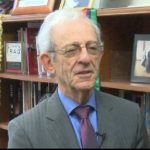
By Rudina Hoxha
Hido Biscevic, Secretary General of the Regional Cooperation Council (RCC), a regional cooperative framework for Southeast Europe countries, stressed in an exclusive interview with Tirana Times that the South East Europe is at a historical crossroad while the accession of Croatia and the beginning of accession negotiations for Montenegro in June next year certainly keeps the EU perspective and dynamics open and rolling. According to him, EU integration should be explained to the whole society after a vibrant EU environment is created.
Biscevic, a former Croatian diplomat and journalist, did not miss the chance to praise Albania’s role when it comes to regional cooperation. “In many areas, from infrastructure to initiatives such as e-SEE, Tirana is among the leading members. And, if I may step into the area of political assessment, I think that Albania’s political cooperation with neighbouring countries additionally helped preserve a favourable atmosphere at the times of great challenges,” he said.
The RCC, which succeeded the Stability Pact for SEE countries in February 2008, works to generate development in SEE and create a political climate that will enable implementation of projects of regional character to the benefit of the people in the region.
Full interview below:
T.T. Three years from its establishment, to what extent, has the Regional Cooperation Council (RCC) achieved its goals? Has the crisis of the Eurozone affected the activity?
H. Biscevic: – It would be, of course, too presumptuous to say that the RCC has achieved all of its goals. There are so many unfinished businesses in our region that the mission is far from over. I strongly believe that even when “everything is settled”, there will be room to engage our countries in cooperative frameworks of different kinds. We share many cultural and societal similarities, much of a common history, our economies are largely inclined to each other. The RCC still has much to do in terms of its core mandate, which is assisting aspiring EU countries to achieve their goal and, also, promoting Euro-Atlantic integration in the region. As to the effects of the Eurozone crisis, of course they are harsh – after all, our economies are interlinked with the EU’s economic and financial market, so it was only a matter of time and proportion of the spill-over.
T.T. How does the RCC coordinate efforts with the EU to help aspiring countries towards their final end – integration?
H. Biscevic: – Let me answer by offering an illustration – recently I made a comparison between the RCC Strategy and Work Programme 2011-2013 and detailed requirements from the European Commission’s Enlargement Package, with a long list of things that aspiring countries from the region need to fulfill along their accession road. And it transpired that almost 80 percent of our Work Programme is already covering the “acquis list”. Thus, in many priority areas – and in particular in justice and home affairs, rule of law, media and others – the RCC has created a platform to assist the aspiring countries to better prepare themselves for EU negotiations through a joint work in these areas. In addition, we have been discussing with the European Commission, in particular with the Directorate General for Enlargement, ways to enhance the role of the RCC in the enlargement process.
T.T.Please, can you share with us any lessons which RCC has surfaced on the way for the aspiring countries, so they can surpass obstacles quicker and lose no time?
H. Biscevic: – The lessons learned along the way strongly indicate that in many areas of future EU negotiations countries share the same or similar insufficiencies. If one goes through the Progress Reports for the aspiring countries over the last several years, it is clear that they share the same challenges in meeting requirements in justice and home affairs sector, rule of law, administrative capacities, freedom of the media, etc. But, there are also other areas, from security cooperation to refugee issues, from trade to migrations, where obstacles can be surpassed faster precisely through cooperation.
T.T. With the eye of a former diplomat and a journalist, how do you see the last developments in the SEE? How has RCC contributed to their goal-attainment?
H. Biscevic: – I think that South East Europe is at a historical crossroad, in particular if we look at the unfinished peace in the Western Balkans. The last decisions by the European Council – confirming the accession of Croatia, indicating the beginning of accession negotiations for Montenegro in June next year, and providing Serbia with an additional opportunity to confirm its full European capacity and political consensus around this goal – certainly kept the EU perspective and dynamics open and rolling. But, at the same time, there are several issues and unresolved, now almost residual questions hampering the advancement of others. In addition, the international agenda is changing, there are new priorities and there is a clear danger that parts of the region may fall into a prolonged status quo, with a few frustrating frozen issues. This unfortunately bears a negative potential not only in terms of completing peace but also in terms of stability and security, not to mention the biggest danger – creation of a prolonged strategic imbalance in the region or even a strategic vacuum from the Euro-Atlantic viewpoint.
T.T.Being a journalist from Albania, I am curious to know where do you position Albania in the context of the SEE regional cooperation?
H. Biscevic: – I can say with great satisfaction that Albania is very active and supportive when it comes to regional cooperation. In many areas, from infrastructure to initiatives such as e-SEE, Tirana is among the leading members. And, if I may step into the area of political assessment, I think that Albania’s political cooperation with neighbouring countries additionally helped preserve a favourable atmosphere at the times of great challenges.
T.T. To what extent, is the civil society involved in the regional activities?
H. Biscevic: – Civil society is particularly important. EU accession and general modernization of our societies is not and should not be a job only for politicians. That is why in the RCC we have recognized the importance of civil society cooperation. On two occasions already, we have brought together European Movements from the region, and their representative was also invited to the last South-East European Cooperation Process (SEECP) Summit in Montenegro. At the same time, just a few days ago, we co-organized a conference of civil society organization networks in Western Balkans and Turkey, to discuss their greater participation in EU integration processes and in implementing the RCC Strategy and Work Programme.
T.T. One of your books is “EU for YOU”. In your view, what’s the most appropriate way to explain integration to the people?
H. Biscevic: – Remembering how we did it in Croatia at the beginning of the accession process, I think it is important to share a full picture and a comprehensive truth about the EU with all segments of a society. I remember that we printed the “EU for You” book so that every pupil in elementary and grammar school could get it for free, take it home, get their parents and grandparents intrigued. There was a vibrant EU environment. This is just one example, indicating that the EU idea should be deeply embedded into a society, and not remain a “game” of the political class only.
T.T. How do you see RCC in 10 years and its objectives accordingly?
H. Biscevic: – As I said, even when we resolve all the issues related to the EU accession of all of our countries, when this region is fully stabilized, when our part of Europe is just the same as any other part of Europe, there will be a need to cooperate. I am sure you have noted that I said “when” and not “if”. And I hope that that “when” will take less than 10 years.