Europe Makes Calming Calls
Tirana Times
TIRANA, Feb. 19 – The longstanding political deadlock threatens Albania’s European perspective, Eduard Kukan, head of the European Parliament’s delegation for relations with Southeast Europe, was quoted as saying last week.
Deutsche Welle said Kukan confirmed that the debate held at the European Parliament earlier in the week on Albania was constructive and demonstrated politicians’ determination to solve the crisis. He stressed, however, that preparations for the May local elections must get off the ground, and the OSCE’s recommendations on the Elections Code must be addressed.
European Commission Ambassador in Tirana Ettore Sequi said Tuesday that the current political conflict may delay the country’s integration steps toward the bloc.
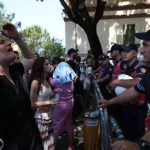
The bitter stand-off between Albania’s Socialist opposition leader, Edi Rama, and Prime Minister Sali Berisha of the Democratic Party continued to intensify and there were no signs of abating.
With no solution in sight, Albania’s aspirations for EU membership have for the moment been thrown into question. The victims of the saga are a people struggling to get by on meager wages, amid government corruption and a crumbling infrastructure.
Last year, the European Commission opinion on Albania’s application for EU membership called upon the country to strengthen rule of law, ensure political dialogue and establish a properly functioning parliament.
But ugly scenes of members of parliament trading blows have done little to inspire confidence. To compound the misery, Ilir Meta, the now former deputy prime minister and close ally of Prime Minister Berisha, was caught on camera attempting to influence a huge government tender for a hydroelectric power plant. He resigned on 16 January. The corruption case has fuelled resentment.
EU enlargement commissioner Stefan Fuele has issued a stark warning. “The tone in Tirana needs to change. The dangerous downward spiral must end. The political crisis must be resolved,” he said in a statement delivered at the European Parliament last week.
EU foreign policy chief Catherine Ashton sent her special envoy to the western Balkans, Miroslav Lajcak, to mediate, but to little avail. Lajcak asked the leaders to stop the violence and get the political dialogue back on track. He also asked them to implement the 12 priorities outlined in a 2010 commission opinion. The origin of the escalating controversy is a disputed June 2009 national election. Rama, who lost against Berisha, says it was rigged – a position he has maintained throughout.
A 2009 report by the Organization for Security and Co-operation in Europe (OSCE) says the country does not meet international standards for a democratic election. The OSCE recommendations to improve the election process have yet to be implemented. The opposition refuses to recognize any election results so long as proper standards are not in place. Because of this, the upcoming local elections in May are in jeopardy.
Rama is now calling for more protests, “peacefully but decisively” insisting for a snap national election, that is vehemently opposed by Berisha.
Albania, which became a NATO member in 2008, had its visa restrictions to the EU lifted in November 2010.