
On November 16 the Council of Ministers of the European Union (EU) formally approved the application for membership of Republic of Albania. Also after lifting the visa regime for some countries of Western Balkans, namely Montenegro, Former Yugoslav Republic of Macedonia and Serbia, soon Albania and Bosnia and Herzegovina are expected to join this liberalization proposed by the European Commission. These recent events have brought optimism in regard to Albanian integration and its rapprochement with the EU. Furthermore, what is more important is that this approach with the Union will soon bring to an end the long and difficult transition period of the Albanian citizens.
Unlike the perception of the Albanians on EU membership, the problems they have (the inability of conducting elections with the requirements asked from international institutions, corruption, high unemployment and poverty) can not be solved only by becoming part of EU. At the same time the EU, as it has been proven from the former communist bloc countries, is not the Promised Land.
These last twenty years the ‘European integration’, the ‘West’, the ‘Euro-Atlantic structures’, and many similar expressions have always been the keywords used by the political elite in Albania. Moreover, the target of two major political parties as well as majority of other parties in the country has always been European integration. Albanian citizens, since the fall of communism, consider accession to the EU as the only salvation from their woes. Over the course of the last 20 years, the zealous worship of the EU in the Albanian political elite and society has made accession look messianic.
This ‘messianic perception’ of accession has been the ultimate goal of the post-communist Albanian political machine. After Albania becomes a member state, politics’ primary mission has been completed. With EU membership, Albanian political history will come to an end. The Albanian people can finally live their European dream and the elite will have accomplished its two-decade long objective by integrating Albania into the so-called European family. After integration, Albanian politics will be devoid of objective, direction or mission.
Indeed, the integration process has been a boon for Albania, as it was to the former communist states, by catalyzing large-scale reforms. Also the promise for a future membership to the Western Balkan countries, has contributed to the reduction of ethnic conflicts and nationalist movements in the region. However, Albania’s integration is not considered as a reform initiative, but rather as an escape from all the problems from the communist regime, and the chaos that ensued after its fall. Interestingly, the Albanian mindset mirrors that of the citizens’ in Central and Easter Europe (CEE) prior to their accession. Despite the dream of integration becoming a reality for CEE in 2004 and 2007, the same problems that plagued them remain today.
Citizens of the above-mentioned countries continue to have the same complaint for their governments. Corruption in most of these countries still remains a problem (although not as endemic and widespread as in the Balkans and Albania in particular). The significant inequity between “old” and “new” Europe remains a tangible problem in the CEEC, despite their considerable economic development since 1989 and the significant transfers from the EU’s development programs. Though all member states are in the same ‘club’, the economic disparity between the western member states and the eastern ones persists, generating incentives for citizens to migrate from CEECs to the Western European economies.
Albania faces the same problem. Considering the experience of CEECs, even after Albania becomes an EU member-state it will continue to have the identical difficulties that exist today. Brussels cannot solve Albania’s problems, and integration may generate a brain drain, further crippling the Albanian economy and creating a sense of disappointment with integration. Rather than focusing on transferring EU-designed governance and reform models with accession as the end goal, Albania should focus on its own development independently, using home-grown reform initiatives that involve the political elites and the other elements of society. Not only will this strategy bring an end to the protracted transition period Albania is in, but will also accelerate the country’s development. Such a strategy will cause the EU to look at Albania as a desirable member, rather than Albania looking at the EU as its messiah. Albania should create a value added so that the European Union wants Albania in its club, rather than the opposite, which characterizes today’s status quo.
European Integration and the End of History

Change font size:


Latest from Op-Ed
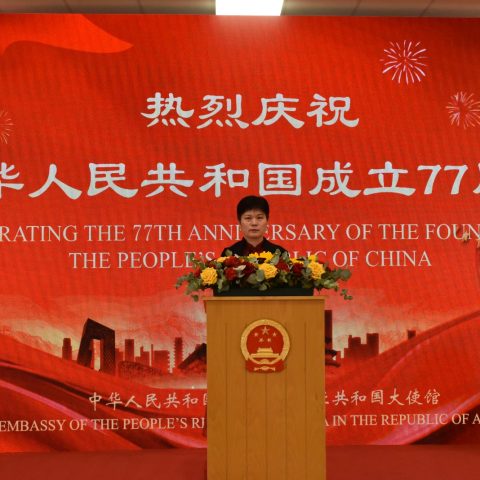
China: Development, Openness and Cooperation
Change font size: - + Reset by H.E. Pang Chunxue, Ambassador of the People’s Republic of China to Albania Seventy-seven years ago, Chairman Mao Zedong proudly declared to the world: “The Chinese
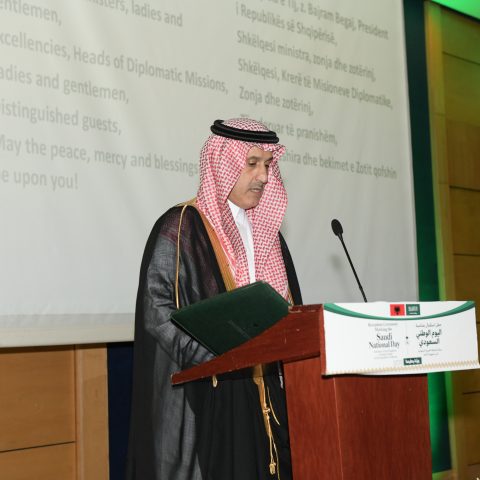
Saudi Arabia: Vision, Peace and Partnership
Change font size: - + Reset By Turki bin Ibrahim Al-MadiAmbassador of the Kingdom of Saudi Arabia to the Republic of Albania National Day is an occasion to recall the historic journey

No More Fake Enlargement
Change font size: - + Reset By Genc Pollo Tirana Times, September 21, 2026 – At Thessaloniki in June 2003, the European Union made a promise that sounded historic and irreversible. The

It’s not just the verdict that is unjust
Change font size: - + Reset By Daniel Serwer Tirana Times, September 17, 2026 – The Kosovo Specialist Chambers’ has convicted former President Hashim Thaci and three other Kosovo Liberation Army leaders of war

September 16: Justice, History and Kosovo’s Statehood
Change font size: - + Reset By Sylë Ukshini Tirana Times, Sept. 15, 2026 – The September 16 judgment at the Kosovo Specialist Chambers in the trial of former Kosovo President Hashim