TIRANA, April 30 – Albanian exporters have warned the considerable strengthening of Albania’s national currency, lek, against Europe’s single currency in the first four months of this year will lead to losses of at least €100 million for the country’s economy for 2018 alone.
In an open letter to Prime Minister Edi Rama and central bank governor Gent Sejko, the Albanian Export Center representing some of the country’s main agri-food producers and exporters, says the situation could escalate to crisis unless no measures are taken.
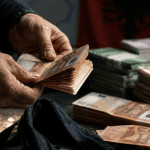
Europe’s single currency currently trades at a 9-year high of 128.86 lek, down 4.5 percent compared to the same period last year with a negative impact on the country’s poorly diversified and Eurozone- oriented exports and also damaging local producers who now face tougher competition from cheaper imports.
Exporters attribute the faster strengthening of Albania’s national currency in the first four months of this year when the euro lost 3.2 percent of its value, to Albania’s central bank de-euroisation strategy. Already partly in force, the strategy targets reducing current high levels of euro-denominated deposits and loans, accounting for about half of the country’s savings and credit, a key barrier for the pass-through of Albania’s easier monetary policy to stimulate sluggish lending and consumption.
“As we had already warned since the de-euroisation strategy was publicly unveiled, there were expectations that the action undertaken under its framework and simply its psychological effect would have a market impact by depreciating the euro against the local currency and this way damage the exporting industry, tourism and the country’s most vulnerable groups who rely on remittances,” says the Albanian Export Center.
The new de-euroization rules that Albania’s central bank will apply by next June make it more expensive for commercial banks to provide euro-denominated loans and accept deposits in Europe’s single currency, by increasing compulsory reserve requirements.
Farmers seem to be the hardest-hit category with a double setback from lower export income but also tougher domestic competition from cheaper milk and meat imports, exporters say in their letter.
Albanian exporters estimate the country’s economy will be stripped of at least 14 billion lek (€108 mln) for 2018 if Europe’s single currency continues to trade at this 9-year-low rate against the Albanian lek.
There will be 7 billion lek (€54 mln) less in internal circulation from export losses, 3.5 billion lek (€27 mln) in losses from remittances and another 3.5 billion lek from tourism to account for a total of 14 billion lek less circulating in the Albanian economy, says the association.
According to the Albanian Export Center, losses are far bigger if damage to the state budget and export and tourism-related industries are taken into account with total damage equal to creating about 3,500 to 7,000 jobs.
“I believe those figures are significant enough to establish a working group that would manage the situation arising from this rapid devaluation of the country’s exporting capabilities and a decline in money circulating in the Albanian economy,” says Alban Zusi, the head of Albanian Export Center.
“If the situation persists, in autumn we will have the first crisis effects and in spring next year nobody will deny the crisis,” warns Alban Zusi, a former deputy Agriculture Minister from 2013 to 2015.
In late March 2018, when the euro traded at similar levels, Albania’s central bank said it was not planning to make any intervention in the country’s free-floating exchange rate regime determined by market demand and supply.
“The Bank of Albania intervenes in the market in case of sharp fluctuations in the exchange rate, and the occurrence of circumstances specified by the central bank. In the concrete case, we deem that the circumstances specified for intervention are not in place,” central bank governor Sejko told journalists then.
The national currency, lek, has been on a gradual upward trend that began in mid-2015 as the euro’s five-year reign of about 140 lek came to an end, negatively affecting Albania’s poorly diversified exports, two-thirds of which are destined to Eurozone countries.
Albania’s central bank attributes the strengthening of the national currency against the euro to higher GDP growth fuelled by an increase in FDI and tourism revenue, but the opposition and some experts say the euro inflows from the peak cannabis cultivation 2015-2016 and ongoing drug trafficking have also had an impact.
On the positive side, the depreciation of the euro against the national currency is good news for borrowers in Europe’s single currency who have their income in lek, the government’s external debt payments as well as imports whose cost has slightly dropped.
No visual effect on exports so far
The significant strengthening of Albania’s national currency has had no apparent negative effect on exports in early 2018 as they grew by 19 percent in the first quarter of this year and seem on track to register strong growth for this year, mainly due to the resumption of electricity exports and crude oil production wholly destined for sales abroad following the bankruptcy of a local refiner.
Albania’s exports grew by 12 percent in 2017 following modest growth of 0.1 percent in 2016 and a 5 percent decline in 2015 triggered by a sharp cut in international oil and mineral prices.
However, certain industries such as the garment and footwear relying on cheap labour costs and tourism whose package holidays have already been booked could be negatively affected by the national currency’s ongoing strengthening.
Exporters have earlier warned a stronger national currency could make them lose their competitive advantage especially in key sectors such as the garment and footwear industry producing the country’s top exports, employing about 100,000 people and relying on cheap labor costs.
The travel and tourism industry was one of the key drivers of the Albanian economy in 2017 when it generated a record high of €1.7 billion in income, up about 12 percent compared to a year ago as the country was visited by more than 5 million foreign tourists, according to central bank and INSTAT data.
Albania’s exports are currently poorly diversified with three-quarters of them relying on ‘garment and footwear,’ ‘minerals, fuels and electricity’ and ‘construction materials and metals,’ exposing the country’s economy to industry-specific shocks such as the mid-2014 slump in commodity prices significantly reducing the country’s key oil and mineral exports.
A Harvard University study has unveiled Albania needs to consider the plastics and agriculture sectors to diversify the country’s exports in order to make the country’s economy more competitive and reduce exposure to international headwinds such as sharp swings in energy prices.