TIRANA, May 17 – With two-thirds of Albania’s exports destined for Eurozone countries, the country’s exporters are suffering their first blow from the considerable strengthening of Albania’s national currency against Europe’s single currency during the first five months of this year.
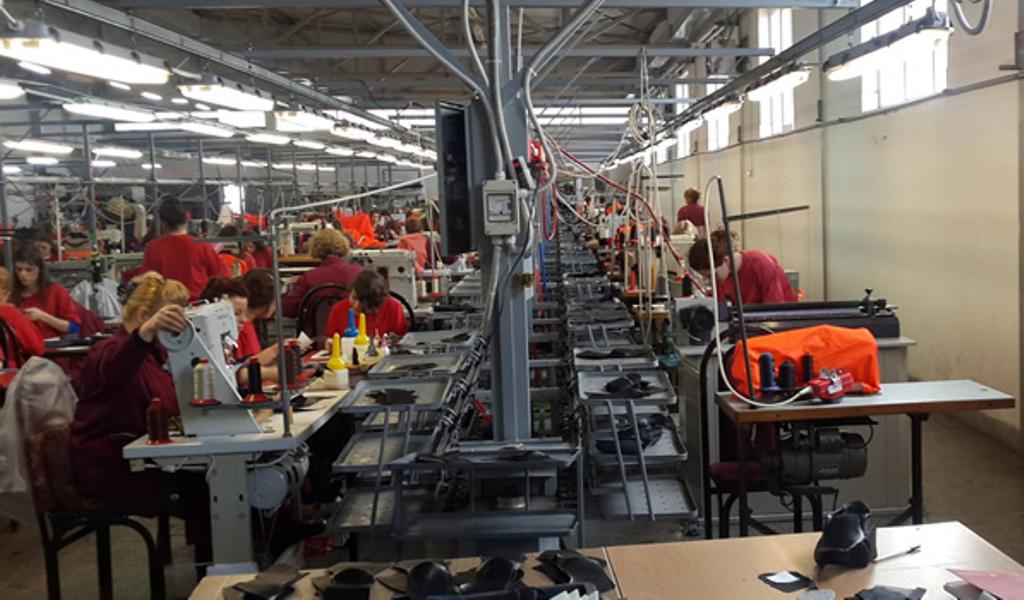
The garment and footwear industry producing the country’s top exports is the hardest hit industry due to the low value-added exports it produces as the raw material is overwhelming imported from Eurozone countries, mainly Italy, and labour costs and taxes are incurred in the national currency, lek.
“Garment and footwear” products, accounting for 40 percent of Albania’s poorly diversified exports, grew by a mere 5 percent year-on-year in April 2018 following double-digit growth rates in the previous three months as the Euro traded at a 10-year low of an average of 129.3 lek, down from 135.4 lek in April 2017, a depreciation of 4.5 percentage points, according to INSTAT and Bank of Albania data.
Their growth for the first four months of this year also slowed down to 10 percent, down from 11.6 percent in the first quarter of the year as the national currency continued to gain ground against the Euro.
Europe’s single currency was more stable this week trading at an average of 127.3 lek after hitting a 10-year low of 126.86 on May 9 but has depreciated by about 5 percent compared to the mid-January peak level of about 134 lek for this year and is about 9 percent lower compared to the mid-2015 as the euro’s five-year reign of about 140 lek came to an end.
Garment and footwear producers, relying on cheap labour costs, say they are incurring huge losses and some of them been forced to cut staff to handle the situation.
However, Finance Minister Arben Ahmetaj has downplayed risks, saying the maximum losses garment and footwear producers could incur even if the national currency strengthens by 20 percent is about 2 to 3 percent more in costs as the industry overwhelming imports from Eurozone countries and trade in euro and the added value they produce is only 20 percent.
Garment and footwear companies in Albania have been facing rising difficulty in finding new workers in the past few years amid hesitation and refusal of potential employees to work for low wages, rising competition by call centers offering much better benefits and a new migration wave.
The sector is mostly involved in cut-make-trim production and overwhelmingly imports raw materials, designs and patterns but there are also a few emerging Made in Albania brand that have upgraded to full cycle production.
Albanian exporters have warned the considerable strengthening of Albania’s national currency, lek, against Europe’s single currency in the first four months of this year will lead to losses of at least €100 million for the country’s economy for 2018 alone.
However, the country’s central bank says it cannot intervene in the country’s free floating exchange rate regime and that its adopted de-euroisation measures discouraging massive savings and borrowing in Euro have not had an impact yet as they become effecting starting next June.
The central bank and the Albanian government say the strengthening of lek is a signal of Albania’s recovering economy and increased Euro inflows from major FDI projects and tourism, but the opposition and some experts doubt the main reason behind this situation is euro inflows from drug cultivation and trafficking that are allegedly being laundered in construction projects.
The newly adopted de-euroisation package makes it more expensive for commercial banks to provide Euro-denominated loans and accept deposits in Europe’s single currency, by their increasing compulsory reserve requirements and lowering requirements for credit and savings in the national currency.
However, Albania’s exports seem on track to register double digit growth rates for this year, fuelled by ‘construction material and metals” as well as recovering crude oil exports and the resumption of electricity exports following heavy rainfall since late 2017 improving hydro-dependent domestic electricity generation.
Albania’s exports grew by about grew by 16.8 percent to about 101 billion lek (€780 million) in January-April 2018, but met only about half of the country’s imports which grew by 8.4 percent to produce a slightly higher trade gap compared to the first four months of last year.
Italy, Germany, Greece and China were Albania’s top trading partners for the first four months of this year with traditional top trading partner Italy accounting for about 36 percent of Albania’s total trade exchanges.
Albania’s exports grew by 12 percent in 2017 following modest growth of 0.1 percent in 2016 and a 5 percent decline in 2015 triggered by a sharp cut in international oil and mineral prices.