By Vaske Papa
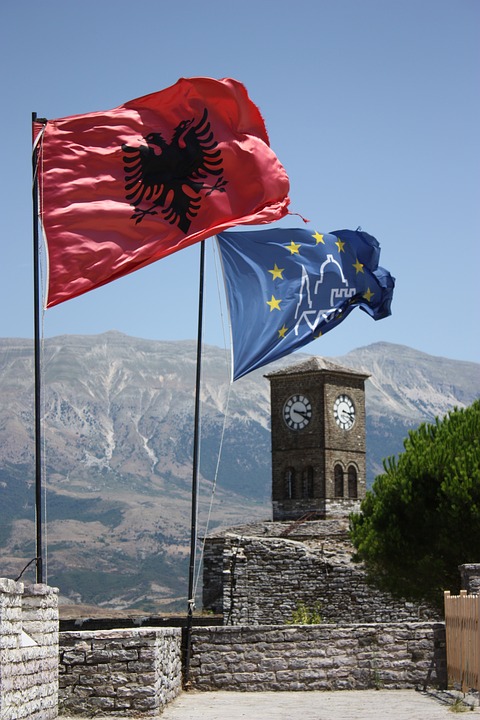 Visiting Albania this week, Germany’s foreign minister said: “In my country, and in Europe, it is absurd to boycott parliament.” This is one of those statements that is so obvious, no one really needs to say it.
So, yes, it is is absurd to have a boycott of parliament in Germany or any well-established European Union country. It is equally absurd and inconceivable to have the German/EU opposition seeking the resignation of the prime minister just a couple of months ahead of scheduled elections. On the same vein, it is absurd for the opposition to seek a caretaker government to manage elections – or a government of trust as the Albanian speaker of parliament calls it.
But all of it – the opposition’s parliamentary boycott and the demand for a caretaker government to prepare and organize elections – have happened in Albania, a country with a very heavy legacy of barbaric oppression of freedom and human rights, incomparable to any other country under communism. Although 25 years have passed since the fall of communism, in Albania the rule of law and constitution are applied at a very low level. And, to make things worst, the interests of the public are secondary to those of the oligarchs, politicians – and criminals.
So German Foreign Minister Sigmar Gabriel is also right when he says that: “What distinguishes Europe from [Albania] and elsewhere in the world is the rule of law and the Constitution. The rule of law must ensure and guarantee that at the end of the day, the spotlight will be of interest to citizens and not to different cliques.”
But let’s move beyond abstract terms when comparing Europe to Albania in rule of law and constitution. How are they different in practical terms? Let’s create a scenario to better understand the difference.
Suppose for example that the German Bundestag or the parliaments of German states had members of parliament that were criminals – even murderers – elected on voting day. Imagine a scenario where it gets so bad that these German legislative bodies had to pass a decriminalization law.
Suppose that Germany or any other European country cultivates illegal narcotics at an industrial scale and then smuggles them for sale to neighboring countries by land, sea and air.
Suppose that every three days a police station has to disbanded due to its involvement in drug trafficking and other criminal activities.
Suppose that a German political party comes to power and quickly starts purges in the civil administration. Had Albania been as large as Germany, in three years, it would have had to pay 62 million euros to those who were illegally fired on political, clannish, tribal and corrupt grounds.
Suppose that in Germany, the top national television channels and the majority of the print and online press are controlled by the government – attacking the opposition day and night – as it happens in today’s Albania. The four national television stations in Albania, where most Albanians get their news, are now all captured by the government. Suppose that was the case in Germany. Can you imagine a well-established European state were independent voices criticizing the government are few and far in between and drowned out by the mighty media outlets in the government’s pockets. If you can’t, you should know it is happening in Albania.
As such, some of the comments made by the German foreign minister this week are irrelevant because they apply to the reality of a normal European state – and Albania is not one of them.
Germany’s foreign minister statements this week show more than the failure of the opposition or the success of the government to pitch their cases to the international community. It shows a clear lack of understanding of Albanian realities by key European leaders.