Interview with Australian Ambassador to Albania, Jenny Bloomfield
By Anastasia Nazarko
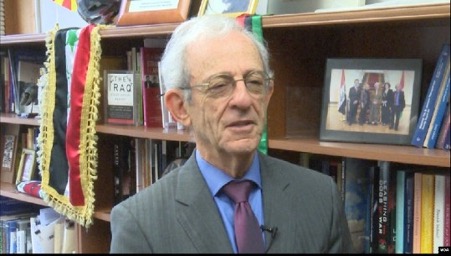
This week, Tirana Times had the honor of an exclusive interview with Australian Ambassador to Albania Jenny Bloomfieldةn which she opened up about the Albanian community in Australia, and her hopes for the two countries’ bilateral relations.
TIRANA, Nov. 10 – Australia is a continent, whereas Albania is a tiny countryءlmost a village in comparison to the size of Australia. What can Albania offer to Australia, and Australia to Albania?
Albania and Australia share a warm and productive relationship, underpinned by community and people to people links and a joint commitment to international peace and security.
The Albanian community in Australia, estimated at some 20,000, makes a positive contribution to Australia’s multicultural society and provides a strong foundation to further develop our relationship.
More important than the comparative size of our countries and the distance between us are our enduring community bonds, our shared commitment to peace and prosperity, and our willingness to work together to achieve common goals.
Albania and Australia hold similar viewpoints on many international issues. We share a commitment to global peace and security, and a commitment to working together in multilateral organizations to address global challenges. Australia greatly appreciates Albania’s contribution to international peace and security including through its membership of NATO, the Organisation of Security and Cooperation in Europe, and its support of international efforts in Afghanistan.
As an island continent, a trading nation and a country with a long history of immigration, Australia has forged close and productive partnerships with countries very diverse or distant from our own. Our country has a western tradition, a society of people from a rich variety of cultural, ethnic, linguistic and religious backgrounds, and a strong, open economy. We are a key member of our own Asia Pacific region and active in international organizations including as a founding member of the United Nations, with a strong record of contribution to global security and prosperity.
As Australia’s ambassador to Albania, I am committed to working together to enhance our bilateral relationship and to further strengthen our cooperation in addressing global challenges.
Albania and Australia established diplomatic relations in 1985. How did this come about?
The decision to establish diplomatic relations with Albania was a natural one for Australia, given the warm and enduring community links between our two countries. This decision reflected the positive contribution by the Albanian community to Australian society, as well as our modest trade links. Australia had recognized the post-war Albanian state for some time, but in 1985 Albania was the only country in Eastern Europe with which Australia had not yet established diplomatic relations. Australia was also among the first western countries to establish diplomatic relations with Albania at that time.
Australia recognises the considerable achievements of the Albanian people in recent times. We welcome Albania’s positive engagement with its region, as well as its important contribution to international peace and security goals.
Our growing contacts and shared outlook on many international issues have greatly increased the common ground and scope for closer cooperation between our two countries. We would like to strengthen even further the dialogue and cooperation between our two countries in areas of common interest.
How would you describe the evolution of these relations in the past 26 years?
The bilateral relationship has continued to grow, aided by the close and enduring bonds between our communities. In recent years there has been a significant increase in contacts between us also at the political level. Albanian and Australian Prime Ministers and Foreign Ministers, as well as members of our respective parliaments, have regular contact in international forums and exchange views. Australia would also welcome exchanges of two-way visits to strengthen our relationship.
These contacts reflect our two countries’ shared concerns about international security and prosperity. We have a number of common reference points: NATO, of which Australia is a contact country, Afghanistan, where Australia is the largest non-NATO contributor of troops; and the OSCE, of which Australia is an Asian partner for cooperation. Australia supports Albania’s EU trajectory and integration with the European continent, including in the context of our own deepening partnership with the European Union.
Albania is an important country in the Western Balkans and integral to the achievement of lasting stability in this region. Australia recognises significant progress made, and would like to see Albania’s continuing development as a peaceful and prosperous country in a peaceful and prosperous South Eastern Europe.
Europe is important to Australia, both as a trading partner and as a strong international actor with whom we share values and interests. Albania is, fundamentally, a European nation. We welcome Albania’s contribution to peace and stability in the Western Balkan region. We also welcomed Albania’s accession to NATO and support its continuing development and progress towards European integration. We greatly appreciate Albania’s contribution to international peace and security, including our joint commitment to the international effort in Afghanistan.
Our challenge, for both Albania and Australia, is to further build our relationship. As Australia’s Ambassador to Albania, this is a goal to which I am strongly committed.
Is Albania a country that is well-known to Australians? Could you tell me a bit about the Albanian community in Australia?
Australia is a country of migration. One quarter of our population was born outside Australia and many Australians are the children or grandchildren of migrants who came to Australia, particularly in the post-war years. This, and our relative geographic isolation, has made Australia a very outward-looking country.
The Albanian-Australian community, estimated at around 20,000, continues to make a strong and positive contribution to Australia’s multicultural society, and has increased significantly Albania’s profile in Australia.
Albanian Australians have been successful in many fields and contribute to our community in a variety of ways. To give one example: in August this year the Australian Prime Minister, Julia Gillard, appointed South Australian District Court Judge,Justice Rauf Soulio, of Albanian descent, as Chair of the new Australian Multicultural Council. The Council was established to advise the government on multicultural policy and to ensure that Australian Government services respond effectively to the needs of Australia’s diverse communities.
Albanian migration to Australia dates back to the late 19th century. Around 1000 Albanians arrived in Australia in the 1920s and won reputations as hard, reliable workers accustomed to rural life. The community continued to grow in Australia’s agricultural areas and, after the Second World War, several hundred Albanians came to Australia and settled in our second largest city, Melbourne. In the post-war decades, most Albanian migration to Australia came from the former Yugoslavia. Then, in the 1990s, many hundreds came to Australia from Albania and Kosova. In 1999, Australia took 4,000 mostly Albanian Kosovar refugees, most of whom have since returned to their homeland.
Many Australian Albanians, including Justice Soulio, have risen to prominent positions in the Australian community. These include academics, sportspeople and community organizers. There is even an annual Albanian festival in Melbourne, which will be held on 4 December this year.
Albanian Australians also maintain strong connections with their homeland and are an important bridge between our two countries. I have been impressed by the commitment of Albanian-Australians to assist members of their community in any way that they can.
With the support of the Australian-Albanian community, an Australian team of medical surgeons visited Albania twice this year to operate on children with special needs. Albanian patients have also been treated in Australia. I understand the doctors will visit Albania again in December this year and I look forward to meeting them and learning more about their work.
As I mentioned, the contribution of Albanian-Australians to the Australian community has been positive and diverse. Albanian-Australians are highly valued members of our diverse Australian society.
It appears that Australia and Greece have a strong partnership. How did these relations develop? More specifically, how did Australia choose Greece as its base for the mission responsible for Greece, Albania, and Bulgaria?
Australia and Greece have a close relationship built on enduring people-to-people links and the common experience of Greek and Australian forces fighting to defend Greece during the Second World War. Australia and Greece cooperate in international institutions and in the context of Australia’s deepening partnership with the European Union of which Greece is member.
It is common for Australian embassies around the world, and particularly in Europe, to be accredited to several countries. As is the case with other countries, decisions on overseas representation are made by the government based on budgetary and other considerations.
Australia is exploring the possibility of establishing a presence in Tirana through the appointment of an Honorary Consul, which will assist in increasing contact and cooperation between us. We would also warmly welcome establishment of an Albanian Embassy in Canberra in the future.
What are some key goals that the Australian Embassy has for Albania?
We would like to strengthen our relations and cooperation on issues of common interest. Our strong community links provide a good foundation for us to further build our relationship. I believe there is significant scope to expand trade and investment exchanges between Australia and Albania. There are particular opportunities for cooperation in sectors, such as mining and tourism, which I have discussed with the Albanian Government. We are also keen to promote cultural exchanges and we are exploring ways to do this with the participation of communities in both countries.
The Australian Government also continues to support community-based humanitarian and development projects in Albania. We have supported projects such as child development activities, small infrastructure projects and assistance to disadvantaged community groups. This work will continue as we identify further areas in which Australian assistance can be useful.
You recently visited Albania. Can you tell me a bit about your trip?
I appreciated very much the opportunity to visit Tirana in late September to present credentials and to hold constructive discussions with members of the Albanian Government on practical ways to build our relationship.The warm welcome I received was a demonstration of the close and friendly ties between our two countries and the potential for us to work even closer together.
I enjoyed seeing Tirana and look forward to experiencing more of the country on future visits. I have heard excellent reports, for example, about Albania’s tourism potential and hope to see some of the natural features of the country that are attracting so much international attention.