
BRUSSELS, July 2 – Well-run governments gets better results out of their budget resources, according to a report entitled, Fiscal Policy and Economic Growth: Lessons for Eastern Europe and Central Asia, released by the World Bank.
The study draws on quantitative analysis and case studies to confirm that more productive public spending lowers fiscal deficits, and greater reliance on non-distorting taxes can spur economic growth.
The report reviews trends in public spending and taxation in Eastern Europe, Turkey, and Central Asia (ECA) since the 1990s and how they compare to trends in high-growth countries elsewhere in the world.
Middle-income countries in Eastern Europe typically have larger governments than comparable countries in Asia or Latin America because of large social spending.
Primary public spending in Croatia is more than double the size of that in Thailand, and the 8 Eastern European countries that joined the EU in 2004 spend on average three times as much on social spending than Korea.
Once public spending exceeds about one-third of GDP, higher spending is associated with lower growth in countries with weak governance, but no such relationship exists in well-governed countries.
“High levels of public spending are risky when public institutions are weak,” says World Bank Country Manager and report co-editor Aristomene Varoudakis. “Money is less likely to be well-spent, fiscal deficits are more likely to emerge, and higher taxes needed to finance such spending are more likely to distort business and worker decisions.”
The study offers policy recommendations to enhance the efficiency and effectiveness of public spending in these four sectors, drawing on experience in high-growth countries such as Chile, Korea, and Ireland.
In education and health, for example, Eastern Europe achieves good results but at a high cost. Reorienting spending away from expensive vocational programs and high-cost hospital care, moving to per capita financing, and realigning cost-sharing between governments and students or patients can both help make public spending more effective and yield better results.
Investing in infrastructure can help boost economic growth, if project selection is appropriate and operations and maintenance costs are adequately funded. Removing implicit subsidies, especially in power and water, can make resources available for maintenance while also making infrastructure more attractive for private investment. Given aging populations, low employment ratios, and a legacy of generous social protection, pension spending in Eastern Europe tends to be much higher than in fast-growing countries elsewhere.
Reforms of pension systems need to create fiscal space for growth-enhancing public spending while continuing to protect pensioners, the most vulnerable group in society. In middle-income countries, public pensions need to be further streamlined and complemented by privately-funded pillars and means-tested social assistance. In low-income countries, a universal or means-tested low-rate pension financed out of general revenuesءs has recently been adopted in Georgiaحay be the best option.
“Flat-rate income tax reforms have generally had positive effects in Eastern Europe, but need to be complemented with additional steps to modernize tax administration and reduce labor taxation,” says World Bank Senior Economist and co-editor Tracey Lane. The flat-rate income tax reform in Slovakia closed tax loopholes and improved compliance, and well-designed exemptions and changes in social benefits maintained the progressiveness of the overall fiscal system.
Despite income tax reforms, labor taxes are still much higher in Eastern Europe than in comparable countries and are associated with lower formal employment and growth. The key to reducing labor taxation and stimulating employment is to reform social benefits and move some financing to general revenues rather than relying on wage taxes.
Good governance helps fiscal policy spur economic growth

Change font size:


Latest from Business & Economy

Concrete, Cocaine and Corruption: Albania’s Fragile Growth Model
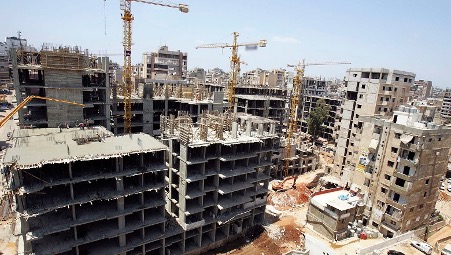
Change font size: - + Reset Albania’s Concrete Economy: How Construction Became the Country’s Dominant Growth Model Tirana Times, July 10, 2026 – A booming construction sector has made Albania an outlier

Austria Leads FDI, but Real Estate Tells the Bigger Story
Change font size: - + Reset Bank of Albania data show Austria topping first-quarter foreign investment flows, while property and construction continue to shape Albania’s FDI model. Tirana Times June 25, 2026

Albania’s Missing Generation: A Country Losing Its Future Before 2050
Change font size: - + Reset Tirana Times, June 22, 2026 – Albania is no longer facing a normal demographic decline. It is facing the possible disappearance of the very generation on

OTP Bank Albania inaugurates new Private Banking premises in Tirana
Change font size: - + Reset Tirana Times, May 18, 2026 – OTP Bank Albania has inaugurated new premises dedicated to the Private Banking segment, unveiling an exclusive space designed for clients

Building a Trusted Health Tourism Ecosystem: Albania’s Next Competitive Advantage
Change font size: - + Reset by Professor Alaa Garad Tirana Times, March 17, 2026 – There are countries you visit, and there are countries you remember. Albania is rapidly becoming the