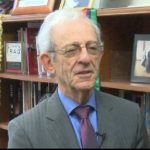
Karsten Ankj粠JENSEN
First of all, thank you so much for inviting me to this prestigious event. And warm congratulations to the graduates for completing the EU integration seminars.
Now, Dr. Rakipi more or less gave me a free hand to choose a topic. And I thought about a few.
However, considering that Albania has just received its yearly report card on EU-integration in the form of the Commission’s progress report, I felt there was really no way to avoid talking about that.
I say avoid, because I know what happens when one tries to deal with political hot potato. And I really have no wish to get entangled in the political dogfight as to who is most to blame for Albania yet again being turned down for candidate status.
I say avoid, because I also have no desire to see what I say being made out to be pro or anti this or that side of the political divide.
Contrary to the belief in some circles, ambassadors do not come to Albania to enlist in the armies of the left or right – to become warriors in the fight between the factions of politics.
For the EU ambassadors, our shared objective is to do what we can to help make Albania ready for EU-membership.
This is an HISTORIC objective, which transcends way above the nitty gritty of every day politics and whoever happens to be in power or in opposition.
Our priority, as EU-ambassadors, in this endeavor is Albania and the Albanian people. And only that.
I think most Albanians very well understands this.
For you simply do not let far reaching decisions such as EU-membership depend on Mr. X or Y. You look at the facts. The homework done. And you take a long-term strategic view, because everyone will have to live with the decision beyond the election period. EU-membership is not a gift. It is a reward for an accomplishment – for a track record of jobs well done.
Having said this, let me turn to the Progress Report:
First, I am sorry to have to say that the political debate in the aftermath of its release has not helped bringing Albania any closer to candidate status. Rather the contrary.
The mud-slinging, the blame games and the refusal to accept responsibility where responsibility is due have yet again laid bare for all to see that the required level of political maturity is still far from having been achieved.
Contrast this with the reaction in the other prospective EU-member countries. In Kosovo, for example, they immediately began to take action to tackle the problems mentioned in their report. Not so in Albania.
I do not know how many have actually read the Commission’s report. But judging from the political and public debate in the Albanian media since the release, I would venture the guess that it is not that many.
For the media debate has focused nearly exclusively on the effects of the political crisis on the negative report card. To an extent, this is understandable.
However, those of you, who have actually read the lengthy report, will know that the current political stalemate at most accounts for a miniscule portion of the vast number of troublesome issues raised in the Commission’s paper.
Those of you who have NOT read the report – and I urge you to read it – you should know that it is a meticulous analysis, chapter by chapter, of how Albania and its institutions have functioned in the past year:
Is there any progress in how the Police enforce the laws? How the schools are performing? Are the necessary resources and expertise available in the Ministries? Have promises been kept? Has rule of law been advanced? Have Parliamentary proceedings become more democratic? Are the individual policy areas being brought up to EU standards? And so on.
Unfortunately, the report card in most areas is a failing or just passing grade regarding progress compared to last year. If my memory serves me well, only one area is actually characterized by the Progress Report as “on track towards EU” and that is Foreign Policy.
I do not want to put too much importance on this, but if I were Albanian, the paucity of such expressions would be a cause for reflection.
The Progress Report is handed over to the Government. It is handed over to the Government, because in the final analysis, the Government is responsible for most of what is evaluated in the progress report. Thus the report is, for NOT ALL, but MOST practical purposes, a report card for what the Government has achieved during the last year.
I am not saying this to be controversial or partisan. It is a matter of fact. But that this simple fact may be seen as highly controversial or partisan in an Albanian context is perhaps very telling about the state of political discourse in Albania.
However, for that very reason, I immediately hasten to remind the audience that this year’s Progress Report is really not radically different from the reports of any previous year.
And the Commission’s comprehensive status report of last year – the avis – clearly showed that successive Albanian governments – no matter the color – for the last 20 years have done little, relatively speaking, to advance Albania’s progress towards EU.
Or put in a different way: It is not only the current government’s, or – for that matter – the current opposition’s, responsibility that Albania is not ready for candidate status. It is a shared responsibility of the political class, who since Albania won freedom, has made fewer right choices than wrong choices on behalf of their countrymen.
20 years of different governments failing to make Albania ready for EU-membership, when other countries coming from similar sad circumstances in a short time have managed to become full-fledged members of the EU, in my view, suggests debilitating systemic problems in the way politics function in Albania.
I find it surprising that a discussion about this did not materialize following last year’s comprehensive Commission avis.
It is perhaps even more surprising that it didn’t happen with this year’s progress report. Reading the reports of the region, it is clear that Albania is not following the pace of the best and, in some areas, is the odd man out in the Balkans.
Frankly: This is not Albania living up to its potential.
In my mind there is no doubt that Albania – objectively speaking – is one of the most fortunate countries in the Balkans. Not only is Albania blessed with natural resources and beauty second to none. It also has a well-educated population, whose kindness, hospitality and focus on the future are unique. And the Albanian people are so obviously European by heart and culture.
I am a Dane, and when I consider what Albanians are blessed with, it is really, really hard to understand, why Albania is not at the forefront of EU.
I have heard Albanian politicians refer to Denmark as a shining example of what can be accomplished. But from my perspective, it is hard to fathom why it is not Albania that is way ahead of Denmark. You have certainly been way more fortunate with nature, resources, climate, etc. than we have. And Albanians are at least as hard working and smart as Danes are.
I think one explanation is that Danes think and act as a nation, a people. Albanians act as individuals or as family members. Through our history Danes have learned that acting as a nation benefits all, raising our collective standard of living, improving everyone’s chance of success.
Among Albanians, however, the awareness of nation, common destiny and mutual interest has yet to become a common denominator. And nowhere is this more pronounced that in Albanian politics.
The sad fact is that unless this changes, Albania and the Albanian people will not be able to advance towards the EU. Why? Because the EU is built on the very values that are missing in Albanian politics.
Putting it in this way perhaps makes it easier to understand why internationals are so focused on the political stalemate.
It is NOT because the political stalemate per se is hindering Albania’s advance towards EU. As I mentioned earlier, only a few of the problems highlighted in the Progress Report have anything to do with the crisis. Yes, there are a number of important laws that have not been passed by Parliament, because they require the votes of the opposition, but this is a minor problem compared with the lack of implementation of existing laws.
The reason we are focused on the political stalemate is because it is symptomatic of the fundamental problems of Albanian politics. In a sense, solving the political stalemate is the litmus test of Albania’s readiness – and the Albanians political class’ interest – in moving towards EU.
Commissioner Fule, in his press conference presenting the Progress Report, made a point of reaffirming EU and its member states’ commitment to help Albania become ready for membership.
Quite frankly, I think EU and its member states now need a similar commitment from the Albanian political class that it is genuinely interested in bringing their country into EU. Not in more words. But in deeds.
And the EU has made very clear, what would be considered as deeds. And again, speaking frankly: what EU has asked for is in reality mere symbolism – in the grand scheme of things really just a tiny show of good will.
Of course, such a tiny show of good will, before December’s EU ministerial meetings, will not suddenly qualify Albania for candidate status. But it will at least be a small first step in that direction. An extremely important step. Because, as I indicated before, the Albanian political class really needs to reaffirm the direction of their efforts. Again: in deeds, not more words.
Next year Albania will celebrate its first hundred years as a nation. It would have been lovely if that could have been crowned with EU-membership. Or the very least: with candidate status. I believe that is what the Albanian people expected from their politicians. That is what they feel they have been promised.
Being in my fourth year in Albania, I have learned never to underestimate the speed of change and the capabilities of Albanians, once they set their mind on achieving something. Miracles do seem to happen in Albania. But it really looks like it will require a miracle for Albania to take the step, the Albanian people hopes will be taken next year.
We internationals cannot make that miracle happen. Only the Albanian people can. By sending a strong and unequivocal signal to their elected representatives that they will be out of office unless they cooperate, do their homework and deliver on their promises. That in itself would be a strong signal to EU that the Albanian people have internalized the power of democracy.
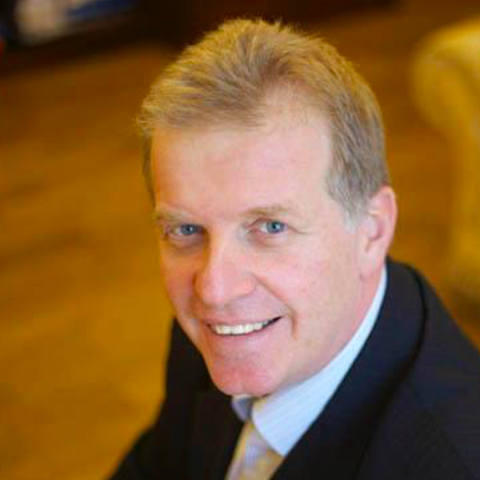
This lecture was given by H. E. the Ambassador of the Kingdom of Denmark at the European Academy of AIIS and House of Europe.