TIRANA, Dec. 28 – The boom in hydropower plant construction in the past decade has put significant pressure on the environment in Albania and international financial institutions are also to blame for this for financing the controversial projects, a report has shown.
A recent report by Bankwatch, a Czech Republic-based environmental and human rights group which monitored two European-financed HPP projects in Albania and six others in Croatia and Macedonia shows HPPs in protected areas are inflicting serious damage to nature and biodiversity.
“Small-scale hydropower projects often do not pass through a comprehensive Environmental Impact Assessments (EIAs) at all, which in a fragile governance context leads to outright destruction of the environment,” says Bankwatch which examined two projects financed by London-based European Bank for Reconstruction and Development in Albania including one in the Shebenik-Jabllanicà« National Park, east of Albania close to the Macedonia border.
“There is an almost complete lack of monitoring and enforcement by the Albanian authorities. In both projects that we visited, the environmental destruction was connected with social impacts as the rivers had also been used for irrigation purposes. Residual flows are not enforced. Ancillary infrastructure such as access roads brings further destruction to pristine environments,” says the environmental watchdog.
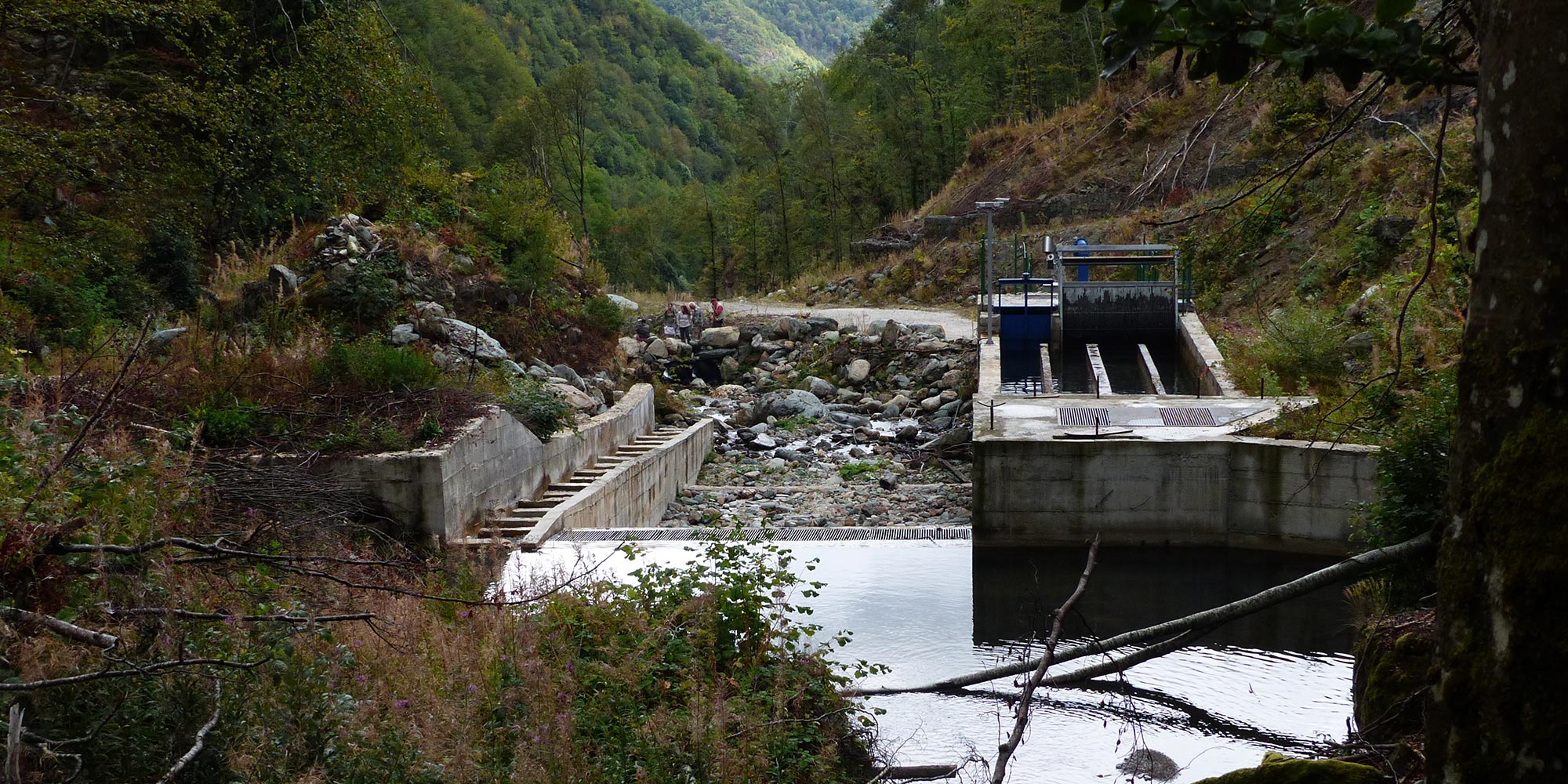
Commenting on the Rapuni 1 & 2 HPPs in the protected area of Shebenik-Jabllanice, Bankwatch experts say the investor went ahead with redirecting water from his project to another one further downstream which led to the drying up of 4.3 km of river bed, although this was not in the project approved by the Bank.
“The residual water flow is inadequate and not determined in advance; the fish passes are problematic. And finally, the cumulative impacts are disastrous: making all the tailwater from the Rapuni 2 go via a tunnel to Rapuni 3 & 4 leaves almost no water below the Rapuni 2 powerhouse, which has contributing to drying up the riverbed for a length of 4.3 km,” says the report.
The Ternove HPP, a Euro 6 million EBRD financed project that is being built in the Martanesh Natural Monument in Dibra region, northern Albania, is also causing serious erosion and deforestation.
“The project also endangers a glacial lake designated as a national nature monument. It was also not adequately consulted with the local community, which blames the facility for a lack of water for irrigation. This caused tension and violence in 2014, 2015 and 2016,” says the Bankwatch report.
Environmentalists suggest the EBRD and other international institutions should stop considering any investment in hydropower schemes before investing in governance such as technical assistance for capacity building in environmental permitting and monitoring and anti-corruption measures that would enable better control of permitting as well as monitoring.
“For the existing plants the EBRD and other international institutions should ensure better communication with local communities to enable locals to voice their grievances,” Bankwatch experts recommend.
Albania produces all of its domestic electricity from hydropower, three-quarters of which from three major state-run HPPs. Some 177 HPPs, mainly small and medium-sized ones built under concession contracts, are currently in operation and another 43 HPPs are under construction.
“Hydropower projects are putting significant pressure on the environment. Albania still has pristine natural areas in comparison to the EU, with 30 per cent of European plant species and 42 per cent of European mammals found there. Yet it has only 16 per cent of its territory covered by protected areas and so far the fragile governance system has been unable to balance the risks of development with environmental protection,” Bankwatch experts say.
In 2017, a new law on protected areas finally forbid the construction of hydropower plants in Albania national parks, but this move comes too late for those plants such as Rapuni. Bankwatch experts say the law is also of little comfort in cases like the planned plants on the Vjosa River where the area is not legally protected.
Albanian environmentalists have been protesting HPP construction projects along the Vjosa and Valbona rivers, two of Europe’s last wild rivers, but court decisions have upheld government decisions to allow their construction.
A recent fact-finding mission by Bankwatch also found that Albanian farmers received peanuts after losing land and livelihoods to the major Trans Adriatic Pipeline and were given sharply lower compensation than their peers in neighboring Greece.