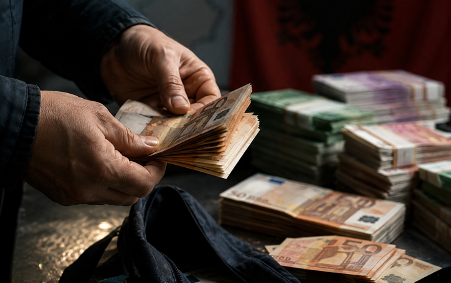
TIRANA, Oct. 23 – Albania’s central and local government institutions accumulated about €120 million in unpaid bills to private sector companies at the end of the first half of this year when the country held general elections, the IMF has unveiled in its latest report.
The new arrears come after some €500 million was cleared in 2015 in payments to private sector companies contracted for public works under a two-year deal that is estimated to have strengthened private sector balance sheets, reduced nonperforming loans and supported domestic demand, although credit is still struggling to return to positive growth rates.
The accumulation of new arrears which is seen as a new threat to public finances and efforts to bring down public debt to 60 percent of the GDP by 2021 also hurts private sector companies engaged in public works and services which suffered a freeze in public procurement in the run-up to the June 25 elections until last September when a new government was formed.
Finance ministry data shows central government institutions owed private companies about 3.44 billion lek (€25.7 million) at the end of June 2017 in unpaid bills for public works and services provided.
Almost half of the arrears were incurred during the May-June period ahead of the June 25 general elections when public investment sharply increased. Public investment during the first half of this year sharply rose by an annual 56 percent to 26.4 billion lek (€196 mln), but remained within the target set for the year’s first half, according to the finance ministry.
However, it is local government units which hold the overwhelming majority of debts of about €90million.
Local government units hold the overwhelming majority of about 90 percent of the arrears and could be the most problematic to pay off as the central government has made it clear the now bigger municipalities following the 2015 administrative reform will have to use their own funds to pay them off.
Finance ministry data shows local government units had accumulated a stock of about 12 billion lek (€87.2 million) at the end of 2015, posing a key threat to their fragile finances which are also supported through central government grants.
An IMF mission visiting Albania few weeks ago unveiled central and local governments had accumulated arrears of 1.1 percent Albania’s €11 billion GDP in mid-2017. The amount includes 0.3 percent of GDP, about €33 million in arrears on VAT refunds, one of the top concerns for the business community in the country.
While legal changes have made VAT refunds automatic within 30 days for businesses exporting more than 70 percent of their total sale value as of mid-2016, only 11 percent of businesses say the refund is completed within a month, according to a late 2016 survey conducted by Albania Investment Council, an advisory body serving as a linking bridge between the business community and the government.
“To prevent arrears, the authorities should improve the tax refund process, strengthen commitment controls, particularly at the Ministry of Energy and Infrastructure, expand the Treasury’s IT system to local governments, register all unbudgeted commitments, and record unpaid bills,” suggests the IMF.
The IMF, whose relations with Albania have been downgraded to an advisory role after a 3-year binding deal supported by a €331 million loan was concluded in early 2017, says it expects Albania’s growth to slow down between 3.7 to 4 percent in the next five years as investment by large energy related projects such as the Trans Adriatic Pipeline and Devoll Hydropower project taper off and no new major projects appear in sight to replace them.