TIRANA, Oct. 12 – The International Monetary Fund has downgraded Albania’s mid-term growth prospects and expects the country’s economy to grow between 3.7 to 4 percent in the next five years.
In its new World Economic Outlook, the IMF forecasts the Albanian economy will only modestly pick up compared to the 2016 growth rate of about 3.4 percent and almost stay the same to the 4 percent growth rate reported by state statistical institute, INSTAT, for the first half of this year, until 2022.
The IMF’s growth forecasts are considerably lower compared to the Albanian Socialist Party government’s more optimistic forecasts of growth averaging at 4.5 percent in the next four years of its mandate and accelerating to 5.5 to 6 percent by 2021 at the end of its second consecutive mandate.
The Albanian GDP is estimated at €11 billion, and 1 percent change means about €110 million less to the Albanian economy, a considerable amount for the developing Albanian economy.
The IMF, whose relations with Albania have been downgraded to an advisory role after a 3-year binding deal supported by a €331 million loan was concluded in early 2017, also expects the country’s public debt to decline at a slower pace and not drop to below the 60 percent of the GDP target before 2021.
The more pessimistic forecasts are apparently related to the lower contribution of some major energy-related projects such as the Trans Adriatic Pipeline and the Devoll Hydropower plant which are in their peak construction stage and are set to complete in the next couple of years, waning the FDI-fuelled growth over the past few years.
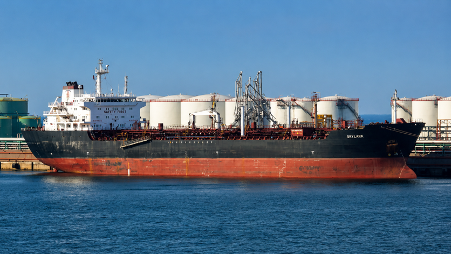
The IMF also expects commodity prices to remain at about the same levels with a negative impact on Albania’s major oil and mining exports which have been severely affected following the mid-2014 slump.
“Commodity exporters, especially of fuel, are particularly hard hit as their adjustment to a sharp stepdown in foreign earnings continues. Despite expectations of more robust global demand going forward, commodity prices have remained low, with oil prices reflecting stronger-than-anticipated supply,” says the IMF.
Albania’s exports are back to double this year thanks to the resumption of production by the country’s largest steel plant and modest growth in garment and footwear sales, the country’s traditional top exporting industry.
Meanwhile, oil exports have registered only a modest increase as a considerable part of domestic production is being sold to a local refiner.
The IMF expects inflation rate to gradually pick up to the central bank’s 3 percent target over the next few years, but total investment to remain unchanged at 25 percent of the GDP and general government revenue at about 28 percent of the GDP.
Last year, the Albanian economy recovered to 3.5 percent but that was mainly thanks to some major energy-related investment such as the Trans Adriatic Pipeline.
Experts say the Albanian economy, one of Europe’s poorest, needs to grow by at least 6 percent annually in order to produce welfare for the country’s households.
Few days ago, an IMF mission visiting the country warned a series of vulnerabilities including the much-rumored public-private partnerships pose serious threats to the country’s macro-economic stability and fiscal consolidation efforts.
The IMF expects the Albanian government’s commitments to PPPs to climb to €1 billion, around 7 percent of GDP by 2021, posing a threat to the Albania government’s agenda of reducing public debt to 60 percent of the GDP by 2021.
GDP forecasts by international financial institutions are always lower to the Albanian government’s more optimistic scenarios and in most cases are later upgraded to INSTAT’s final GDP forecasts.
In its latest Global economic Prospects report, the World Bank expects the Albanian economy to grow by 3.5 percent in 2017 and 2018 and pick up to 3.8 percent in 2019, in forecasts which are about 0.3 percentage point lower compared to the Albanian government’s more optimistic forecasts.
Meanwhile, last May, London-based European Bank for Reconstruction and Development left unchanged its 2017 economic growth outlook for Albania at 3.5 percent, and expects the Albanian economy to pick up to 3.7 percent in 2018, but warned of downside risks such as internal political problems ahead of the general elections and a reversal of the recent recovery in oil prices.
In its latest summer forecast, the Vienna Institute, one of the top centers for research in Central, East and Southeast Europe, expects the Albanian economy to grow by 3.9 percent for 2017, up from 3.5 percent in the previous Spring forecast, on recovering exports and ongoing energy-related investment. The 2018 and 2019 prospects are only slightly more optimistic with growth expectations ranging from 4 to 4.1 percent of the GDP, in forecasts which are in line with the Albanian government’s estimates.
U.K.-based BMI Research, a unit of Fitch, expects the Albanian economy to grow by 3.6 percent in 2017 and slow down to 3.3 percent in forecasts which are considerably lower to the Albanian government’s more optimistic scenario of a 3.8 percent GDP growth for 2017 and a pickup to 4.1 percent in 2018.