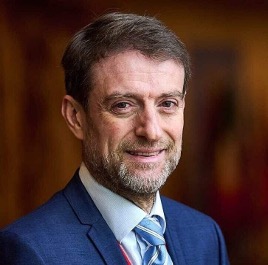
In its new World Economic Outlook report published this week, the IMF lowered its 2011 forecast to 2.5 percent, down from 2.7 percent last June when IMF representative Gerwin Bell visited Albania
TIRANA, Sept. 20 – The International Monetary Fund has lowered Albania’s GDP growth projection for 2011 for the second time in a row, and expects the Albanian economy to grow by only 2.5 percent, twice less compared to the reviewed government targets last July at 5 percent. In its new World Economic Outlook report published this week, the IMF lowered its 2005 forecast to 2.5 percent, down from 2.7 percent last June when IMF representative Gerwin Bell visited Albania. This would Albania’s second lowest GDP growth rate in the past 20 years after the shrink the economy underwent in the 1997 pyramid scheme turmoil.
Earlier this year, the IMF had predicted the Albania economy would grow by 3.4 percent, from 3.5 percent in 2010. However, what’s more concerning is that the IMF expects growth to remain at low levels until 2016. The Fund’s projection for 2012 is at 3.5 percent and 4 percent in 2016.
As far as consumer prices are concerned, IMF expects the inflation rate to be at 3.9 percent this year, only 0.1 percent below the Albanian central bank’s target of 3+-1 percent. The forecast for 2012 is at 3.5 percent and for 2016 at 3 percent. According to the Bank of Albania, inflation rate during the first half of this year was at 4.05 percent.
Meanwhile, Albania’s balance on current account is expected to drop to -10.9 percent in 2011, down from -11.8 percent in 2010.
Albania enjoyed an average annual growth rate of 6 percent from 2003 to 2008 and was one of the few countries to register positive growth of 3.3 percent in 2009, when the financial crisis broke out. According to the country’s Institute of Statistics, the 2010 growth was at 3.9 percent, down from 7.5 percent in 2008.
Compared to other central and Eastern Europe countries, Albania’s growth at 2.5 percent in 2011, would be one of the lowest in the 14 countries represented in this group.
The highest growth rate is forecast for Turkey at 6.6 percent, followed by Lithuania at 6 percent and Kosovo at 5.3 percent.
The high public debt levels and rising budget deficit remain key risks to the Albanian economy, the International Monetary Fund said after concluding a visit to Albania.
“The important thing is that the public debt should not reach the maximum 60 percent level. For developing countries such as Albania this is a very high level which should drop,” said IMF’s Bell during his visit last June as government was making budget cuts of 5 percent to keep public debt and budget deficit in check.
“The global economy is in a dangerous new phase. Global activity has weakened and become more uneven, confidence has fallen sharply recently, and downside risks are growing,” the IMF said in its September 2011 World Economic Outlook (WEO).
“Strong policies are urgently needed to improve the outlook and to reduce the risks,” said IMF Chief Economist Olivier Blanchard. “Only if governments move decisively on fiscal policy, financial repairs, and external rebalancing, can we hope for stronger and more robust recovery.”
Large capital inflows in some emerging economies are a signal to those countries to further strengthen their macroeconomic and financial policy frameworks and reform their economies so that these inflows have productive outlets. And high food prices underscore the need for developing well-targeted social safety nets that protect the most vulnerable from hunger, added the IMF.