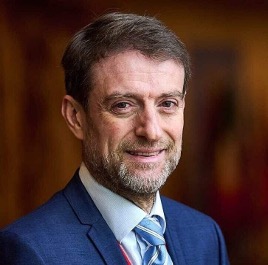
“With this deal, the Albanian government guarantees businesses on the payment of accumulated bills, a process which will start soon after the ratification of the deal by Parliament,” said Albanian Finance Minister Shkelqim Cani
TIRANA, March 4 – The International Monetary Fund has approved a three-year Euro 331 million soft loan which will pave the way to the payments of accumulated unpaid government bills and give a boost to the ailing economy by promoting new investments and reducing non-performing loans.
The approval by the IMF executive board allows for immediate disbursement of about 26.4 million Euro. The loan comes after the Albanian government and the IMF signed a deal in mid-December 2013 bringing the IMF back to Albania after five years.
The IMF concluded its permanent mission to Albania in January 2009 when relations with the Fund were reduced to an advisory role. The renewed deal also comes after the country’s economy has sharply slowed down in the past couple of years, with GDP growth expected at only 0.7 percent in 2013, the lowest in the past 15 years and the forecast for 2014 is at 2 percent.
Speaking after the IMF decision, Albanian Finance Minister Shkelqim Cani said that a new deal would also be signed with the World Bank and the EU to support Albania’s fiscal consolidation, management of public finances and reduction of non-performing loans.
“The deal with the IMF is a deal to support the recovery of the Albanian economy and government programme. With this deal, the Albanian government guarantees businesses on the payment of accumulated bills, a process which will start soon after the ratification of the deal by Parliament.”
David Lipton, the IMF First Deputy Managing Director, said the Extended-Fund Facility will help Albania meet its external financing needs while providing the necessary support to strengthen fiscal and debt sustainability, lower public financing risks, and put the economy on a sustained medium-term growth path.
“”Albania’s high public indebtedness calls for fiscal consolidation that aims to lower the public debt ratio to below 60 percent of GDP in the medium term. This will require significant tax and expenditure policy measures, supported by extensive public financial management and tax administration reforms. Lowering the outstanding stock of arrears and putting in place mechanisms to prevent their recurrence will also be critical,” he said.
“The authorities’ plans to reform pensions, energy, local government finances, public administration, and the business environment are welcome. If implemented properly, these reforms should strengthen Albania’s ability to attract investment, improve prospects for sustained medium-term growth, and reduce fiscal risks,” Mr. Lipton added.
The opposition Democratic Party also hailed the deal as the right thing in a difficult moment for the Albanian economy.
“The deal comes at a time when the government is plunging the economy into recession and when there is lack of vision and programme, when the measures taken have degraded and when Albania faces the highest taxes in the region,” said the opposition in a statement.
“We hope that through this deal and the strict monitoring by the IMF, the government should start implementing the right agenda of reforms,” it added.
The Socialist Party-led government estimates the payment of USD 350 million in accumulated bills to the business community will also help banks by reducing their non-performing loan stock by 3 to 4 percent.
The Finance Ministry has prepared a draft strategy which foresees the payment of a total of 72.6 billion lek (Euro 500 million) in government arrears over the next three years. The arrears, estimated at 5.3 percent of the GDP include unpaid bills to the business community for finished public works and services, VAT and profit tax refunds as well as bills from court decisions against the Albanian government, expropriations and payment of social assistance to people with disabilities.
Almost half of the arrears, some 35 billion lek (Euro 244 million), will be paid in 2014 while the remaining part some 20 billion lek (Euro 140 million) and 17.5 billion lek (Euro 122 million) will be paid in 2015 and 2016.
The Finance Ministry has identified 24.6 billion lek in unpaid bills for finished public works, some 5 billion lek for goods and services, 12.8 billion lek in VAT refunds and 10 billion lek in profit tax refunds. Other obligations estimated at 20.1 billion lek include bills from court decisions and expropriations and social protection.
Last December, accountancy giant Deloitte identified 24.6 billion lek (Euro 172 million) in unpaid bills and arrears government owed to Albanian and foreign business community for finished public works.
In its latest report on Albania, the IMF said “addressing the problem of unpaid bills and arrears would enhance the government’s credibility and boost liquidity and confidence. Clearance of these liabilities would strengthen private sector balance sheets, facilitate the resumption of credit growth by helping lower nonperforming loans (NPLs) and support domestic demand.”