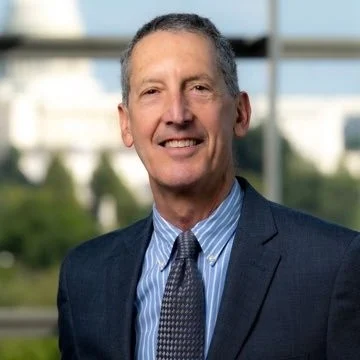
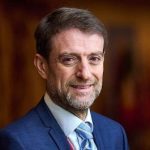
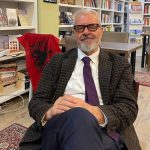
Professor Bernd J. Fischer, a history professor at the University of Indiana, Fort Wayne, gives his expert views on matters of interest to Albania and region, such as the case of Kosovo and democracy & development in Albania.
Proff. Fisher is the author of several books such as Albania at War, King Zog and the Struggle for Stability in Albania, and the most recent one, Balkan Strongmen, Dictators and Authoritarian Rulers of Southeast Europe. He is currently writing a chapter on Albania for a book to be published by the Cambridge University Press and is also working on longer-term projects including a book on the Balkans during the Second World War and a biography of Enver Hoxha.
The exclusive interview was given to Alba ȥla of Tirana Times.
What is your opinion about the stalemate in the process of Kosovo’s status right now? What are the implications of this for Kosovo and the region?
This delay in the movement towards independence, which I still consider to be inevitable, is regrettable and potentially disasterous. Kosova has been more than patient and Russia is playing a very dangerous game which certainly could destabilize the entire region. Kosovar politicians, who promised independence last year, are slowly losing the ability to control internal developments and moderates are clearly being marginalized. I only hope that Kosova can made it through the hot summer without any serious incidents, which might delay the process even further.
How do you explain Russia’s stance in t his matter? What about Europe’s indecision?
Russia, in my mind, is pursuing a completely irresponsible policy and likely cares little for Kosova or for Serbia. I believe that Russian policy is simply an attempt to divide the European Union in its renewed struggle with the United States. Should Russia achieve its goals with the United States – including progress on the missle shield controversy – I believe that Russia would be more than willing to abandon Serbia. The European Union of course needs Russian natural resources and is hoping that Russia and the U.S. can resolve the Kosovar issue and the missile shield issue quickly and without extensive EU involvement. The future of Kosova very much depends on the U.S. and Russia. The anticipated Slovenian EU presidency might help, but new talks between Belgrade and Pristina will likely achieve as little this time as they did last time. The breathing space that the talks will provide for more U.S.-Russian negotiations might be seen as a positive, but the danger of an explosion in Kosova in the meantime seems very real. I certainly think that a unilateral declaration of independence on the part of Kosova would not be helpful.
Ahtisaari plan, worth to stick with it or should the relevant actors come up with something new?
I believe that the Ahtisaari plan will ultimately become the basis of Kosova’s future but the plan under its current name and in its current form is unfortunately associated with divisiveness and failure. Cosmetically it might be useful to call it something else and search for a new chief negotiator. Hopefully the Contact Group will come up with something similar but again this will depend upon U.S.-Russian behind the scenes negotiations – which will be quite difficult. President Bush has so few foreign policy successes, if he is seen to back down on the missile shield and other policy priorities over Russian objections, the move will simply be interpreted as yet another defeat. Both Bush and Putin, through bluster and an unwillingness to compromise, seem to have backed themselves into separate corners and the Kosovars are paying the price.
How do you see Albania’s democratic development recently? What was your impression from the process and the solution of the presidential crisis here?
The Albanian political process is developing but certainly still has considerable room for improvement. The February elections were a disappointment and a step backwards when compared to the elections of 2005. Prime Minister Berisha still seems to have a problem conducting reasonable elections. The long crisis over the presidency, too, was most unfortunate but I am very pleased that a new national election, for which Albania was not prepared, was avoided. I join in congratulating President Topi and believe he has significant potential. I am sorry that the election process could not have been consensual. One wonders – was there not one prominent Albanian that both of the major parties could have agreed upon? I believe that President Topi’s success will in part be judged by how often Prime Minister Berisha complains about President Topi’s policy direction. I note that the NGO Freedom House downgraded Albania’s “democracy score” in June. I believe that this may be justified and is certainly troubling. One hopes that the new president will act concertedly, in the spirit of conciliation, to help turn this around.
We have seen a revival of some issues pertaining to Albanian history such as the tcham protests last month. What can we say about the Albanian question right now?
I believe that the Albanian question very much hinges on the independence of Kosova. If an acceptable final status is achieved soon, all of the other aspects of the Albanian question, Montenegro, Southern Serbia, Macedonia, Greece, will be resolved peacefully through negotiation and the mutual acceptance of incremental improvements. If the current situation in Kosova is allowed and linger and fester, I believe there is potential for other aspects of the Albanian question to be radicalized and we may witness the growth of an unhealthy form of nationalism, as we see developing in Serbia. I see Kosova as the key.
You are already the author of some very successful books on Albanian history; do your future plans include anything else in this aspect?
Thank you for your kind comment. I certainly am continuing with my studies of Albania and the region. I have just published a book called “Balkan Strongmen, Dictators and Authoritarian Rulers of Southeast Europe” published by C. Hurst in London, for which I am currently seeking an Albanian publisher. The book includes chapters on Zog and Hoxha, along with pieces on other authoritarians like Tito and Milosevic. I am currently writing a chapter on Albania since 1989 for a book to be published by Cambridge University Press and am also working on longer-term projects including a book on the Balkans during the Second World War and a biography of Enver Hoxha. I am also still hoping that some cooperative projects with some of my Albanian colleagues can progress.
In your objective view, is the west Balkans region progressing in its European integration path?
Absolutely. The process could be moving more quickly but Albania has the legacy of Enver Hoxha to overcome – and this is quite complex. Albanians are justifiable tired of having foreigners tell them what to do, but in terms of integration it is the foreigners who make the rules and set the standards. I believe that Albania has a problem with its political culture. Politics is highly confrontational and neither of the major parties has yet to develop the concept of a “loyal opposition” without which democracy cannot fully function. When one party takes power the other tends to focus on undermining its opponent and the people suffer because little substantive is accomplished. One crisis, however artificial, simply leads to another and the business of government is hampered. The two parties would do better by cooperating on critical institutional reform, particularly in the judiciary. In my mind Albania would also benefit from some social justice. While certain aspects of the economy seem to be functioning well, the benefit tends to accrue to only the few, while far too many are left is poverty. This is not a healthy situation and will make internal stability more difficult to achieve. But having said all of that, I am quite optimistic and believe that Albania will not only find domestic peace but will continue to provide stability for the Balkans as a whole.