TIRANA, Nov. 16 – With interest rates in traditional deposits at slightly above zero, savers have turned to the more profitable investment funds and are even withdrawing their money from banks, according to Bank of Albania data.
Deposits remained almost unchanged in the first three quarters of this year, but the emerging investment funds heavily investing in more profitable and risk-free government securities continued there moderate growth.
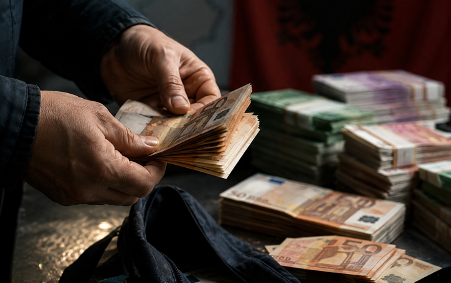
Meanwhile, money outside banks surged in the first nine months of this electoral year when it rose by an annual 17.4 billion lek (about €129 million) to 254.5 billion lek (€1.88 bln), about a fifth of the Albanian GDP, triggering informality concerns.
With credit struggling to recover amid tight lending standards and poor demand, the central bank has warned there has been a rising trend in informal lending while some banks have shifted to lending abroad amid high deposit-funded liquidity.
Central bank data shows the annual deposit growth at the end of September 2017 was at about 1.5 billion lek (€11 mln), considerably lower than the 3.8 billion lek (€28.5 mln) growth in the three investment funds.
Net assets in the three investment funds rose by an annual 5.5 percent to 73.6 billion lek (€544 mln) at the end of September 2017 as the number of investors rose by about 750 to 31,710, according to the Financial Supervisory Authority.
Operational since early 2012, the two Raiffeisen-run investment funds and a newly launched Albanian-owned fund have increased their market share to 5 percent of the GDP, but yet account for only 7 percent of the bank deposits.
The emerging investment fund market is dominated by investments in government bonds and T-bills, accounting for about 80 percent of total assets.
Yields on 2-year notes rose to 3 percent last October while yields on 12-month T-bills, the government’s key instrument for internal borrowing, rose to 2.54 percent in the latest November auction, making them much more favourable option compared to average interest rates of about 0.26 percent in traditional bank deposits.