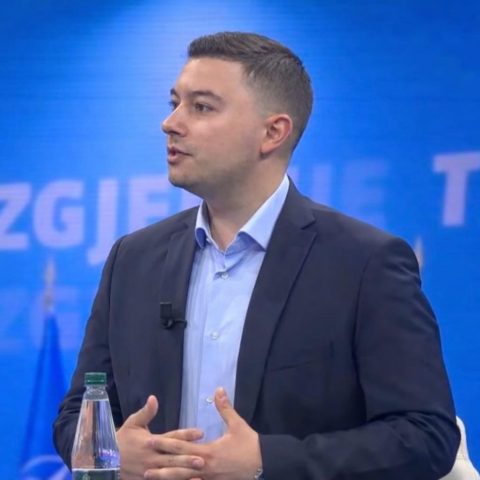
“Time has come for symbols to co-exist and and not exclude each other,” says Petrit Vasili, an SMI politician.
TIRANA, Feb. 4 – It’s time to review in a proper historical context and rehabilitate the legacy of communist partisan fighters after two decades of neglect, representatives of Albania’s third largest party said this week, launching a series of initiatives that would coincide with commemorating 70 years since the end of WWII in Albania in late 1944.
The Socialist Movement for Integration Party of Ilir Meta, the minor ally in the governing coalition with the Socialist Party, says the sacrifices of the partisans and the communist resistance fighters should not be forgotten, proposing that some symbolic changes implemented by Albania’s previous center-right government be reversed.
“Time has come for symbols to co-exist and and not exclude each other,” says Petrit Vasili, an SMI politician.
After ruling with an iron fist for 46 years and committing many crimes against political rivals, the communists fell out of favor during Albania’s difficult transition to democracy. Like elsewhere in former communist Europe, the WWII partisans went from glorification to a review of their contribution under a new historical context. Moreover, in Albania where a civil war took place as the same time as WWII, even seven decades after the war, political divisions mean that center-right parties try to focus more on the legacy of right-wing nationalist and royal supporters, actively promoting them with symbolic gestures like statues and street names.
Symbolic changes bring controversy
SMI chose Feb. 4, to launch its campaign, urging that a street renaming in downtown Tirana be reversed back to its original mane, Deshmoret e 4 Shkurtit. It’s original name, changed two years ago, honored more than 80 Tirana residents massacred on Feb. 4 by Nazi-led Albanian militia serving the Quisling government.
The main street of the Bllok neighbourhood was renamed to honor the late Kosovo president Ibrahim Rugova two years ago, an initiative led by the center-right Democratic Party.
The name Deshmoret e 4 Shkurtit was moved to another street which was not as prominent and the Bllok’s main thoroughfare. Families of those who died in the massacre have already launched a legal suit to bring back the old name.
The issue also has additional national and emotional elements to it as Rugova, a symbol of nonviolent resistance resistance revered in Albania, also comes from the same area in Kosovo where most of the Albanians accused of being involved in the massacre came from.
But the street issue is not the only element the leftists want to remedy.
They say the monument of five communist heroes in the northern city of Shkodra should also be rehabilitated. That monument was moved from the city center by the center-right Democratic Party representatives in power to a cemetery in the outskirts of the city that sits next a the municipal dump.
SMI was also part of the governing coalition two years ago, then with the center-right Democrats, but it said it had no power to convince them not to act on historical matters. Now with the Socialists, with whom they belong to the same leftist grouping, they feel they have a more sympathetic year.
There has been no official response from the main governing party, however.
More than two decades after the fall of the communist regime, the Albanian political parties, or groupings are still arguing with each other over historical facts.
Though both sides accept the crimes of the former communist regime, their view on the communist resistance during WWII differ, with right-wing parties focusing more on the right-wing resistance, despite the fact that portions of the nationalist forces had become collaborators by the end of the war.