Tirana Times
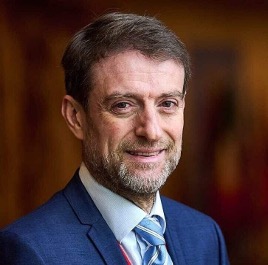
TIRANA, Sep. 8 – OSCE Ambassador in Albania Eugen Wollfarth on Thrusday presented a report to the OSCE Permanent Council.
Wollfarth made clear in his recommendations that the electoral reform remained the primary target of the Albanian politics to deal with in the near future.
The report said that “the greatest single national achievement was clearly the lifting of the Schengen visa regime for citizens holding biometric passports on 15 December 2010. To date, Albanian citizens have shown that they merited the trust placed in them by all the countries of the Schengen area.”
He harshly said that the continuation of the political impasse since the autumn of 2009 has left the parliament stalled with no legislation requiring a three-fifths qualified majority being approved.
“In different ways, both sides must now look to significantly adjust their strategies and policies in order to tackle the current challenges facing the country. Only when all sides begin to fully understand what being in Government and being in Opposition actually means within a democratic system will Albania be able to make significant headway on the reform agenda.”
It also reminds that the danger remains of good intentions becoming politically ‘drowned’ through a mixture of institutional overload and political rancour.
“The first objective should be an agreement on electoral reform. Other issues of policy and political interest can be discussed afterwards,” it said.
It advised all political sides to read the OSCE/ODIHR report on the May local elections in its entirety, “avoiding the temptation to cherry pick on liked or disliked elements.”
The report continues to depict other main issues on the western Balkan country.
It spoke of the Jan. 21 protests where four died and more injured in clashes between opposition protesters and police. “both prosecution and Assembly investigations remain ongoing.”
The OSCE criticizes the opposition for boycotting the parliament saying “the SP failed in its constitutional
duty to scrutinize government work and, in particular, to contribute to electoral reform in time for local government elections.”
It says that more needs to be done by “the Assembly leadership and the ruling coalition in helping to establish a more inclusive political environment.”
The independence of state institutions and the judiciary needs further strengthening as the justice system currently lacks sufficient transparency, accountability and efficiency.
On Gerdec case it says it “has not moved in full compliance with fair trial principles. The public remains disappointed and frustrated by the protracted nature of this case.”
On civil service reform, the institutional procedures for recruiting, promoting, appraising and dismissing public officials requires further strengthening in terms of transparency and the rule of law.
On property reform, private and public investment and lending remain hindered as property ownership cannot be guaranteed in all cases throughout the system.
Corruption remains a main topic. It says that “efforts to pursue senior state officials accused of corruption remains an issue, not helped by a lack of follow-up by the Prosecution office. Immunity of senior public officials also remains an important issue to be addressed. The fight against corruption will only succeed when all sides work together instead of misusing it for partisan self interest.
It notes positive signs in combating the trafficking of human beings but advises further efforts in the pre-screening of illegal migrants detained when transiting Albania to identify possible victims of trafficking.
It also notes police positive moves in fighting organized crime, adding national legislation needs to be
aligned with international standards.
Civil society cannot as yet be seen as a full strategic partner in policy making as there are no institutional procedures in place for dialogue, it says.
It concludes that with the Presidential elections due in 2012 and with the possible hardening of the political debate prior to the 2013 parliamentary elections, the window of opportunity for reform between now and mid 2013 is small. Unless the fullest use is made of what remains of 2011 and 2012 by the Albanian political leaders, there is every chance of the political impasse continuing until the 2013 parliamentary elections. In order to try and avoid such a scenario, political leaders in Tirana will have to deliver.
The message is simple: ‘More than enough time has been lost already. If you really want to show the Albanian public and your international partners that you take your responsibilities and obligations seriously, then we need to see a swift and permanent return to the language of dialogue as well as a sincere willingness to compromise in order to move forward with the reform agenda.’
The next year will provide some answers as to which direction political leaders wish to take Albania – in the direction of reform, progress and national prosperity or into a downward spiral of delay, stagnation and political rancour. The choices are that simple.